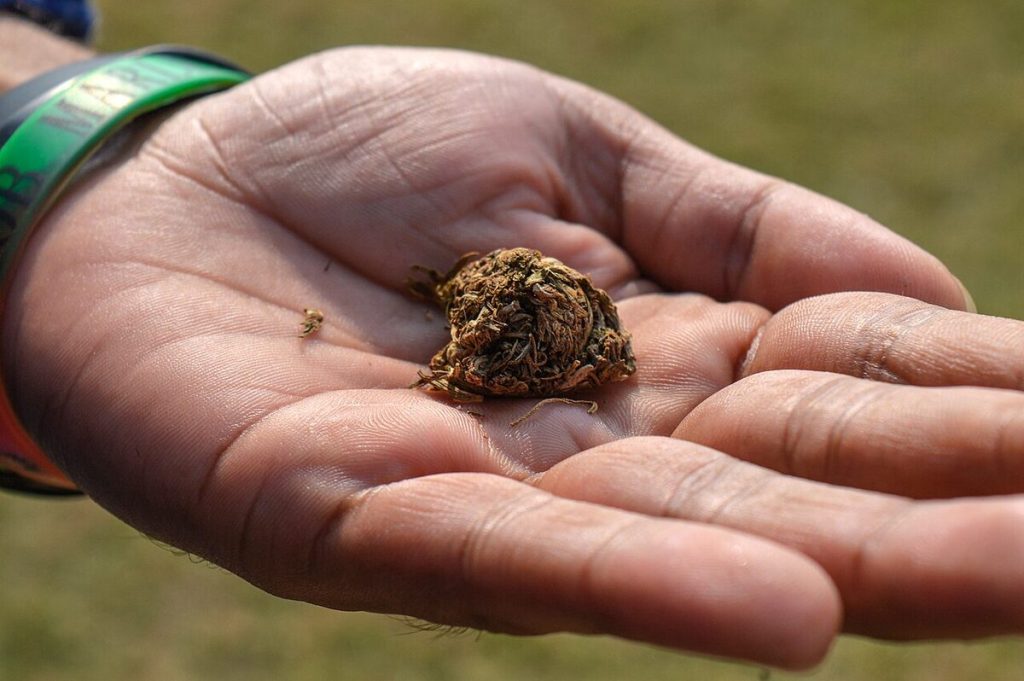
“Ice caps weed”, also written as snowcaps or snow caps, is informal slang for cannabis flower that looks coated in a white, frosty layer. That look usually comes from kief or a concentrate dusted or rolled onto the bud, or sometimes from a very heavy covering of natural resin glands. It is street wording, not a recognised product category, so what a seller means by it can vary. This is general information, not advice to use any drug.
Key takeaways
- “Ice caps” or “snowcaps” are slang, with no fixed meaning, for frosty-looking cannabis.
- A white coating often means added kief or concentrate, which can make a product much stronger.
- Appearance says little about quality, and a coating can hide poor flower.
- Cannabis remains illegal in many places, including the UK; laws differ widely, so check local rules.
Where the frosty look comes from
Cannabis flowers are covered in tiny crystal-like resin glands called trichomes. They hold the plant’s cannabinoids and aromatic compounds, and on a healthy, well-grown bud they give a sparkly, sugar-dusted appearance under light. That natural frostiness is often described as “frosty” or “frosted”. It is not the same thing as a bud that has been coated afterwards.
The coated version is what names like snowcaps usually point to. Loose trichome powder, called kief, or a ground concentrate, is applied to the outside of a bud. This makes the surface look whiter and more intense. The look alone tells you little about the product, because a powder layer can hide weak or poor-quality flower underneath.
Natural frost versus a coated bud
| Feature | Naturally frosty flower | Coated “snowcap” style |
|---|---|---|
| Source of white look | Dense natural trichomes | Added kief or concentrate |
| Appearance | Sparkly, sugar-like, varies across the bud | Uneven, powdery or clumpy outer layer |
| Typical strength | Depends on the plant | Often higher than plain flower |
| Reliability of look | Hints at, but does not prove, potency | Can mask poor quality |
| Labelling | May be tested where legal markets exist | Often unlabelled in illegal markets |
Why strength matters
Because added kief or concentrate raises the amount of active THC, a coated product can hit harder than someone expects. Strong cannabis is linked with anxiety, a racing heart, nausea, dizziness and, in some people, paranoia or panic. Newer or occasional users face a higher risk of an unpleasant experience, and effects can last longer after eating cannabis than after smoking it. High-strength cannabis is also associated with more serious mental health problems in some regular users, particularly those with a personal or family history of psychosis. If you or someone you know is struggling after using cannabis, speak to a doctor or a drug service.
Unknown products carry extra risk
In unregulated markets there is no guarantee of what a product contains. Powders and coatings may include other substances, pesticides or mould. Without lab testing and clear labels, the buyer cannot tell strength or purity. That uncertainty is one of the main safety concerns with slang-named products.
The legal position
Laws vary a great deal by country and, in some places, by state or region. In the United Kingdom, cannabis is a controlled drug, and possession, supply and production are offences; the main exceptions are medicines prescribed through the proper clinical route. Some places, including parts of North America, allow regulated adult use, with licensed shops, testing and labelling rules. Even there, there are rules about age, quantity, driving and where use is allowed. Check the official government source for your area, such as gov.uk for UK guidance, before you assume anything is legal. Travelling with cannabis across borders can be a serious offence.
Health cautions in plain terms
- Driving. Cannabis impairs reaction time and judgment. Driving under its influence is illegal in many countries and dangerous everywhere.
- Mixing substances. Combining cannabis with alcohol or other drugs increases risk and can make effects unpredictable.
- Smoking. Inhaling smoke can harm the lungs, particularly when mixed with tobacco.
- Pregnancy and breastfeeding. Medical advice is to avoid cannabis. Speak to a midwife or doctor.
- Mental health. People with anxiety, depression or a history of psychosis should be especially careful and seek professional advice.
- Dependence. Regular use can lead to dependence in some people.
If someone feels unwell after using
- Move them to a calm, quiet place and stay with them.
- Reassure them that the feeling will pass, and avoid arguing with them.
- Offer water and let them rest.
- Do not leave them alone, particularly if they are very anxious, confused or vomiting.
- Call emergency services if they have chest pain, trouble breathing, a seizure, lose consciousness or seem to be in serious distress.
For information on drugs and their effects, the NHS publishes plain guidance on nhs.uk, and a GP or local drug and alcohol service can give confidential support.
Terminology: the slang around quantities and strains
Cannabis slang changes constantly by region and by social group. Words for frosty buds, quantities and strengths often come from sellers or marketing and are not standard. If you see unfamiliar terms in articles or conversations, treat them with caution and do not rely on them for safety decisions. Quantity slang is just as inconsistent; our explainer on how much weed is in a zip shows how terms like that are normally defined and why scales matter. Wikipedia’s article on cannabis gives an overview of the plant, its compounds and legal status around the world.
Why labels and testing matter
In places with regulated cannabis markets, products must be tested and labelled with THC and CBD percentages, and sometimes contaminant results. This lets buyers know what they are getting, which is a major safety difference from unregulated supply, where there is no standard. A frosty look on its own is not information. If you live somewhere regulated, read the label, start with the lowest amount, wait to see the effect and avoid mixing with alcohol. If you are somewhere cannabis is illegal, remember that unlabelled products carry unknown strength and contamination risks, along with legal consequences.
Frequently asked questions
What does ice caps weed mean?
It is slang for cannabis flower that looks coated in white crystals or powder, often because kief or concentrate has been added.
Is snowcap weed stronger?
Often yes, because added kief or concentrate raises THC content, but the amount varies and unlabelled products are unpredictable.
Does frosty weed mean better quality?
Not necessarily. Natural frost can point to a resinous plant, but a coating can hide poor flower. Appearance alone is unreliable.
Is cannabis legal?
It depends on where you are. It is illegal in the UK except for prescribed medicines, and legal under rules in some other places. Check your local law.
Where can I get help if cannabis is causing problems?
Speak to your GP or a local drug service. In an emergency, call your local emergency number.
Conclusion
Ice caps or snowcaps simply describes a frosty look, and that look can hide anything from natural resin to a heavily boosted product. Treat the slang as a warning about unknown strength, know the law where you live, and ask a health professional for support if you have concerns.
Key takeaways about ice caps weed
Here is a short summary of ice caps weed so you can find the main points quickly.
- "Ice caps weed", also written as snowcaps or snow caps, is informal slang for cannabis flower that looks coated in a white, frosty layer.
- Cannabis flowers are covered in tiny crystal-like resin glands called trichomes.
- The coated version is what names like snowcaps usually point to.
- Because added kief or concentrate raises the amount of active THC, a coated product can hit harder than someone expects.
Questions about ice caps weed are common, so it helps to compare more than one trustworthy source.
Use this page as a starting point for ice caps weed and come back to it when your situation changes.
Good decisions about ice caps weed come from checking the facts, comparing your options and taking your time.
Save this guide to ice caps weed so you can find it again whenever you need a quick reminder.
If you only remember one thing about ice caps weed, make it the practical steps covered in this guide.
Check official sources before acting on anything related to ice caps weed, because details can change over time.
Related reading:
For general background, you can look up ice caps weed on Wikipedia.