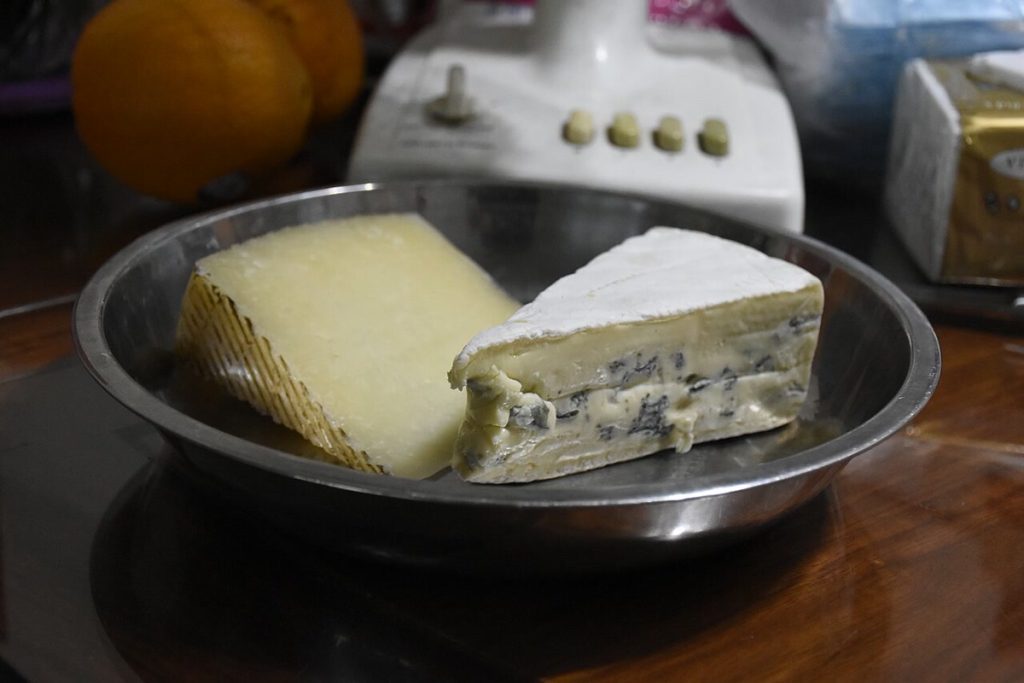
What is the rind of brie made of? It is made of a harmless, edible white mould, usually Penicillium candidum, which grows on the surface of the cheese as it ripens. The rind is part of the cheese, and most healthy people can eat it. Here is how it forms, how it tastes and when you might want to leave it.
Key takeaways
- The white rind on brie is a safe, intentionally added mould that helps the cheese ripen.
- It is edible, and many people enjoy its mushroomy, earthy flavour.
- Eating or leaving the rind is a matter of taste, not safety, for most people.
- Pregnant people and those with weakened immune systems should follow official advice on soft, mould-ripened cheese.
How the brie rind forms
Brie is a soft, bloomy-rind cheese. During production, cheesemakers add a mould culture to the milk or spray it on the surface of the young cheese. The mould grows into a thin, velvety white layer over several weeks while the cheese matures in a cool, humid room.
As the mould grows, it helps break down the interior of the cheese from the outside in. Enzymes released by the mould soften the paste, which is why a ripe brie is creamy and sometimes runny just under the rind, while a young one can be firmer and chalkier in the centre. The mould used is closely related to the one used for camembert, and it is often named as Penicillium candidum or Penicillium camemberti, depending on the source. You can read more about the cheese in the Wikipedia article on Brie.
Is the rind of brie safe to eat?
For most people, yes. The mould on brie is a food-grade culture used on purpose, completely different from the unwanted blue-green or furry mould that grows on forgotten leftovers. Brie is sold with its rind on because the rind is part of the finished product.
Who should be careful
Soft, mould-ripened cheeses carry a slightly higher risk of listeria than hard cheeses, which matters for some groups. In the UK, the NHS advises people who are pregnant to avoid mould-ripened soft cheeses such as brie and camembert unless they have been cooked until steaming hot. Older adults and people with weakened immune systems should also follow the guidance of their doctor or national health authority. If you are unsure, ask a pharmacist, midwife or GP.
Penicillin allergy and cheese mould
The mould in brie shares part of its name with the one that makes the antibiotic penicillin, but they are different species and the cheese does not contain penicillin. If you have a mould or dairy allergy, though, talk to your doctor before eating mould-ripened cheese.
What does brie rind taste like?
The rind has a more intense flavour than the paste inside. Many describe it as earthy, mushroomy or slightly ammoniated when the cheese is very ripe. A slight ammonia smell can be normal in a ripe brie, but a strong, sharp or sour smell may mean that the cheese is past its best.
| Brie stage | Rind | Inside | Taste |
|---|---|---|---|
| Young | Pale, firm | Chalky, firm centre | Mild, milky |
| Ripe | White, slightly springy | Soft, creamy | Rich, buttery, earthy |
| Overripe | Darker, wrinkled, may be sticky | Very runny | Strong, sharp, ammonia smell |
How to eat brie with the rind
- Take the cheese out of the fridge 30 to 60 minutes before serving so it softens and the flavour opens up.
- Cut a wedge, slicing from the point towards the edge, so each person gets a fair share of paste and rind.
- Eat the rind and paste together, which is how the cheese is designed to taste.
- Pair with fruit, crusty bread, crackers, nuts or chutney.
- Return leftovers to the fridge promptly.
Baked brie
Baked brie is a popular party dish, and the rind helps hold the cheese together as the middle melts. Bake a whole wheel at a moderate oven temperature until the centre is soft and gooey. Cooking until hot also makes it a safer choice for those who are advised to avoid soft cheeses unless cooked, as long as it is steaming hot all the way through.
When to remove the rind
It is fine to leave it if you do not like it. Reasons to cut it off include:
- You dislike the bitter or ammonia notes in a very ripe rind.
- The rind is dry, hard or cracked.
- You are using brie in a recipe where a smooth texture matters, such as a sauce.
Cutting off the rind is a taste decision, not a food safety step. Discard the cheese if you see pink, green, black or fuzzy mould that is not the original white bloom, if it smells really off, or if it is slimy.
Storing brie safely
Keep brie in the fridge, ideally at 5 degrees Celsius (about 41 degrees Fahrenheit) or below. Wrap it in wax paper or cheese paper and place it in a container, which lets it breathe without drying out. Do not leave it on the table for hours, particularly in warm rooms. Once cut, eat it within a few days, or follow the use-by date on the label. For wider guidance on safe food handling, such as thawing, see our guide to defrosting salmon safely, which covers the same temperature principles.
Frequently asked questions
Is the white stuff on brie mould?
Yes, it is a mould, but a harmless one added on purpose. It forms the bloomy rind that gives brie its look and flavour.
Do you have to eat the rind of brie?
No. It is edible, but you can cut it off if you prefer. Most cheese lovers eat it because it adds flavour.
Can I eat brie when pregnant?
NHS advice is to avoid mould-ripened soft cheese such as brie unless it is cooked until steaming hot. Check current guidance with your midwife or doctor.
What if my brie smells like ammonia?
A faint ammonia smell can come with very ripe brie, and airing it for a few minutes often helps. A strong, sharp smell or slimy texture suggests it is past its best.
Can you freeze brie?
You can, but the texture may become crumbly or watery after thawing, so it is better for cooking than for a cheeseboard.
Conclusion
The rind of brie is made of a safe, intentionally grown white mould that gives the cheese its texture and flavour. Most people can eat it freely, those in vulnerable groups should follow official advice, and keeping brie properly chilled helps it stay at its best. If you enjoy the earthy taste, leave the rind on; if not, simply cut it away.
Key takeaways about what is the rind of brie
Here is a short summary of what is the rind of brie so you can find the main points quickly.
- What is the rind of brie made of?
- As the mould grows, it helps break down the interior of the cheese from the outside in.
- Soft, mould-ripened cheeses carry a slightly higher risk of listeria than hard cheeses, which matters for some groups.
- The mould in brie shares part of its name with the one that makes the antibiotic penicillin, but they are different species and the cheese does not contain penicillin.
If you only remember one thing about what is the rind of brie, make it the practical steps covered in this guide.
Check official sources before acting on anything related to what is the rind of brie, because details can change over time.
Questions about what is the rind of brie are common, so it helps to compare more than one trustworthy source.
Use this page as a starting point for what is the rind of brie and come back to it when your situation changes.
Good decisions about what is the rind of brie come from checking the facts, comparing your options and taking your time.
Save this guide to what is the rind of brie so you can find it again whenever you need a quick reminder.
Related reading:
For general background, you can look up what is the rind of brie on Wikipedia.