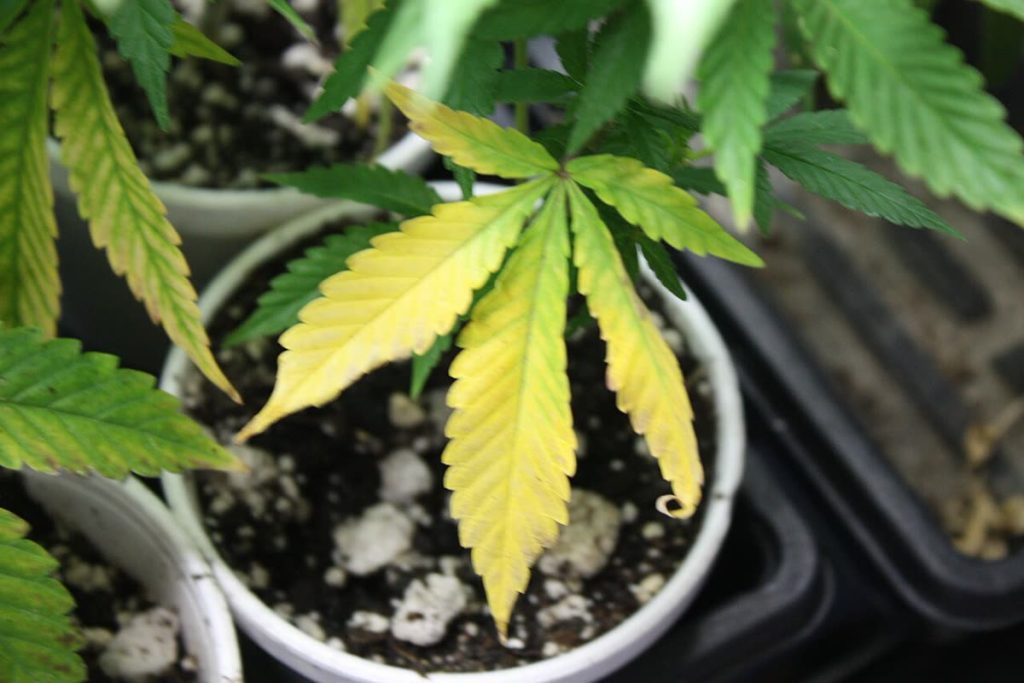
A marijuana plant turning yellow usually points to a nutrient problem, a watering issue or a pH imbalance, though late in flowering some yellowing is completely natural. This guide is for adults who grow legally. Rules differ by country and state, so make sure you follow your local laws before growing anything.
Key takeaways
- Where the yellowing starts, whether on old or new leaves, is your best clue.
- Overwatering and wrong pH are among the most common causes, and both are fixable.
- Nitrogen shortage yellows lower leaves first, while iron problems hit new growth.
- Late-flowering yellowing is normal as the plant uses up its reserves.
- Change one thing at a time and watch the plant for several days.
Why a marijuana plant turns yellow
Leaves turn yellow when they lose chlorophyll, the pigment that makes them green. This process is called chlorosis. The plant may be moving nutrients from older leaves to newer growth, or it may be struggling with its roots, light or water. How the yellowing looks and where it appears gives useful clues.
| Pattern | Likely cause | First thing to check |
|---|---|---|
| Lower leaves yellow, moving upward | Nitrogen shortage or natural ageing | Feeding schedule and growth stage |
| Yellow between green veins on older leaves | Magnesium shortage | pH and water type |
| Yellow new growth, veins green | Iron or other micronutrient lock-out | pH of soil or water |
| Drooping, yellow, wet soil | Overwatering or poor drainage | Pot weight and drainage holes |
| Yellow tips or scorched top leaves | Light burn or nutrient burn | Light distance and feed strength |
| Yellow spots, speckles, webbing | Pests such as mites | Underside of the leaves |
Common causes and how to fix them
Nitrogen deficiency
Nitrogen is a key nutrient for leafy growth. When it is short, the plant robs older leaves to feed new ones, so the lowest leaves fade to pale yellow first and may drop. Fix it by feeding a balanced nutrient suited to the growth stage, and make sure pH is in range so the plant can actually take up what you give it.
Overwatering and poor drainage
Roots need air as well as water. Constantly wet soil limits oxygen, causing drooping, yellowing leaves and slow growth. Let the top layer dry before watering again, lift the pot to judge weight, and use containers with drainage holes. Avoid leaving water in saucers.
Underwatering
Very dry soil can also cause yellowing and crispy leaves. Water thoroughly until a little runs out of the bottom, then let it dry slightly before the next watering.
pH imbalance and nutrient lock-out
Even a well-fed plant cannot absorb nutrients if the root zone pH is off. Growers commonly aim for a mildly acidic range, roughly 6.0 to 7.0 in soil and around 5.5 to 6.5 in hydroponic setups. Use a reliable pH meter or test kit, adjust your water, and avoid big swings. If you suspect lock-out, flush the pot with plain pH-adjusted water, then resume gentle feeding.
Light stress and heat
Lights placed too close can bleach or yellow the top leaves. Keep lamps at the distance recommended by the manufacturer and check that the top of the plant is not hot to the back of your hand.
Pests and disease
Spider mites and fungus gnats can cause yellow stippling or weak growth. Inspect the underside of leaves with a magnifier. Remove affected leaves, improve airflow and use treatments suitable for the stage of your plant, avoiding sprays near flowering buds.
When yellowing is normal
Near the end of flowering, many plants naturally fade as they use stored nutrients for the buds. Some yellowing of fan leaves in the final weeks is expected and not a cause for alarm. Seedlings may also lose their first round leaves as true leaves develop. If the buds look healthy and the timing fits, you may just be seeing maturity.
Step-by-step troubleshooting
- Note which leaves are affected: old, new, or all over.
- Check the soil moisture and the weight of the pot.
- Measure the pH of your water and runoff.
- Look at the underside of leaves for pests.
- Review light distance and temperature.
- Correct one issue, such as watering or pH, and wait several days before changing anything else.
- Keep a simple log with dates so you can see what works.
Yellow leaves will not turn green again, so judge recovery by new growth. For a more detailed breakdown, see our companion guide on why cannabis leaves turn yellow.
Soil, coco and hydroponic differences
The right fix depends on the growing method. In soil, mild deficiencies can be corrected slowly, because the medium buffers changes. In coco coir, plants are fed more often and need calcium and magnesium support, so yellowing can appear sooner if the feed is unbalanced. In hydroponics, changes happen fast and pH swings are more dangerous, so check the reservoir daily. Whatever the method, avoid dramatic corrections, which can shock the roots and cause further yellowing.
Water quality matters too. Hard tap water can push pH up and add calcium or magnesium, whereas filtered water may lack them. If you see recurring problems, test your source water and adjust your feeding accordingly.
Recovering after a fix
Once you have corrected the cause, be patient. Plants recover over days, not hours. Watch the newest leaves, as healthy new growth is the best sign you have solved the problem. Resume feeding gently, at around half strength, and increase only if the plant looks hungry. Avoid combining several fixes at once, such as flushing, changing the light and adding a booster, because you will not know which change helped. Keep notes and photographs to track progress from week to week.
Prevention tips
- Start with good-quality, well-draining growing medium.
- Feed lightly at first, since it is easier to add than to remove nutrients.
- Use consistent, pH-adjusted water.
- Keep the grow space clean and well ventilated.
- Inspect plants regularly so problems are caught early.
Frequently asked questions
Should I remove yellow leaves?
Fully yellow leaves can be removed once they come away easily, which helps airflow. Do not strip healthy leaves.
Can overwatering cause yellow leaves?
Yes. It is one of the most common reasons, as roots struggle without oxygen. Allow the soil to dry slightly between watering.
Why are only the bottom leaves turning yellow?
This often indicates nitrogen shortage or natural ageing, particularly if the rest of the plant looks healthy.
Will flushing fix yellow leaves?
It can help if the cause is salt build-up or lock-out, but it will not fix problems like pests or light stress.
Is it legal to grow cannabis?
That depends on where you live. Laws vary widely, so check the rules in your country or state before growing.
Conclusion
When you see a marijuana plant turning yellow, stay calm and work through the clues: location of the yellowing, watering, pH, light and pests. Make small corrections, track the result and remember that some fading late in flowering is normal. Always grow only where it is legal to do so.
Key takeaways about marijuana plant turning yellow
Here is a short summary of marijuana plant turning yellow so you can find the main points quickly.
- A marijuana plant turning yellow usually points to a nutrient problem, a watering issue or a pH imbalance, though late in flowering some yellowing is completely natural.
- Leaves turn yellow when they lose chlorophyll, the pigment that makes them green.
- Nitrogen is a key nutrient for leafy growth.
- Very dry soil can also cause yellowing and crispy leaves.
Good decisions about marijuana plant turning yellow come from checking the facts, comparing your options and taking your time.
Save this guide to marijuana plant turning yellow so you can find it again whenever you need a quick reminder.
If you only remember one thing about marijuana plant turning yellow, make it the practical steps covered in this guide.
Check official sources before acting on anything related to marijuana plant turning yellow, because details can change over time.
Questions about marijuana plant turning yellow are common, so it helps to compare more than one trustworthy source.
Related reading:
- Who’s in Jail in Shelby County, TN? How to Search Inmate Records
- How to Clear a Chesty Cough: Self-Care Tips and When to See a Doctor
For general background, you can look up marijuana plant turning yellow on Wikipedia.