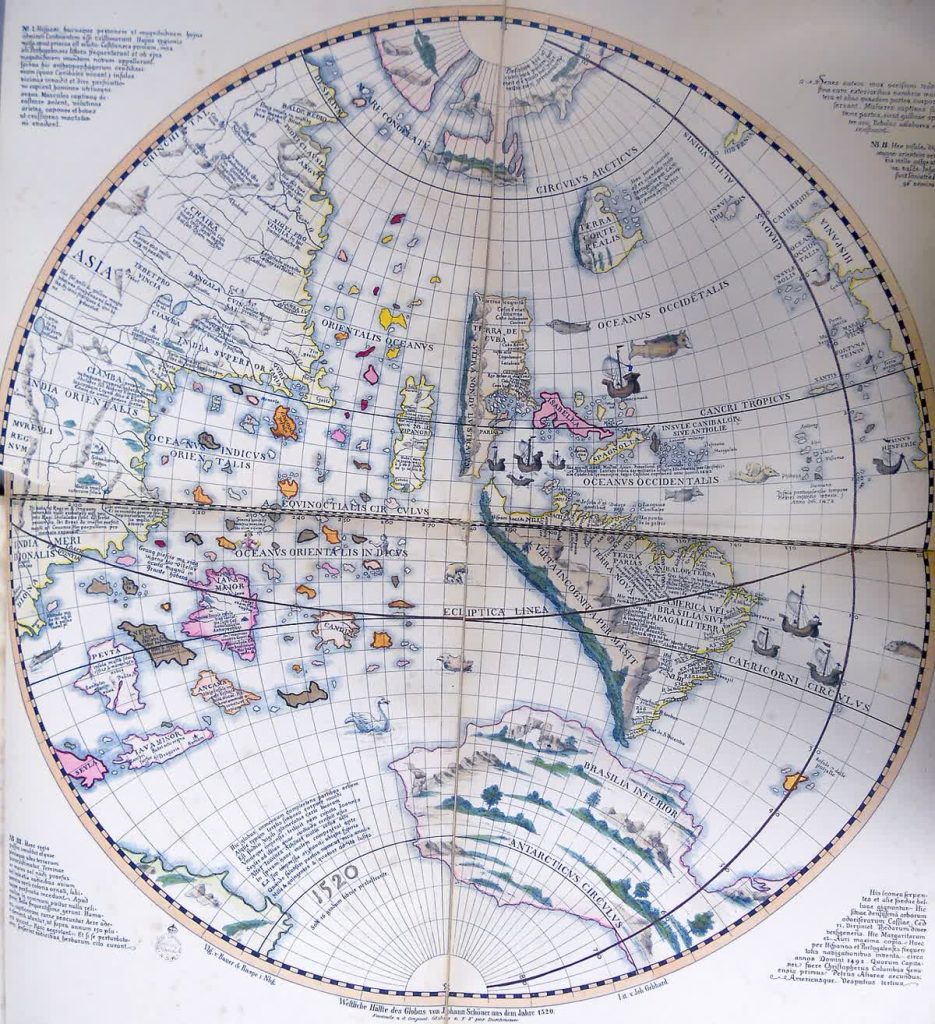
The countries of the Western Hemisphere are mainly those of North, Central and South America and the Caribbean, plus a few places in Europe, Africa and the Pacific that lie west of the prime meridian. The Western Hemisphere is the half of the Earth west of the prime meridian, which passes through Greenwich in London, and east of the 180th meridian. Below is a clear, organised list and an explanation of the tricky cases.
Key takeaways
- The Western Hemisphere is the half of the globe west of 0 degrees longitude and east of 180 degrees.
- Almost all of the Americas sit inside it, including the United States, Canada, Mexico and every South American country.
- Some European and African countries, such as Ireland, Iceland, Portugal and Senegal, lie wholly or mostly in the west.
- Countries crossed by the prime meridian, like the United Kingdom, France and Spain, are split between hemispheres.
How the Western Hemisphere is defined
Geographers split the globe using the prime meridian (0 degrees longitude) and the 180th meridian. Everything west of 0 and east of 180 is in the Western Hemisphere, while everything east of 0 and west of 180 is in the Eastern Hemisphere. This is a different split from the Northern and Southern Hemispheres, which are divided by the equator, so a country can be in the Northern and Western hemispheres at once.
Some people use a slightly different line, such as 20 degrees west and 160 degrees east, so that Europe and Africa sit together in the Eastern Hemisphere and the Americas sit together in the Western. That convention is handy for maps, but the most common technical definition uses Greenwich. You can read more about the idea on Wikipedia.
North America
All of mainland North America lies in the Western Hemisphere. The main countries are:
- Canada
- The United States (with a small technical exception, noted below)
- Mexico
Greenland, an autonomous territory of Denmark, also lies in the west. Alaska’s Aleutian Islands stretch past the 180th meridian, so a few of the westernmost islands are technically in the Eastern Hemisphere, but for everyday purposes the United States is counted as a Western Hemisphere country.
Central America
All seven Central American countries are in the Western Hemisphere:
- Belize
- Guatemala
- Honduras
- El Salvador
- Nicaragua
- Costa Rica
- Panama
The Caribbean
The Caribbean island nations are all in the Western Hemisphere. They include Cuba, Jamaica, Haiti, the Dominican Republic, The Bahamas, Barbados, Trinidad and Tobago, Grenada, Saint Lucia, Saint Vincent and the Grenadines, Dominica, Antigua and Barbuda, and Saint Kitts and Nevis. Many other Caribbean islands are territories of other countries rather than independent states.
South America
Every South American country is in the Western Hemisphere. Here is the full list of independent states.
| Region | Countries |
|---|---|
| Northern South America | Colombia, Venezuela, Guyana, Suriname |
| Andean countries | Ecuador, Peru, Bolivia, Chile |
| Southern Cone and east | Argentina, Uruguay, Paraguay, Brazil |
French Guiana, a French overseas department, is also in South America and in the Western Hemisphere.
Countries outside the Americas
Because the prime meridian runs through Europe and Africa, a number of countries there fall at least partly in the west.
Wholly or mostly west of Greenwich
- Europe: Ireland, Iceland and Portugal, plus the western parts of Spain.
- Africa: Senegal, The Gambia, Guinea-Bissau, Guinea, Sierra Leone, Liberia, Mauritania, Morocco and Cape Verde.
- Pacific: Samoa and Tonga, if the 180th meridian is used as the boundary.
Countries split by the prime meridian
The prime meridian crosses the United Kingdom, France, Spain, Algeria, Mali, Burkina Faso, Ghana and Togo. These countries have territory on both sides, so they belong partly to each hemisphere. In the UK, for example, parts of England, Wales, Scotland and Northern Ireland west of Greenwich are in the Western Hemisphere while eastern England is in the Eastern. Fiji and Kiribati are also unusual because the 180th meridian passes through or near their territory.
Why this matters
The hemisphere idea appears in school geography, trade statements, sporting competitions and political language. For example, the phrase “Western Hemisphere” is often used as shorthand for the Americas. Remember that this is a political and cultural use, not a strict geographical one. Time zones, shipping lanes and navigation all use longitude, and the Greenwich line is the reference for all of them.
If you enjoy A to Z style reference lists like this, you might also like our handy A-Z list of occupations that start with A.
Quick memory tips
- Think of the Americas as the core of the Western Hemisphere.
- Remember that Greenwich in London sets the dividing line at 0 degrees.
- Add Ireland, Iceland and Portugal for Europe.
- Add the Atlantic coast of West Africa, from Morocco down to Sierra Leone and Liberia.
- Treat the UK, France and Spain as split countries.
Common mix-ups to avoid
Many people confuse hemispheres with continents or with time zones. A few clarifications help.
- Western Hemisphere is not the same as “the West”. The West in politics and culture often includes Europe, Australia and New Zealand, while the Western Hemisphere is purely about longitude.
- Latin America and the Western Hemisphere overlap but are not identical. Latin America describes cultural and linguistic ties, while the hemisphere is geographic.
- Hemispheres overlap. The Northern, Southern, Eastern and Western Hemispheres are four halves of the globe, and every place falls into two of them, such as Canada in the Northern and Western.
- Antarctica is split. Because the continent surrounds the South Pole, it crosses both the prime meridian and the 180th meridian, so it lies in both the Eastern and Western Hemispheres.
Counting the countries
The exact number of countries in the Western Hemisphere depends on how you treat split countries, territories and the 180th meridian. If you count only independent countries wholly in the west, you get the 35 states of the Americas as a starting point, as recognised by the Organization of American States, plus the European and African examples listed above. If you include any country with territory in the west, the list grows. When a quiz or textbook gives a number, check which definition it uses.
Using the hemisphere in school and quizzes
Teachers often ask pupils to shade the Western Hemisphere on a world map. A practical way to do it is to draw the vertical line through Greenwich and shade everything to the left of it, stopping where the map edge reaches 180 degrees. On most world maps centred on the Atlantic, the whole Americas fall neatly in the shaded half. Quiz questions commonly ask which continent lies wholly in the Western Hemisphere; the answer is usually South America, with North America mostly so apart from the far Aleutian tip.
Frequently asked questions
Is the United States in the Western Hemisphere?
Yes. It is in both the Northern and Western Hemispheres, although a few Aleutian Islands in Alaska cross the 180th meridian.
Is the UK in the Western or Eastern Hemisphere?
Both. The prime meridian runs through Greenwich, so the UK is split between the two.
Is Brazil in the Western Hemisphere?
Yes. Brazil lies entirely west of the prime meridian, as do all South American countries.
Are any African countries in the Western Hemisphere?
Yes. Several West African countries, including Senegal and Sierra Leone, sit west of Greenwich, and others like Ghana and Mali are split by the line.
Is Australia in the Western Hemisphere?
No. Australia is east of the prime meridian and west of 180 degrees, so it belongs to the Eastern Hemisphere.
Conclusion
The Western Hemisphere covers the Americas and several countries in Europe, Africa and the Pacific that lie west of Greenwich. Once you remember where the line runs, the list is easy: all of North, Central and South America and the Caribbean, plus a few western edges of the Old World.
Key takeaways about countries of the western hemisphere
Here is a short summary of countries of the western hemisphere so you can find the main points quickly.
- The countries of the Western Hemisphere are mainly those of North, Central and South America and the Caribbean, plus a few places in Europe, Africa and the Pacific that lie west of the prime meridian.
- Geographers split the globe using the prime meridian (0 degrees longitude) and the 180th meridian.
- Some people use a slightly different line, such as 20 degrees west and 160 degrees east, so that Europe and Africa sit together in the Eastern Hemisphere and the Americas sit together in the Western.
- All of mainland North America lies in the Western Hemisphere.
Check official sources before acting on anything related to countries of the western hemisphere, because details can change over time.
Questions about countries of the western hemisphere are common, so it helps to compare more than one trustworthy source.
Use this page as a starting point for countries of the western hemisphere and come back to it when your situation changes.
Good decisions about countries of the western hemisphere come from checking the facts, comparing your options and taking your time.
Save this guide to countries of the western hemisphere so you can find it again whenever you need a quick reminder.
If you only remember one thing about countries of the western hemisphere, make it the practical steps covered in this guide.
Related reading:
For general background, you can look up countries of the western hemisphere on Wikipedia.