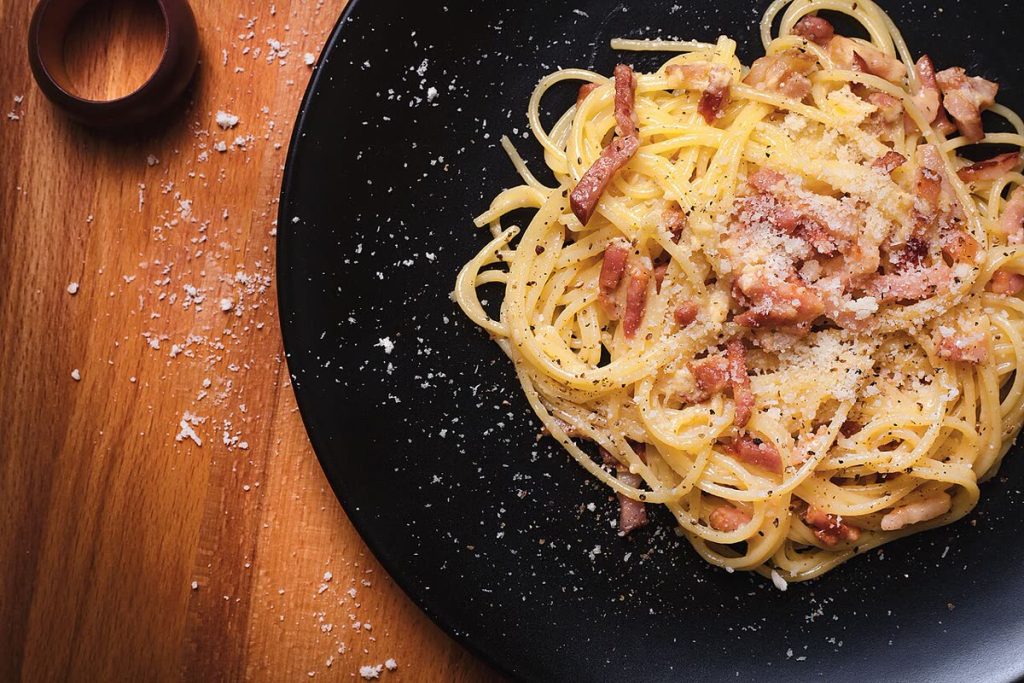
The best method for reheating carbonara is to warm it gently in a pan over low heat with a splash of water or milk, stirring constantly so the egg sauce loosens instead of scrambling. Carbonara is delicate because its creamy coating is made from eggs, cheese and pasta water, so heat and patience matter more than speed.
Key takeaways
- Use a pan on low heat with a splash of water or milk, and keep stirring.
- Avoid high heat, which turns the egg sauce into scrambled bits.
- The microwave works in short bursts at reduced power with stirring in between.
- Cool leftovers within about two hours, refrigerate, and eat within one to two days.
- Reheat until steaming hot throughout, and reheat only once.
Why reheating carbonara is tricky
Traditional carbonara has no cream. The sauce comes from egg yolks, hard cheese, black pepper and the starchy cooking water, which together cling to the pasta as a silky coating. When you first make it, the heat of the pasta cooks the eggs just enough to thicken them. Heat it a second time too fast and the proteins in the egg tighten and clump. That is why leftover carbonara so often turns grainy or dry.
The fix is to treat the sauce as something to loosen and warm, not to cook again. Moisture and low temperature are your two tools. A little liquid brings back the creamy texture, and gentle heat keeps the eggs from setting.
Storing carbonara leftovers safely
Because carbonara contains eggs and cured pork, it is worth handling carefully. Food safety bodies such as the FDA and the UK Food Standards Agency give general guidance on cooling and storing cooked food, and the basics are simple.
- Let the pasta cool for a short time, then refrigerate within about two hours of cooking.
- Use a shallow, airtight container so the food cools quickly.
- Keep it in the fridge and eat it within one to two days.
- Do not leave it on the counter overnight.
- Reheat only the portion you plan to eat, and do not reheat the same food repeatedly.
If it smells odd, looks slimy or you are unsure how long it has been out, throw it away. Pregnant people, older adults, young children and anyone with a weak immune system should be especially careful with egg dishes.
How to reheat carbonara on the stove
This is the method most cooks prefer, because it gives you the most control.
- Take it out early. Let the container sit on the counter for ten to fifteen minutes so the pasta is not fridge-cold. Do not leave it for much longer.
- Choose the right pan. A wide non-stick frying pan or a saucepan works well. A wide pan lets the pasta warm evenly.
- Add liquid. Put a tablespoon or two of water, or a little milk, in the pan over low heat.
- Add the pasta. Tip in the carbonara and break up any clumps gently with tongs or a fork.
- Stir constantly. Keep the pasta moving for a few minutes. If it looks dry, add another splash of liquid.
- Check the temperature. The pasta should be steaming hot all the way through. Take the pan off the heat as soon as it is.
- Finish. Add a little fresh black pepper and grated cheese, then serve straight away.
Water or milk?
Plain water is closest to the original dish and keeps the flavour clean. A splash of milk gives a slightly softer, creamier result and can be a little more forgiving. Pasta cooking water, if you saved some, is best of all, because its starch helps the sauce bind.
Reheating carbonara in the microwave
The microwave is quicker but riskier, because it heats unevenly and can cook the egg in hot spots. Use it only if you are careful.
- Put the pasta on a microwave-safe plate or bowl and sprinkle over a tablespoon of water or milk.
- Cover loosely with a lid or a microwave-safe cover to hold in steam.
- Set the microwave to medium or 50 percent power.
- Heat in 30-second bursts, stirring well between each one.
- Stop when the food is steaming hot throughout and the sauce looks glossy.
Do not use full power for a long stretch. That is the usual cause of rubbery, split sauce.
Other methods compared
| Method | Result | Best for | Risk |
|---|---|---|---|
| Stovetop on low heat | Creamiest, most even | Best quality | Needs attention and stirring |
| Microwave at reduced power | Good if stirred | Speed and single portions | Hot spots can scramble the egg |
| Oven in a covered dish | Even but can dry out | Larger batches | Pasta can dry or harden on top |
| Double boiler or bowl over simmering water | Very gentle | Nervous cooks | Slower, needs a bowl that fits |
Troubleshooting common problems
The sauce has scrambled
If you see small egg curds, take the pan off the heat at once and add a splash of cold water or milk. Stir vigorously. You may rescue some of the texture, although it will rarely be perfect.
The pasta is dry or stuck together
Add a little more liquid, a spoonful at a time, and keep stirring over low heat. A bit of grated cheese can help restore creaminess.
It tastes bland
Cold dulls flavour, and reheating can too. Finish with freshly ground pepper, a little grated Pecorino or Parmesan and, if you like, a few crisp pieces of freshly fried guanciale or pancetta.
Tips for making better leftovers
- Cook slightly less pasta than you think you need, so there is less to reheat.
- Store the pasta and any extra crispy pork separately when possible.
- Freezing is not recommended for egg-based sauces, because the texture usually suffers.
- If you want to plan a big pot of something that freezes well, our guide on freezing and reheating borscht shows how soups behave differently.
Frequently asked questions
Can you reheat carbonara?
Yes, if it was stored properly. Warm it gently with a little water or milk and stir constantly, and eat it within one to two days of cooking.
How do I stop carbonara scrambling when I reheat it?
Use low heat, add liquid, and keep stirring. Remove the pan from the heat as soon as the pasta is hot throughout.
Is it safe to reheat carbonara?
It is generally safe if you cool and refrigerate it promptly, reheat it once until steaming hot, and do not keep it beyond a day or two.
Can I freeze carbonara?
It is not ideal. The egg sauce tends to split and turn grainy once thawed, so it is better to cook only as much as you will eat.
Can I add cream when reheating?
You can add a tiny splash if you want a softer texture, but milk or water is closer to a traditional result and less likely to make the sauce heavy.
Conclusion
Reheating carbonara well comes down to gentle heat, a splash of liquid and constant stirring. Store it safely, warm it slowly until it is steaming hot, and you will get a creamy, enjoyable plate of leftovers rather than a pan of scrambled egg.
Key takeaways about reheating carbonara
Here is a short summary of reheating carbonara so you can find the main points quickly.
- The best method for reheating carbonara is to warm it gently in a pan over low heat with a splash of water or milk, stirring constantly so the egg sauce loosens instead of scrambling.
- The fix is to treat the sauce as something to loosen and warm, not to cook again.
- Because carbonara contains eggs and cured pork, it is worth handling carefully.
- If it smells odd, looks slimy or you are unsure how long it has been out, throw it away.
Check official sources before acting on anything related to reheating carbonara, because details can change over time.
Questions about reheating carbonara are common, so it helps to compare more than one trustworthy source.
Use this page as a starting point for reheating carbonara and come back to it when your situation changes.
Related reading:
- La Cerveza Más Fina in English: Meaning and Translation
- How to Show Paragraph Marks in Word (Windows and Mac)
For general background, you can look up reheating carbonara on Wikipedia.