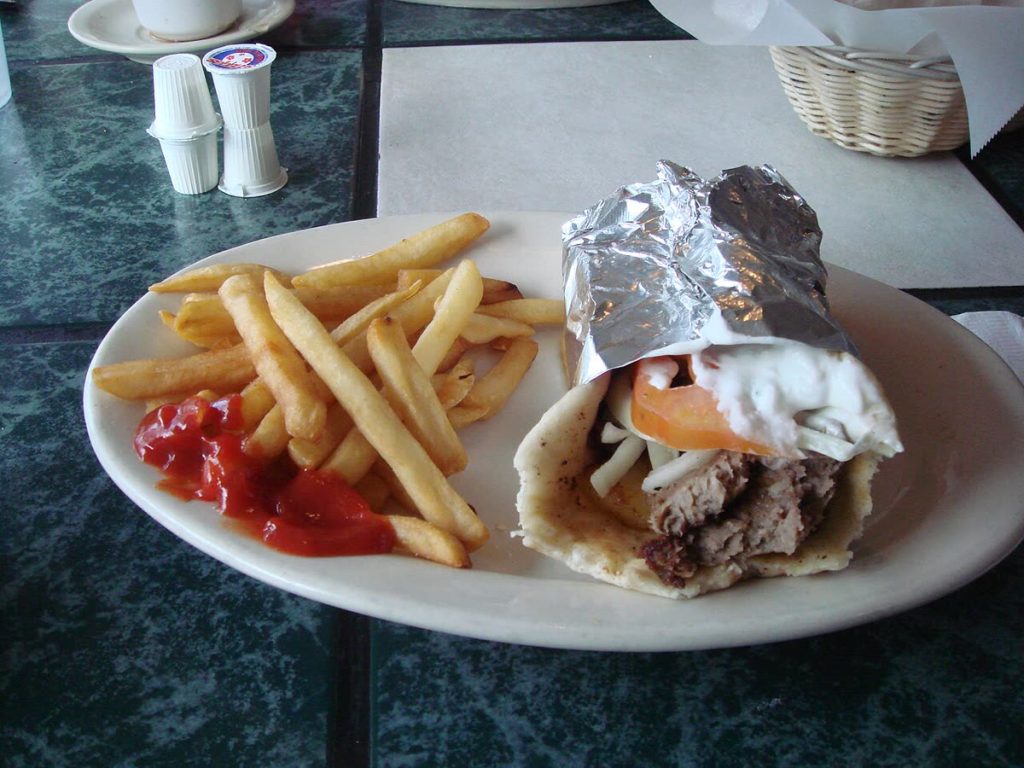
This guide on how to heat up gyro meat gathers the main facts, common questions and practical tips in one place.
The best way to heat up gyro meat is in a skillet over medium heat with a splash of water or stock, covered for a minute so steam warms it through, then uncovered so the edges can crisp. Whichever method you choose, the meat needs to reach 165°F (74°C) in the middle, the standard safe temperature for leftovers, and it should never be blasted on full power.
Key takeaways
- A covered skillet with a little liquid gives the juiciest result and brings back some of the browned edge.
- Thin slices dry out fast, so use moderate heat and short times.
- Reheat to 165°F (74°C), check with a thermometer, and only reheat the portion you plan to eat.
- Keep the pita, tzatziki, tomato and onion separate and add them cold or freshly warmed.
- Cooked gyro meat keeps in the fridge for about three to four days, or in the freezer for a few months.
Why gyro meat turns dry and chewy
Gyro meat is shaved thin from a cone or loaf of seasoned lamb, beef, pork or chicken. That shaving is what makes it so good fresh, because every slice has a little crust on it. It is also the problem when you reheat. Thin slices have a large surface area and almost no thickness to hold moisture, so water leaves them quickly and the proteins tighten into something rubbery.
Every reliable reheating method therefore does the same three things: it uses gentle or indirect heat, adds a small amount of moisture, and keeps the time short. Think of it as warming, not recooking.
Before you start: prep and safety
Take the container out of the fridge about ten minutes before heating, so the meat is not ice cold in the centre while the edges overcook. Separate the meat from any sauce, salad or bread. Soggy pita and warm tzatziki are both unpleasant, and mixing them with meat makes it harder to heat evenly.
Food safety agencies such as the USDA Food Safety and Inspection Service advise reheating leftovers to 165°F (74°C). A cheap instant-read thermometer takes the guesswork out, especially with a thick pile of slices. If the meat has been in the fridge longer than three or four days, or was left out for more than a couple of hours, throw it away rather than trying to rescue it.
Method 1: skillet (best overall)
- Heat a non-stick or cast-iron pan over medium heat and add a teaspoon of olive oil.
- Spread the slices in a loose layer. Do not pile them up, or the bottom will fry while the top stays cold.
- Add one or two tablespoons of water, chicken stock or the juices from the container.
- Cover with a lid or a baking tray for about a minute so the steam warms the meat.
- Take the lid off, let the liquid cook away, and leave the slices to sizzle for a minute or two until the edges colour.
- Check that the thickest piece is steaming hot, then serve straight away.
This is the nearest you will get to the griddled finish at a good gyro shop, and it suits lamb, beef and chicken versions alike.
Method 2: oven
The oven is the better choice when you have a lot of meat. Heat it to around 325°F (160°C), spread the slices on a baking tray lined with foil, sprinkle on a spoonful of water or stock, and cover the tray tightly with foil. Warm for roughly ten minutes, then check the temperature. For crisp edges, remove the foil for the final two or three minutes. A lower, covered bake is much kinder to thin meat than a hot, open one.
Method 3: microwave (when you are in a hurry)
The microwave works if you respect it. Arrange the slices on a plate in a single layer, with the thicker bits towards the outside. Sprinkle with a teaspoon or two of water and cover loosely with a damp paper towel or a microwave-safe lid. Heat at 50 percent power in 30-second bursts, stirring or turning between each one, until hot throughout. Because microwaves heat unevenly, the thermometer check matters more here than with any other method. The meat will be softer and less browned than from a pan, so a quick sear afterwards is a nice finishing touch.
Method 4: air fryer
An air fryer can bring back crisp edges, but its fast-moving hot air also dries meat quickly. Set it to about 300°F (150°C), spread the slices in the basket without overlapping, and heat for three to five minutes, shaking once. Brushing the meat lightly with oil or a little stock first helps. If your slices are very thin, check after two minutes. The same approach works for other leftovers; the idea is covered in the post on reheating ribs in an air fryer if you want more detail on the gadget.
Comparing the methods
| Method | Time | Texture | Best for |
|---|---|---|---|
| Skillet | About 3-4 minutes | Juicy inside, crisp edges | One or two portions, best flavour |
| Oven, covered | About 10-12 minutes | Tender, lightly browned if uncovered at the end | Larger quantities |
| Microwave | 1-2 minutes | Soft, no browning | Speed, workplace lunches |
| Air fryer | 3-5 minutes | Crisp, can dry out | Slightly fatty lamb or beef |
Reheating other parts of the meal
Warm the pita briefly in a dry pan, wrapped in foil in the oven, or for ten seconds in the microwave under a damp paper towel. Keep tzatziki, tomato, onion and lettuce cold, which is how they are meant to be eaten. If you stored fries or roast vegetables with the gyro, give them a few minutes in the oven or air fryer separately. Chicken has different needs from lamb or beef, and the guide to reheat temperatures for chicken is a handy companion if your gyro was the chicken variety.
Storing leftovers so they reheat well
Cool the meat promptly and put it in an airtight container within two hours of cooking. Store it separately from sauces. It will keep for about three to four days in the fridge. For longer storage, freeze flat in a zip bag with the air pressed out, where it holds its quality for a few months. Thaw overnight in the fridge before reheating, not on the counter. Flat packs also thaw and heat more evenly than a solid lump. Reheat only what you will eat, since repeatedly warming and cooling meat reduces both safety and quality.
Frequently asked questions
Can you reheat gyro meat in the microwave without it going tough?
Yes, if you use reduced power, add a little water, cover it and heat in short bursts. Full power for a long stretch is what makes it rubbery.
How long does leftover gyro meat last in the fridge?
Around three to four days in a sealed container, provided it was refrigerated within two hours of cooking. If you are unsure, discard it.
Can I reheat gyro meat more than once?
It is best not to. Each cycle of cooling and warming gives bacteria another chance and further dries the meat. Divide leftovers into portions and heat only what you need.
Can I freeze cooked gyro meat?
Yes. Freeze it flat in a sealed bag and use it within a few months for the best flavour. Thaw in the fridge, then reheat in a skillet or covered in the oven.
Why does my reheated gyro meat taste different?
Fat and juices set as the meat cools, and the warmed-over flavour comes from oxidation of fats. A splash of stock, a squeeze of lemon and fresh herbs or sauce at the end bring back brightness.
Conclusion
Treat leftover gyro meat gently: a hot-but-not-fierce skillet, a spoonful of liquid, a short covered steam, and a quick uncovered sizzle will give you a result that is close to fresh. Check the temperature, keep the toppings cold, and your second serving will be nearly as good as the first.
Key takeaways about how to heat up gyro meat
Here is a short summary of how to heat up gyro meat so you can find the main points quickly.
- The best way to heat up gyro meat is in a skillet over medium heat with a splash of water or stock, covered for a minute so steam warms it through, then uncovered so the edges can crisp.
- Gyro meat is shaved thin from a cone or loaf of seasoned lamb, beef, pork or chicken.
- Every reliable reheating method therefore does the same three things: it uses gentle or indirect heat, adds a small amount of moisture, and keeps the time short.
- Take the container out of the fridge about ten minutes before heating, so the meat is not ice cold in the centre while the edges overcook.
Use this page as a starting point for how to heat up gyro meat and come back to it when your situation changes.
Good decisions about how to heat up gyro meat come from checking the facts, comparing your options and taking your time.
Save this guide to how to heat up gyro meat so you can find it again whenever you need a quick reminder.
If you only remember one thing about how to heat up gyro meat, make it the practical steps covered in this guide.
Check official sources before acting on anything related to how to heat up gyro meat, because details can change over time.
Questions about how to heat up gyro meat are common, so it helps to compare more than one trustworthy source.
Related reading:
- USCG Rules of the Road Exam: What It Covers and How to Pass
- Should Bitters Be Refrigerated? Storage Tips for Cocktail Bitters
For general background, you can look up how to heat up gyro meat on Wikipedia.