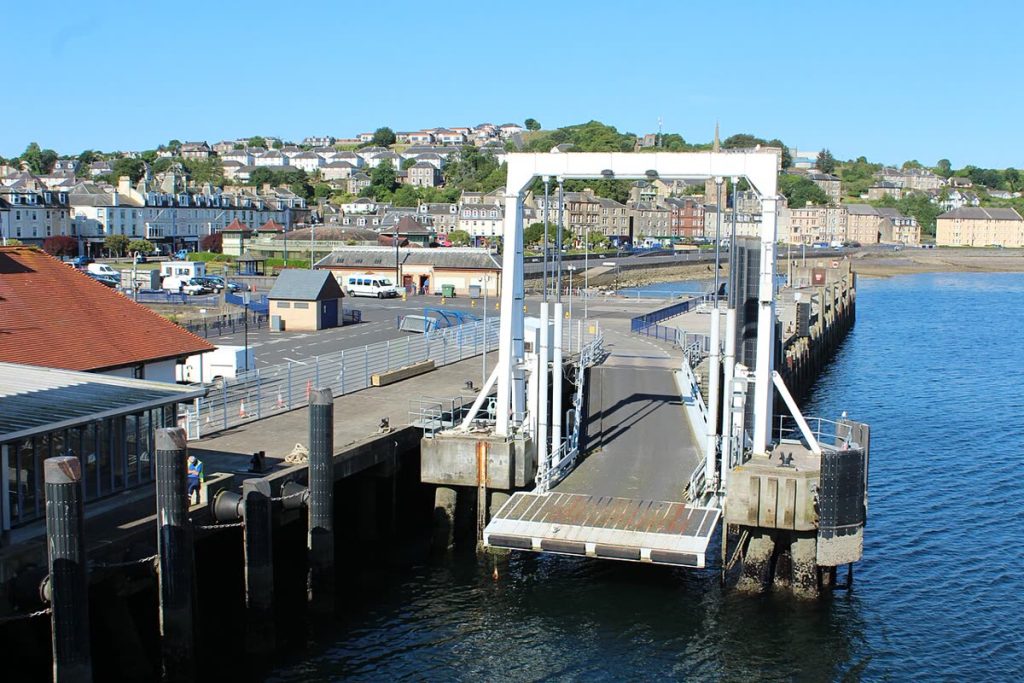
The Rothesay ferry terminal is the Isle of Bute end of the CalMac crossing from Wemyss Bay on the Scottish mainland, and it is the gateway to the island’s main town. If you are planning a trip, the essentials are to check the live timetable, decide whether you are travelling on foot or with a vehicle, and allow enough time to connect with trains or buses at either end.
Key takeaways
- CalMac runs the Wemyss Bay to Rothesay service across the Firth of Clyde; confirm current sailings on the official site.
- Wemyss Bay station sits beside the ferry pier, which makes rail-and-sail journeys from the Glasgow area straightforward.
- Vehicle spaces can fill up at busy times, so booking ahead is sensible; check CalMac’s current booking rules.
- Weather and operational problems can disrupt sailings, so sign up for service alerts and keep your plans flexible.
About the Wemyss Bay to Rothesay route
Bute is an island in the Firth of Clyde, and Rothesay is its main town. Caledonian MacBrayne, better known as CalMac, operates the ferry link between Wemyss Bay in Inverclyde and Rothesay. The crossing is short, commonly described as around half an hour, but vessel types, sailing times and frequency change with the season and over the years, so treat any figure as a guide only. The authoritative source is CalMac’s official website, where you can see timetables, service updates and booking options.
For background on the island itself, there are general overviews of Rothesay and of Wemyss Bay that give history and context.
Getting to Wemyss Bay
By train
Wemyss Bay station is the terminus of a railway line from the Glasgow area, and the station buildings lead directly towards the pier. That is why so many foot passengers use the train: you step off, follow the signs and board. Check the train times together with the ferry times so there is enough margin if a train is late. National Rail Enquiries and the train operator’s site show current services, and engineering works on weekends can change things.
By car
If you are driving, follow the road signs for the ferry and allow time for parking, or for joining the vehicle queue if you are taking the car across. Car park rules, charges and capacity can change, so check CalMac’s guidance and the signage on arrival. Do not assume there will always be a space at peak times, such as summer weekends and school holidays.
By bus or coach
Local buses and some longer-distance services link in the area. Use Traveline Scotland or the operator’s timetable for the day you travel, because routes are adjusted from time to time.
Tickets: foot passengers, cars and bikes
| Travelling as | What to think about | Where to check |
|---|---|---|
| Foot passenger | Tickets are usually available online or at the terminal; keep your confirmation handy | CalMac website or app |
| Car or motorhome | Booking is often advisable in busy periods; arrive by the check-in time given | CalMac booking pages |
| Cyclist | Bikes are normally carried, but confirm current rules and any fee | CalMac travel information |
| Group or coach party | Contact the operator in advance for arrangements | CalMac customer service |
I have deliberately not listed fares, as these change. The booking pages will always show the up-to-date price for your date, vehicle and passenger numbers.
How to check sailing times and disruptions
- Open the CalMac website or app and choose the Wemyss Bay to Rothesay route.
- Select your date and look at the timetable for that day. Note that weekend and holiday timetables can differ from weekdays.
- Check the service status page on the morning you travel; sailings may be amended because of weather, tides, vessel availability or technical issues.
- Sign up for text or email alerts if the operator offers them.
- If your ferry is cancelled, follow the operator’s guidance on rebooking or refunds, and keep any receipts.
The Firth of Clyde can be windy, and ferries sometimes cancel or reroute in strong gusts. If you have a fixed commitment on the other side, such as a flight, wedding or medical appointment, travel the day before or leave a generous buffer.
At the Rothesay end
The Rothesay pier is close to the town centre, so many visitors can walk to the seafront, shops and cafes on arrival. Buses serve other parts of the island, and taxis usually wait around the terminal at busy times, though you can book one ahead if you have heavy luggage. If you are staying outside the town, ask your accommodation about the best way to reach them from the pier.
Bute is popular for walking, cycling, seaside breaks and its Victorian heritage. If you plan to explore, look at bus timetables or consider bringing a bike on the ferry. Planning ahead matters more on an island, since local services can be less frequent than in a city.
Tips for a smoother crossing
- Arrive at the terminal comfortably ahead of departure, especially with a vehicle.
- Keep your booking reference on your phone and as a screenshot in case of poor signal.
- Use the toilets and cafe facilities if you need them before boarding, and check what is available on board.
- Pack a waterproof layer; the deck can be windy even on a bright day.
- If you have mobility needs, contact CalMac in advance to arrange assistance and ask about accessible parking and boarding.
- Take photographs if you have a vehicle with existing damage, as a precaution.
Planning other trips around the UK? Our guide to car hire on the Isle of Wight covers another island visit where a little preparation makes the trip easier.
Frequently asked questions
Where is the Rothesay ferry terminal?
It is at Rothesay, the main town on the Isle of Bute, close to the town centre and seafront.
How long is the ferry from Wemyss Bay to Rothesay?
The crossing is short and is commonly described as roughly half an hour, but check the current timetable on the CalMac website, because sailings can vary.
Do I need to book the Rothesay ferry in advance?
Foot passengers often can buy tickets close to departure, but vehicles are another matter, especially in summer and on holidays. Check CalMac’s booking guidance for your date.
Can I get to the ferry by train?
Yes. Trains run to Wemyss Bay station from the Glasgow area, and the station connects to the pier. Check train and ferry times together.
What happens if the ferry is cancelled?
Follow the instructions from CalMac. Usually you can rebook onto another sailing or ask about a refund; check the current policy on the official site.
Conclusion
A trip through the Rothesay ferry terminal is a straightforward rail-and-sail journey for most people, as long as you check the timetable, book vehicles in good time and keep an eye on service alerts. Build in a little flexibility, and Bute is an easy and rewarding day out or longer stay.
Key takeaways about rothesay ferry terminal
Here is a short summary of rothesay ferry terminal so you can find the main points quickly.
- The Rothesay ferry terminal is the Isle of Bute end of the CalMac crossing from Wemyss Bay on the Scottish mainland, and it is the gateway to the island's main town.
- Bute is an island in the Firth of Clyde, and Rothesay is its main town.
- For background on the island itself, there are general overviews of Rothesay and of Wemyss Bay that give history and context.
- Wemyss Bay station is the terminus of a railway line from the Glasgow area, and the station buildings lead directly towards the pier.
Use this page as a starting point for rothesay ferry terminal and come back to it when your situation changes.
Good decisions about rothesay ferry terminal come from checking the facts, comparing your options and taking your time.
Save this guide to rothesay ferry terminal so you can find it again whenever you need a quick reminder.
If you only remember one thing about rothesay ferry terminal, make it the practical steps covered in this guide.
Related reading:
For general background, you can look up rothesay ferry terminal on Wikipedia.