How long does kimchi last in the fridge after opening? Commonly, an opened jar stays safe and enjoyable for several months if it is kept cold and the cabbage stays under its brine, although the flavour keeps changing the whole time. Kimchi is fermented, so it resists spoilage better than fresh vegetables, but its quality declines gradually, and the label on your jar is your best guide.
Key takeaways
- Opened kimchi typically stays good for months in the fridge, but it becomes steadily more sour and softer.
- Keep it cold, sealed and submerged in brine, and use clean utensils every time.
- Fizzing, tang and cloudy liquid are usually normal; fuzzy mould, slime or a rotten smell are not.
- Very sour kimchi is ideal for cooking in stews, pancakes and fried rice.
What happens to kimchi as it ages
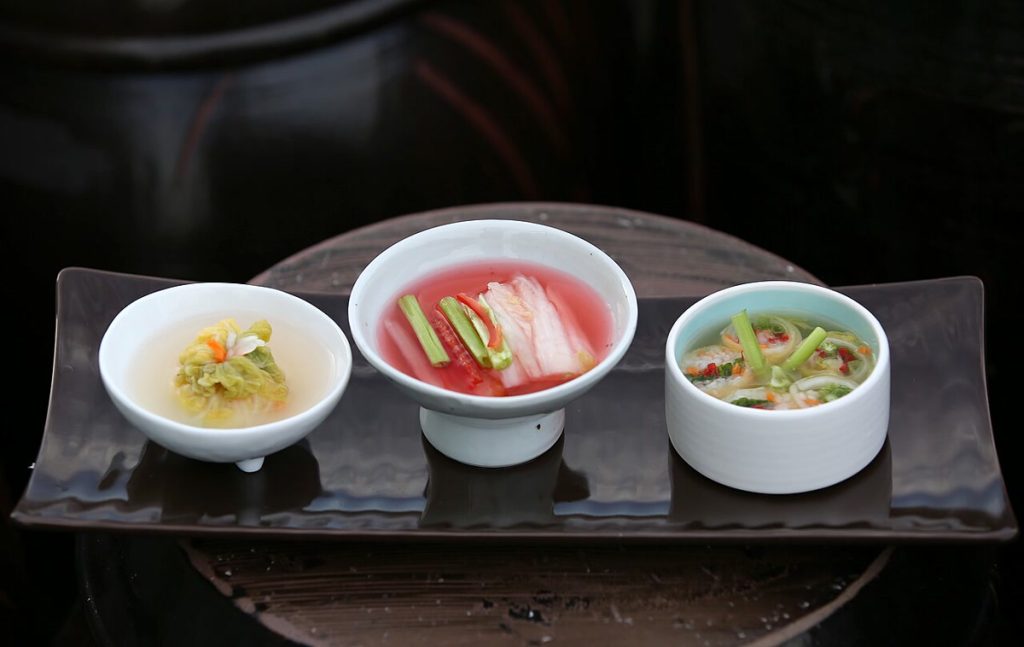
Kimchi is made by fermenting vegetables, mainly napa cabbage, with salt, chilli, garlic, ginger and other seasonings. Friendly lactic acid bacteria turn sugars into lactic acid, which gives kimchi its tang and acts as a natural preservative. In the fridge, fermentation does not stop but slows down significantly. Over a few weeks the flavour gets sharper and more sour, the crunch softens and the colour may deepen.
That change is not spoilage. Many people actively prefer well-aged kimchi, sometimes called mugeunji in Korean cooking when it has matured for a long time, because the deep sourness works so well in cooked dishes. You can learn more about the food in general on Wikipedia’s kimchi article.
A rough timeline for an opened jar
These timings are a general guide, not a guarantee. Always check the manufacturer’s advice on the label, since recipes, salt levels and packaging differ.
| Time after opening | What to expect |
|---|---|
| First week or two | Fresh, crunchy, mildly tangy; best for eating as a side dish |
| Weeks 3 to 6 | More sour, softer texture; good for eating and cooking |
| Months 2 to 3 | Strongly sour and soft; best used in stews, fried rice and pancakes |
| Beyond that | May still be safe, but check carefully; quality and texture often decline |
Homemade kimchi can last just as long as shop-bought kimchi, though with variations in salt content and preparation. Shop-bought kimchi that has been pasteurised may behave differently from live, unpasteurised kimchi and may be less likely to keep fermenting, so follow the label.
How to store kimchi so it lasts
- Keep it cold. Return the jar to the fridge straight after serving. A steady temperature of about 5C or below is ideal for slow fermentation.
- Keep it submerged. Press the vegetables down with a clean spoon so they sit below the brine. Exposed pieces can discolour and grow mould.
- Use clean utensils. Never double-dip with a used fork or chopsticks that have touched other food.
- Seal tightly. A good lid limits odour and surface contamination. Leave some headspace in a homemade jar, because gas builds up.
- Store at the back. The door is warmer and fluctuates, so choose a shelf towards the back.
- Avoid cross-contamination. Place the jar where it will not drip into or touch raw meat or other raw foods.
If the smell bothers you, double-bag the jar or keep it in an airtight container. Some people store kimchi in a dedicated fridge compartment for the same reason.
Signs your kimchi has gone off
Because kimchi is naturally tangy and sometimes fizzy, new users can be unsure what is normal. Here is a guide.
Normal
- A sour, pungent, garlicky smell.
- Bubbling or a slight fizz when you open the jar.
- A cloudy liquid with chilli sediment.
- A white film of harmless yeast on the surface, which some people confuse with mould; if in doubt, see the next list.
- Softer, more sour vegetables.
Discard if you see
- Fuzzy, raised, blue, green, black or pink mould.
- Slimy, stringy texture that is not just soft cabbage.
- A rotten, putrid or chemical smell rather than a sour one.
- Signs the lid has been bulging in a non-fermenting, pasteurised product, or a broken seal.
If you are unsure, play it safe and throw it out. Do not just scrape mould off the top, because spores and toxins can spread below the surface. For general advice on food safety and leftovers in the UK, see the Food Standards Agency.
What to do with very sour kimchi
Instead of throwing away old kimchi, cook with it. Heat transforms the sourness into rich, savoury depth. Classic uses include:
- Kimchi jjigae: a bubbling stew with tofu, pork or tinned fish.
- Kimchi fried rice: frying brings out the sweetness and softens the sharpness.
- Kimchi pancakes: chopped kimchi in a simple batter, crisped in a hot pan.
- Toasties and omelettes: a spoonful adds punch to cheese and eggs.
When you cook fried rice, getting the grains right matters. Our guide to the basmati rice to water ratio is a handy reference, though short-grain rice is more traditional for Korean dishes. For an alternative evening meal, try our easy Indian lentil curry recipe.
Can you freeze kimchi?
Yes, though freezing changes the texture, making the cabbage softer once thawed. It is best suited to kimchi that you plan to cook with. Freeze in portions in airtight containers, leaving a little space for expansion, and thaw in the fridge. Freezing mostly pauses fermentation, so it is a handy way to hold on to a big batch.
Frequently asked questions
How long does kimchi last in the fridge after opening if it is homemade?
Often several months, much like shop-bought jars, provided it stays cold and submerged in brine. Recipes with less salt may change faster, so go by smell, appearance and taste.
Is fizzy kimchi safe?
Usually yes. Fizz comes from carbon dioxide produced during fermentation. Open the jar carefully, especially if it has been in the fridge a while, as pressure can build up.
Why does my kimchi taste so sour?
Fermentation continues in the fridge, producing more lactic acid over time. Sour kimchi is usually still safe and works very well in cooked dishes.
Does the best before date still matter?
The date is a quality guide for unopened jars. Once opened, follow any instructions on the label and use your senses, but never eat food with visible mould.
Can I leave kimchi out on the table?
For a meal, yes. But do not leave it out for hours. Put the jar back in the fridge promptly to keep fermentation slow and quality high.
Conclusion
So, how long does kimchi last in the fridge after opening? Commonly several months, as long as you keep it cold, sealed and under its brine. Expect the flavour to grow sharper, enjoy it fresh at first and cook with it as it matures, and discard it only if you see mould, slime or a truly rotten smell.
Key takeaways about how long does kimchi last in the fridge after opening
Here is a short summary of how long does kimchi last in the fridge after opening so you can find the main points quickly.
- How long does kimchi last in the fridge after opening?
- Kimchi is made by fermenting vegetables, mainly napa cabbage, with salt, chilli, garlic, ginger and other seasonings.
- These timings are a general guide, not a guarantee.
- Homemade kimchi can last just as long as shop-bought kimchi, though with variations in salt content and preparation.
Use this page as a starting point for how long does kimchi last in the fridge after opening and come back to it when your situation changes.
Good decisions about how long does kimchi last in the fridge after opening come from checking the facts, comparing your options and taking your time.
Save this guide to how long does kimchi last in the fridge after opening so you can find it again whenever you need a quick reminder.
If you only remember one thing about how long does kimchi last in the fridge after opening, make it the practical steps covered in this guide.
Related reading:
- JSO Crime Map: How to Check Crime in Jacksonville, FL
- Convex Lens Examples: Everyday Uses and How They Work
For general background, you can look up how long does kimchi last in the fridge after opening on Wikipedia.