Pepperoni made from what animal? Traditionally, a mix of pork and beef. It is an American-style cured sausage, related to Italian salami, flavoured with paprika and chilli pepper. Some brands use only pork, only beef, or poultry such as turkey or chicken, so the ingredient list on the pack is the only sure guide for any particular product.
Key takeaways
- Classic pepperoni combines pork and beef, seasoned with paprika, chilli, garlic and other spices.
- All-beef, turkey, chicken and plant-based pepperoni all exist.
- If you avoid certain meats for health or religious reasons, check the label or certification.
- In Italy, “peperoni” means bell peppers, not the sausage.
The usual recipe
Commercial pepperoni commonly combines ground pork and ground beef with salt, spices and curing agents. The red colour and gentle heat come from paprika and chilli pepper. Garlic, fennel or anise may also appear, depending on the brand. Pork fat is typically included, which contributes to the flavour and the way the slices render on a hot pizza.
The meat is mixed, stuffed into casings, then fermented, dried and sometimes smoked. The drying process is why pepperoni keeps well and slices into thin, firm rounds. For general background, see the Wikipedia entry on pepperoni.
How pepperoni is made
- Grinding and mixing. Lean meat and fat are ground and combined with salt, spices and curing ingredients.
- Stuffing. The mixture goes into casings, which may be natural or manufactured.
- Fermenting. Starter cultures encourage lactic acid bacteria to develop, which gives tang and helps preserve the sausage.
- Drying. The sausages hang in controlled conditions until they lose enough moisture to be shelf-stable or firm.
- Slicing and packing. Finished sticks are sliced and packed, or sold whole.
Variations you will see
| Type | Main meat | Who it suits |
|---|---|---|
| Traditional | Pork and beef | Most pizza and sandwich uses |
| All beef | Beef only | People who avoid pork (check certification) |
| Turkey or chicken | Poultry | Those wanting a lower-fat option or avoiding red meat |
| Plant-based | Soy, wheat protein or similar | Vegetarians and vegans |
Halal and kosher versions exist, but only products that carry proper certification should be trusted for religious dietary needs. A label saying “beef” alone does not guarantee that the meat was slaughtered to a particular religious standard.
Why it is different from Italian salami
In Italy, “peperoni” refers to bell peppers, not sausage, so asking for pepperoni on a pizza there may get you a vegetable topping. The sausage called pepperoni developed in Italian-American communities in the United States. It tends to be softer, spicier and more finely ground than many traditional Italian salamis, which are often coarser and milder. In the UK, supermarkets sell both pepperoni slices and a range of continental salamis, and the labelling usually makes the difference clear.
Why it curls and crisps on pizza
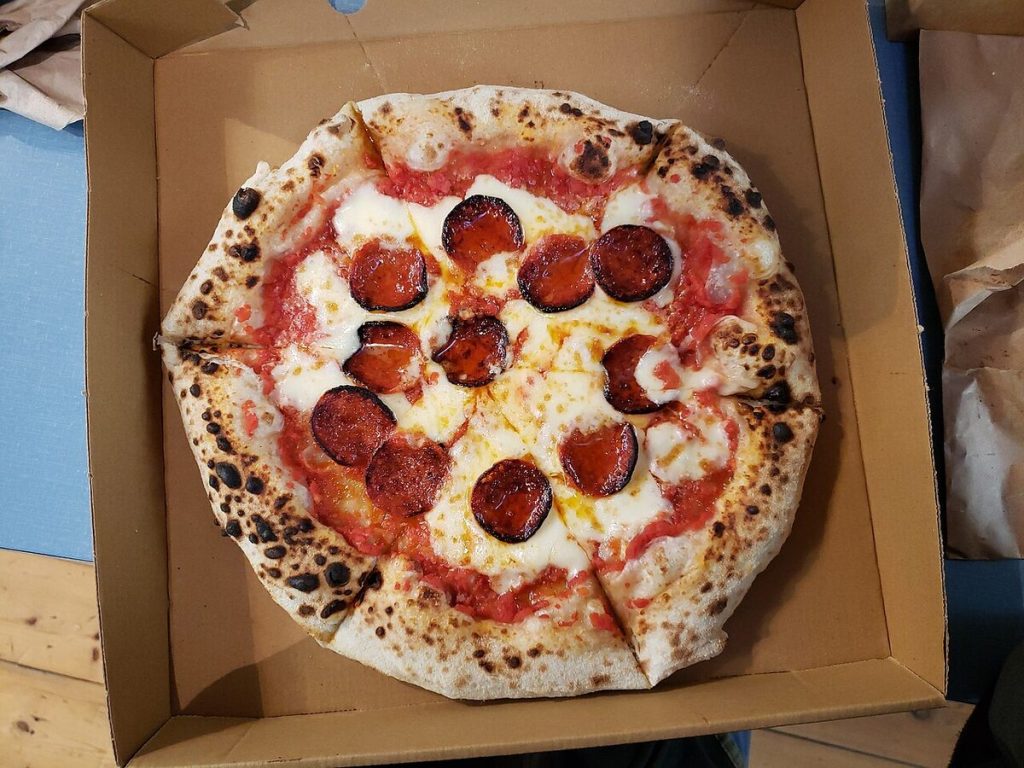
Many people notice that slices cup and crisp in the oven. This happens when the outer layer and casing shrink faster than the interior as it heats, forming a small bowl that collects rendered fat. Some pepperoni is made with a natural casing, which tends to curl more. Thicker slices stay softer, whereas thin ones crisp at the edges.
Why the pork and beef blend works
The two meats complement each other. Beef gives a deeper, meatier flavour and a firm bite, while pork supplies fat, which carries the spices and keeps the sausage from drying out into something tough. Without enough fat the slices would be dry and crumbly, and the characteristic orange-red oil that pools on a hot pizza would not appear. Makers of leaner turkey or chicken pepperoni therefore have to adjust the recipe, often adding other ingredients to keep moisture and flavour. This is why poultry versions can taste noticeably different, even when the seasoning list looks similar. If you are comparing brands, tasting a few is the best test, and the nutrition panel will show how much fat each one contains.
Checking the label
If you have dietary or religious reasons to avoid certain meats, read the ingredient list closely. Terms like pork, beef, turkey or chicken should appear, and allergens must be highlighted in many countries. Restaurants often buy pepperoni from different suppliers, so ask staff directly which one they use if it matters to you.
- Look for the word “pork” or “pork fat” in the ingredients.
- Look for halal or kosher certification marks where needed.
- Check for added ingredients such as milk powder or gluten, which can appear in some processed meats.
- For vegetarians, look for a clear “vegetarian” or “vegan” label from a trusted scheme.
Is pepperoni cooked?
Pepperoni is a cured, fermented and dried sausage, and many packs are sold as ready to eat. That does not mean every product is the same, so follow the storage and cooking directions on the pack. Once opened, keep it in the fridge and use it within the time printed on the packaging. On pizza, pepperoni is heated through along with the rest of the topping. People who are pregnant or have weakened immune systems should follow official food safety advice about cured meats, which you can find on the NHS website.
Cooking and storing tips
- Add pepperoni near the end of cooking if you prefer chewier slices, or from the start for crisp edges.
- Blot extra grease with kitchen paper if it pools.
- Keep unopened sticks cool and follow the date guidance on the pack.
- Freeze sliced pepperoni in small portions if you rarely use it.
If you enjoy kitchen basics, you may like our explanations of what bouillon is made of and what rice pilaf is, and a look at the po’ boy chicken sandwich is a good follow-up.
Frequently asked questions
Is pepperoni always pork?
No. Traditional pepperoni usually contains pork, but you can find all-beef, turkey, chicken and plant-based versions. Always read the pack.
Is pepperoni halal or kosher?
Standard pepperoni containing pork is neither. Certified halal or kosher versions made with beef or poultry exist, and you should look for recognised certification.
Why is pepperoni red?
The colour comes largely from paprika and chilli pepper, along with the curing process that fixes the meat’s pink-red tone.
Is pepperoni healthy?
It is high in salt and fat, so it is best enjoyed in moderation as part of a balanced diet. Check the nutrition label for specific figures.
Is pepperoni the same as salami?
They are close relatives. Pepperoni is a type of American salami-style sausage, usually spicier and softer than many Italian salamis.
Conclusion
So, pepperoni made from what animal? Usually pork and beef, with turkey, chicken and plant-based alternatives available if you prefer. When in doubt, the label and the manufacturer’s certification tell you what you need to know.
Key takeaways about pepperoni made from what animal
Here is a short summary of pepperoni made from what animal so you can find the main points quickly.
- Commercial pepperoni commonly combines ground pork and ground beef with salt, spices and curing agents.
- The meat is mixed, stuffed into casings, then fermented, dried and sometimes smoked.
- Halal and kosher versions exist, but only products that carry proper certification should be trusted for religious dietary needs.
- In Italy, "peperoni" refers to bell peppers, not sausage, so asking for pepperoni on a pizza there may get you a vegetable topping.
Questions about pepperoni made from what animal are common, so it helps to compare more than one trustworthy source.
Use this page as a starting point for pepperoni made from what animal and come back to it when your situation changes.
Good decisions about pepperoni made from what animal come from checking the facts, comparing your options and taking your time.
Save this guide to pepperoni made from what animal so you can find it again whenever you need a quick reminder.
If you only remember one thing about pepperoni made from what animal, make it the practical steps covered in this guide.
Check official sources before acting on anything related to pepperoni made from what animal, because details can change over time.
Related reading:
- Perbedaan Ala Carte dan Set Menu: Mana yang Lebih Cocok?
- How Many Neutrons Does Na Have? Sodium Explained
For general background, you can look up pepperoni made from what animal on Wikipedia.