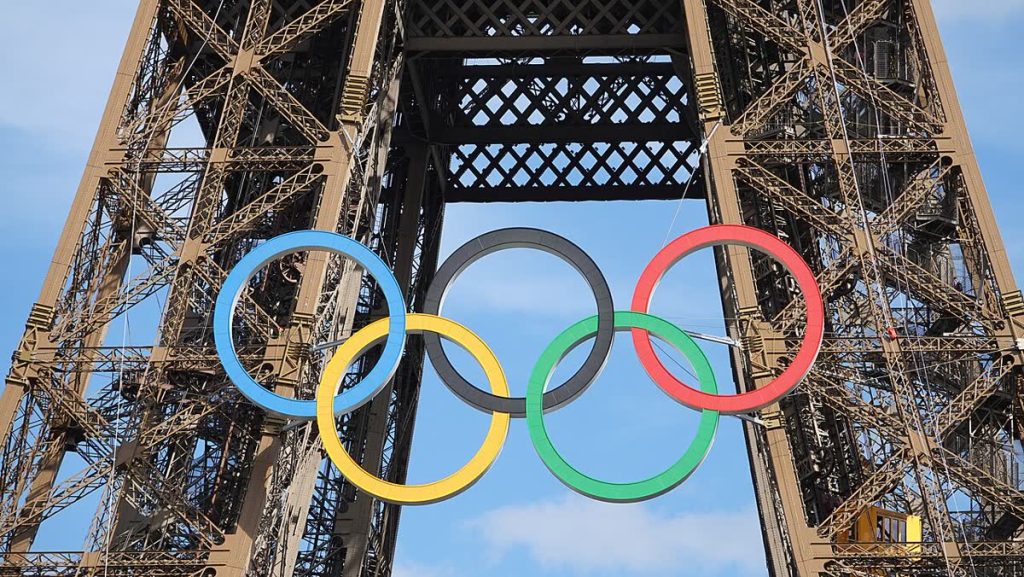
The Olympic color rings are blue, yellow, black, green and red, set on a white background. The five interlocking rings sit in two rows, with blue, black and red on top and yellow and green below, and together they form one of the most recognised symbols in the world.
Key takeaways
- The rings are blue, yellow, black, green and red, on a white field.
- The top row is blue, black, red; the bottom row is yellow and green.
- The five rings stand for the five inhabited continents joined by sport, according to the Olympic movement.
- The colours were chosen so every national flag of the time contained at least one of them, including white.
The Olympic color rings in order
Reading from left to right, the top row shows blue, black and red. The lower row shows yellow on the left and green on the right, tucked between the upper rings. The rings are linked together, and the white background is considered part of the design.
| Position | Ring colour |
|---|---|
| Top left | Blue |
| Top centre | Black |
| Top right | Red |
| Bottom left | Yellow |
| Bottom right | Green |
What do the Olympic rings mean?
The Olympic movement describes the five rings as representing the five inhabited continents of the world: Africa, the Americas, Asia, Europe and Oceania. The interlocking shows the meeting of athletes from around the globe at the Games. The official explanation is that the rings and colours together represent universality, so that any flag in the world could be drawn from them.
Does each colour stand for a continent?
This is a very common belief, but it is not the official position. The Olympic movement states that the rings represent the continents together, and that no specific colour is assigned to a specific continent. Popular charts that match, say, red to the Americas are unofficial and should be treated as a memory aid at best.
History of the symbol
The design is credited to Pierre de Coubertin, the French educator who founded the modern Olympic Games and the International Olympic Committee. He proposed the rings in 1913 as a symbol for the movement, and the emblem first appeared at the Games in Antwerp in 1920. Since then it has appeared on flags, medals, torches and broadcasts at every Olympics.
Coubertin explained that the six colours, including the white background, were chosen because every national flag then in use included at least one of them. That was a practical statement of unity rather than a design rule about continents. You can read a wider history of the emblem on Wikipedia’s Olympic symbols page, and the official site of the movement is at olympics.com.
Rules for using the rings
The rings are a protected emblem owned by the International Olympic Committee. They cannot be used for commercial purposes without permission, and the committee regularly protects the symbol and the Olympic name. Here is a short guide to what is usually allowed.
- The full-colour version on white is the standard form.
- A single-colour version is allowed for certain uses, such as on dark backgrounds, when the full colour version would not work.
- The rings must keep their proportions and interlock pattern.
- Commercial and promotional use needs authorisation from the Olympic authorities.
If you want to reference the rings in a school project or a news story, ask your teacher or editor about the rules before using the official artwork.
How to draw the Olympic rings
- Draw three circles of equal size in a row on the top line: blue, black, red. Leave a small gap between each pair so the rings can overlap later.
- Draw two more circles of the same size below, one beneath the gap between blue and black, and one beneath the gap between black and red.
- Colour the lower-left ring yellow and the lower-right ring green.
- Make the rings interlock by drawing each ring so it passes over one neighbour and under the next.
- Keep the background white.
Fun facts and common mistakes
- Some people mix up the order and place black first. The correct top order is blue, black, red.
- The yellow ring is lower left, not upper.
- The Paralympic movement uses its own emblem, known as the Agitos, rather than the rings.
- The rings feature on the Olympic flag, which is white with the five rings in the centre.
If you enjoy digging into the meaning behind famous names and symbols, you may like our short explainer on what PF Chang stands for.
The rings across the Olympic Games
The rings appear in many forms, from the huge illuminated rings at opening ceremonies to the small pins traded by fans. Host cities often design their own look and feel for each edition, but the rings themselves are kept unchanged. This consistency is what makes the symbol instantly recognisable on television, on medals and on the flag that flies at every venue.
The Olympic flag, with the five rings on a white field, was first flown in 1920 at the Antwerp Games, and it is handed from one host city mayor to the next at the closing ceremony. In the opening ceremony the flag is carried in and raised alongside the national flags, underlining the idea that the Games bring all nations together.
Where the colours show up
The five colours are used across the wider Olympic brand, including on pictograms, merchandise and ceremony lighting. Local organisers often add their own palette, so do not expect every Olympic graphic to follow the five-colour scheme. The rings, however, always keep their colours when displayed in the official full-colour form.
Frequently asked questions
What are the colours of the Olympic rings in order?
Blue, black and red on the top row, then yellow and green on the bottom row, on a white background.
Do the colours represent continents?
Officially, no. The five rings together stand for the five inhabited continents, but no single colour is assigned to a single continent.
Who designed the Olympic rings?
Pierre de Coubertin is credited with the design, which was introduced in 1913 and first used at the Games in 1920.
Why is white included?
The white background is part of the design. Together with the five colours, it allows the flags of all nations to be represented.
Can I use the Olympic rings on my own materials?
The rings are protected, so commercial use needs permission. For personal or educational use, check the official guidelines first.
Conclusion
The Olympic rings are blue, black and red above, yellow and green below, on white. They are a simple, memorable symbol of unity among nations. Knowing the order, the history and the official meaning helps you avoid the common myths about continent colours.
Key takeaways about olympic color rings
Here is a short summary of olympic color rings so you can find the main points quickly.
- The Olympic color rings are blue, yellow, black, green and red, set on a white background.
- Reading from left to right, the top row shows blue, black and red.
- The Olympic movement describes the five rings as representing the five inhabited continents of the world: Africa, the Americas, Asia, Europe and Oceania.
- This is a very common belief, but it is not the official position.
Good decisions about olympic color rings come from checking the facts, comparing your options and taking your time.
Save this guide to olympic color rings so you can find it again whenever you need a quick reminder.
If you only remember one thing about olympic color rings, make it the practical steps covered in this guide.
Check official sources before acting on anything related to olympic color rings, because details can change over time.
Questions about olympic color rings are common, so it helps to compare more than one trustworthy source.
Related reading:
- What Organ Is on the Upper Left Side of Your Back?
- Distilled Water vs Purified Water: What Is the Difference?
For general background, you can look up olympic color rings on Wikipedia.