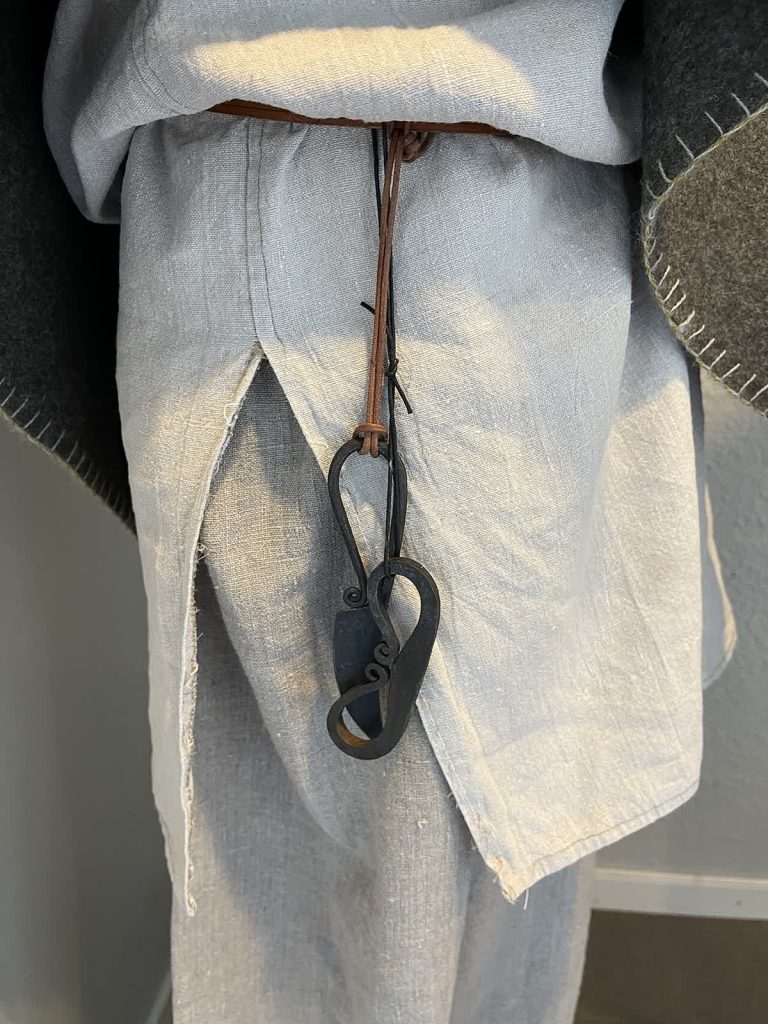
What did Vikings wear in winter? Mostly layers of wool, with linen next to the skin, a heavy woollen cloak or fur-trimmed outer garment on top, and leather shoes, mittens and hats to protect the extremities. Nobody wore a horned helmet to keep warm; the real picture is much more practical, and it comes from archaeology rather than from films.
Key takeaways
- Wool was the main fabric of the Viking Age, valued because it stays warm even when damp.
- Warmth came from layering: linen underlayer, woollen tunic and trousers, then a cloak.
- Fur and sheepskin were used for linings, collars and hats, though not everyone could afford much of it.
- Evidence is patchy, because cloth rots; we rely on fragments, graves, bog finds and later written sources.
What we actually know about Viking clothing
The Viking Age is usually dated from about the late 8th century to the middle of the 11th century. Textiles rarely survive that long, so historians piece the picture together from small scraps of cloth found in graves and in waterlogged or frozen deposits, from tools such as spindle whorls and loom weights, from carvings, and from sagas and chronicles written afterwards. That means we can describe typical clothing with reasonable confidence, but we should be wary of anyone claiming to know exactly what a particular person wore on a particular day.
It also helps to remember that “Vikings” is a loose label. Farmers, traders, raiders and craftspeople lived across Scandinavia and beyond, from Norway and Iceland to Greenland and the British Isles. Winters in northern Norway were very different from winters on the coast of what is now Denmark, so clothing varied with place, wealth and occupation.
The layering system: how Norse people kept warm
The core idea was the same one modern walkers use: several thinner layers trap air better than one thick garment, and you can remove one if you get too warm.
Next to the skin
Linen, made from flax, was commonly used for underclothes such as a long shirt. It is smooth, hard-wearing and washes well. In a very cold spell, some people would probably have worn a thin wool layer closer to the skin instead, but the surviving evidence favours linen for undergarments.
The main layer
Men typically wore a woollen tunic that reached roughly to the hips or knees, with trousers of varying cut, sometimes wrapped with leg bindings of wool strips below the knee. Women commonly wore a long dress or gown of linen or wool, often with a pinafore-style apron dress over it, fastened with brooches. In winter these main layers would be of thicker, tightly woven wool, sometimes twill, which sheds wind and light rain better than a loose weave.
The outer layer
A cloak was the classic outer garment. It was usually a large rectangle or semicircle of heavy wool, pinned at the shoulder or the chest with a brooch or pin. Some cloaks had a pile or shaggy surface that helped shed water. Fur-lined or sheepskin versions would have been warmer still, but the more luxurious furs, such as marten and fox, were associated with higher status and trade.
Wool, fur and leather: the materials
Different materials did different jobs, and a household would have used all of them.
| Material | Typical use in winter | Why it worked |
|---|---|---|
| Wool | Tunics, trousers, dresses, cloaks, hats, socks, mittens | Warm, even when damp, and can be woven tight for wind resistance |
| Linen | Underclothes, head coverings | Comfortable against the skin and easy to launder |
| Fur and sheepskin | Linings, collars, cuffs, hats, outer garments | Excellent insulation for the weight |
| Leather | Shoes, boots, belts, gloves | Durable and fairly weatherproof when treated |
Sheep were central to the household economy, and spinning and weaving were everyday tasks, mostly done by women in the home. Making enough cloth for a family and for sails was a huge investment of time, which is why clothing was valued and repaired rather than casually replaced.
Hats, gloves, socks and shoes
Extremities lose heat quickly, and Norse people dealt with this using simple, sensible items. Hats and caps of wool or fur are known from finds and depictions, and hoods attached to cloaks or tunics were common. Nålebinding, an old looping technique sometimes called needle-binding, was used to make socks and mittens; it produces a dense, stretchy fabric and is still practised by re-enactors and craft enthusiasts today.
Shoes were typically made of leather, often a turnshoe construction in which the shoe is sewn inside out and then turned the right way round. Ankle-height shoes and boots are well documented from towns such as York and Dublin, where waterlogged ground preserved leather. In snow or heavy mud, people may have stuffed shoes with dry grass or added extra socks, a trick still used by hikers.
Common myths about Viking winter clothing
- Horned helmets. There is no solid evidence that they were worn in battle or daily life; the image became popular through 19th-century art and opera costume.
- Everyone wore piles of fur. Fur was used, but it was often expensive, and wool did most of the work for ordinary people.
- Everything was brown and grey. Natural dyes such as madder, woad and various plants produced reds, blues and yellows, and richer people could afford brighter cloth.
- Bare arms and chests. Modern media love them, but in a Scandinavian winter this would have been unwise.
How to recreate a Viking winter outfit today
If you are putting together a costume for re-enactment, a school project or a living history event, the same layering logic works well.
- Start with a linen or cotton base layer that you can wash.
- Add a wool tunic and wool or heavy cotton trousers. Wool blends are fine for comfort, though purists prefer pure wool.
- Wrap simple leg bindings for authenticity and extra warmth.
- Choose a rectangular wool cloak and a brooch or pin to fasten it; check that the pin is blunt enough to be safe around children.
- Finish with a wool hat or hood, mittens, thick socks and sturdy leather shoes.
Look for reputable historical costume makers and museum shops if you want patterns based on finds. If you enjoy the food side of history too, our piece on where momos originate shows how the same careful, evidence-first approach applies to a very different topic. For general background reading, the Wikipedia article on the Vikings is a reasonable starting point, and museum websites give more detail on specific finds.
Frequently asked questions
Did Vikings wear fur coats?
Some did, particularly wealthier people and those in colder regions, but fur was more often used as a lining, trim, collar or hat. Heavy wool cloaks were the everyday winter outer layer for many.
What fabric did Vikings use most?
Wool was the dominant fabric for outer clothing, with linen used for underlayers and some dresses. Wool was prized because it keeps insulating even when it gets wet.
What did Vikings wear on their feet in winter?
Leather shoes or ankle boots, worn with woollen socks, some of them made by nålebinding. Archaeological leather finds from towns show a range of styles.
Did Vikings wear trousers?
Yes, men are generally shown and reconstructed wearing trousers, which varied from fairly slim to baggy styles, often with wrapped leg bindings. Women mainly wore long dresses, with layers beneath.
How do we know what Vikings wore?
From fragments of cloth, preserved leather, grave goods, tools for spinning and weaving, contemporary images and later written accounts. Because gaps remain, reconstructions are informed best guesses rather than certainties.
Conclusion
So, what did Vikings wear in winter? Layers, above all: linen underneath, wool in the middle, a cloak or fur-trimmed garment on top, and leather, wool and fur on the head, hands and feet. It was a practical system built around the materials a farming household could produce, and it still makes good sense for a cold day outdoors.
Key takeaways about what did vikings wear in winter
Here is a short summary of what did vikings wear in winter so you can find the main points quickly.
- The Viking Age is usually dated from about the late 8th century to the middle of the 11th century.
- It also helps to remember that "Vikings" is a loose label.
- The core idea was the same one modern walkers use: several thinner layers trap air better than one thick garment, and you can remove one if you get too warm.
- Linen, made from flax, was commonly used for underclothes such as a long shirt.
If you only remember one thing about what did vikings wear in winter, make it the practical steps covered in this guide.
Check official sources before acting on anything related to what did vikings wear in winter, because details can change over time.
Questions about what did vikings wear in winter are common, so it helps to compare more than one trustworthy source.
Use this page as a starting point for what did vikings wear in winter and come back to it when your situation changes.
Good decisions about what did vikings wear in winter come from checking the facts, comparing your options and taking your time.
Save this guide to what did vikings wear in winter so you can find it again whenever you need a quick reminder.
Related reading:
- SEC Network DirecTV Stream: How to Watch and Check Access
- How to Reheat Corn Kernels Without Drying Them Out
For general background, you can look up what did vikings wear in winter on Wikipedia.