If you have ever wondered what does brine a turkey mean, the answer is simple: you treat the bird with salt before cooking, either by soaking it in salty water (a wet brine) or by rubbing salt over it and leaving it to rest (a dry brine). The salt changes the way the muscle proteins hold water, so the turkey stays moister and better seasoned right through the meat. Here is how it works, which method to choose and how to stay safe.
Key takeaways
- Brining means salting a turkey ahead of roasting, using salty water (wet) or salt alone (dry).
- The salt helps the meat hold on to moisture and seasons it throughout.
- Keep the bird cold, below 40°F (4°C), the whole time it brines.
- Do not brine a turkey that is pre-injected or labelled “self-basting” unless you adjust the salt.
- Cook to a safe internal temperature of 165°F (74°C), checked with a thermometer.
What does brine a turkey mean in plain English?
To brine something is to soak it in a solution of salt and water. When people talk about brining a turkey, they usually mean leaving it in that solution for many hours before roasting. A turkey breast is lean and dries out easily, so the aim is to keep it juicy while the dark meat, which can take longer to cook, finishes. It is a classic tradition around Thanksgiving in the United States, and increasingly at Christmas in the UK.
The technique is old and well studied. If you enjoy the background, the Wikipedia article on brining gives a good overview of how salt solutions have been used to preserve and flavour food.
Why does brining work?
Salt does two things. First, it dissolves some of the muscle proteins, loosening the fibres so they can hold more water. Second, as the salt moves into the meat by diffusion, it seasons the flesh well beyond the surface. As a result, the cooked bird loses less moisture during roasting, and the meat tastes seasoned instead of just the skin.
Brining is not magic. It will not rescue a bird that is badly overcooked, and an over-brined turkey can turn spongy or too salty. Think of it as a safety margin rather than a cure-all.
Wet brine versus dry brine
| Wet brine | Dry brine | |
|---|---|---|
| Method | Submerge turkey in salt-water solution | Rub salt over skin and under it, rest uncovered in fridge |
| Space needed | A large, food-safe container and cold storage | A tray in the fridge |
| Skin | Can be less crisp unless dried well | Usually drier and crispier |
| Flavour | Mild, juicy | Concentrated turkey flavour |
| Mess | More | Less |
How to wet brine
- Defrost the turkey fully in the fridge first. Allow roughly 24 hours per 4 to 5 pounds (about 2 kg).
- Dissolve salt in cold water. A common starting point is about three-quarters of a cup of table salt, or one cup of kosher salt, for each gallon of water, but salt types differ in density, so check your recipe and weigh the salt if you can.
- Add optional flavourings such as peppercorns, bay leaves, orange peel or herbs.
- Submerge the bird in a clean, food-safe bucket or brining bag. Keep it cold.
- Leave it for about 8 to 12 hours for an average bird, and no more than around 24 hours.
- Remove, rinse briefly if your recipe says so, and pat very dry before roasting.
How to dry brine
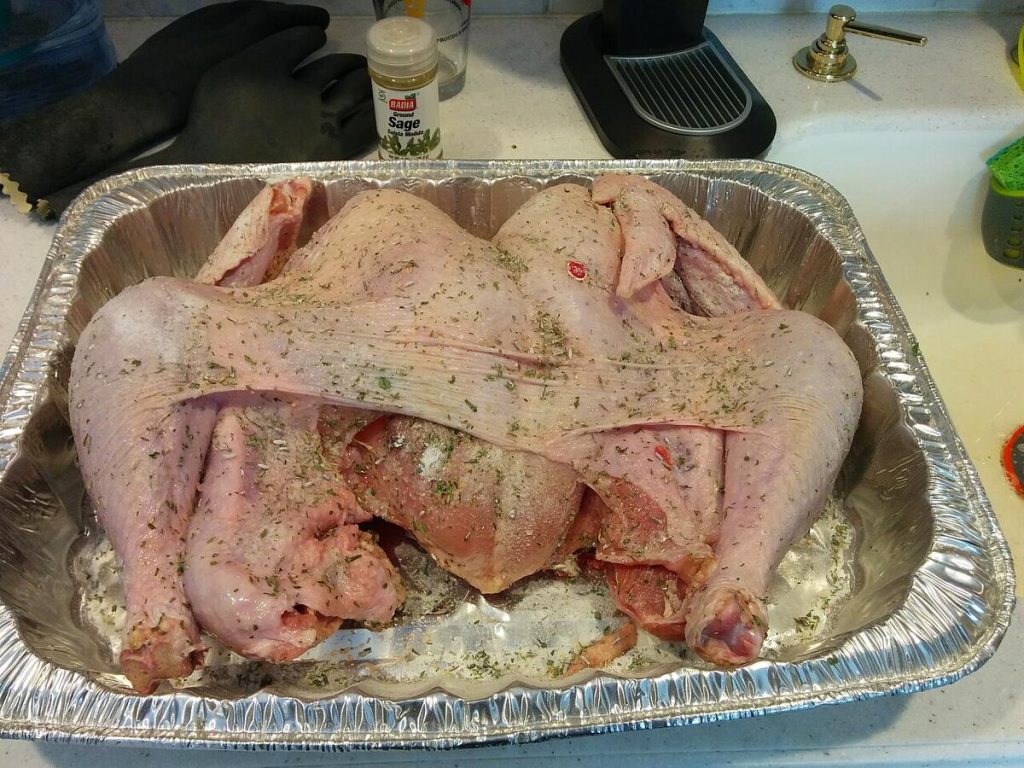
- Pat the defrosted turkey dry.
- Rub fine salt over the whole bird, including under the skin of the breast and legs. A frequently used rule is roughly one tablespoon of kosher salt per 4 to 5 pounds, though recipes vary.
- Place it on a rack over a tray, uncovered, in the fridge for one to three days.
- Do not rinse. Pat off any moisture and roast.
How long should you brine a turkey?
A small turkey needs less time than a large one. As a rough guide, many cooks allow around one hour per pound for a wet brine, within a maximum of about 24 hours, and 24 to 72 hours for a dry brine. Stronger brines work faster but increase the risk of a salty result, so it is wise to follow a tested recipe for your bird’s weight rather than improvising.
Food safety rules you should follow
- Keep the turkey at or below 40°F (4°C) the entire time. If your fridge is full, use a cooler with plenty of ice and check it with a thermometer.
- Never reuse brine. Pour it away carefully and clean the sink and surfaces afterwards.
- Wash your hands and any tools that touch raw poultry.
- Cook the turkey until the thickest part of the breast and the thigh reach 165°F (74°C). The US Department of Agriculture has safe cooking guidance at fsis.usda.gov.
- Let the bird rest for at least 20 minutes before carving.
If you are cooking in the UK, the Food Standards Agency recommends cooking poultry until the juices run clear and there is no pink meat, and the equivalent safe core temperature is also 70°C for two minutes or 75°C instantly.
Common mistakes to avoid
The first is brining a bird that has already been treated. Many supermarket turkeys, especially those labelled “self-basting”, “enhanced” or “kosher”, have been injected with salt solution or are already salted. Add another brine and the result can be unpleasantly salty. Check the label.
The second is skipping the drying step. Wet skin steams rather than crisps, so pat the bird dry and, if you have time, leave it uncovered in the fridge for a few hours before roasting.
The third is using a metal container that reacts with the salt. Stick to food-grade plastic, glass or stainless steel. Finally, remember to adjust the gravy; pan juices from a brined turkey are salty, so season them last. If you enjoy kitchen explainers, you might also like our simple guide to how many cat years are in one human year, or the one on what B means in a Prius for a break from the kitchen.
Frequently asked questions
Is brining a turkey necessary?
No. A well-cooked turkey can be delicious without it. Brining simply gives extra insurance against dry meat and adds seasoning.
Can I brine a frozen turkey?
Not while it is frozen. Defrost it fully in the fridge first, because salt cannot penetrate frozen meat and a half-frozen bird is a food-safety risk.
Should I rinse the turkey after brining?
For a wet brine, a quick rinse can remove surface salt, then dry thoroughly. For a dry brine, do not rinse.
Can I stuff a brined turkey?
You can, but the stuffing will absorb salty juices. Many cooks prefer to cook stuffing separately and use less salt in it.
Does brining change cooking time?
Slightly, if at all. Rely on a thermometer instead of the clock, and check early because brined birds can cook a little faster.
Conclusion
So, what does brine a turkey mean? It means giving the bird a salty head start, in water or on its own, so that it roasts juicy and well seasoned. Choose the wet or dry method that suits your fridge space, keep everything cold, cook to a safe temperature and you will have a far more forgiving holiday roast.
Key takeaways about what does brine a turkey mean
Here is a short summary of what does brine a turkey mean so you can find the main points quickly.
- To brine something is to soak it in a solution of salt and water.
- A small turkey needs less time than a large one.
- If you are cooking in the UK, the Food Standards Agency recommends cooking poultry until the juices run clear and there is no pink meat, and the equivalent safe core temperature is also 70°C for two minutes or 75°C instantly.
- The first is brining a bird that has already been treated.
Questions about what does brine a turkey mean are common, so it helps to compare more than one trustworthy source.
Use this page as a starting point for what does brine a turkey mean and come back to it when your situation changes.
Good decisions about what does brine a turkey mean come from checking the facts, comparing your options and taking your time.
Save this guide to what does brine a turkey mean so you can find it again whenever you need a quick reminder.
If you only remember one thing about what does brine a turkey mean, make it the practical steps covered in this guide.
Check official sources before acting on anything related to what does brine a turkey mean, because details can change over time.
Related reading:
- Spirit Flight Orlando to Boston: Booking and Bag Tips
- How Long Was Chuck Noland on the Island in Cast Away?
For general background, you can look up what does brine a turkey mean on Wikipedia.