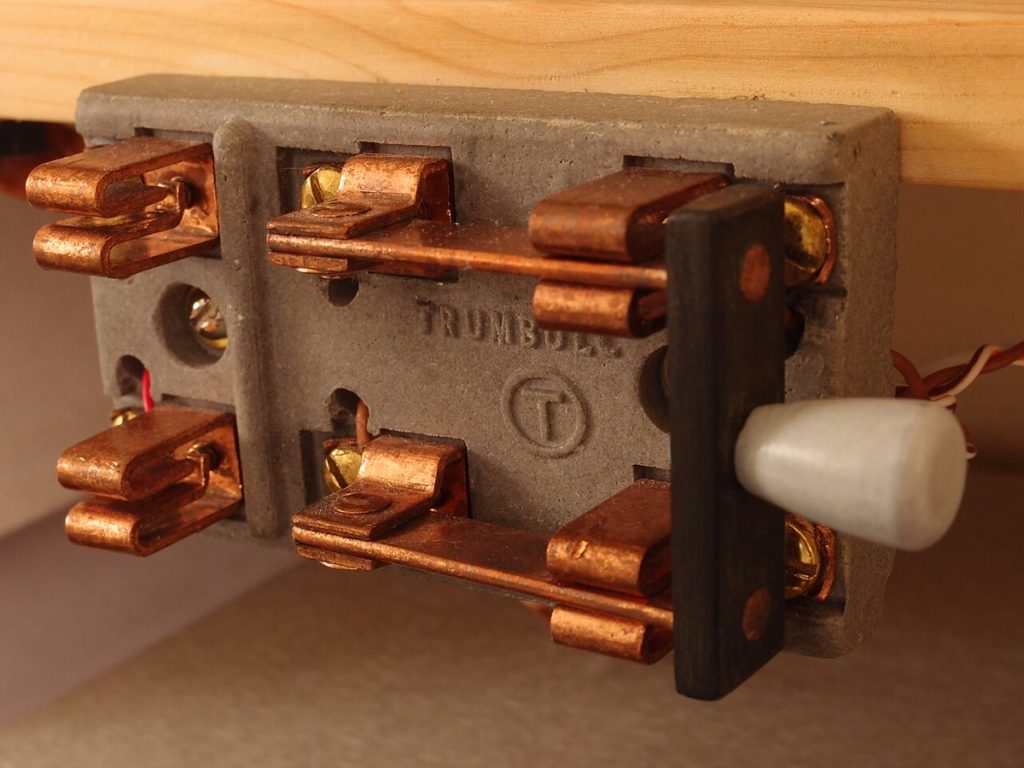
What is a double pole switch? It is a switch that opens and closes two separate electrical conductors at the same time, so one flick of the handle disconnects both the live and the neutral (or both live lines) instead of just one. That makes it a safer way to isolate heavy appliances such as cookers, water heaters and air conditioners. This article explains how it works, where it is used and how it differs from a single pole switch. It is general information only; electrical work should be done or checked by a qualified electrician and must follow your local rules.
Key takeaways
- A double pole (DP) switch breaks two conductors together, giving full isolation.
- It is typically used for high-load or fixed appliances and for isolation switches.
- A single pole switch breaks only one conductor, usually the live.
- Always switch off at the supply and use a qualified electrician for installation.
What is a double pole switch in simple terms?
Think of a switch as a gate in a wire. A single pole switch has one gate, so it interrupts only one wire. A double pole switch has two gates that move together. In a typical household circuit, that means both the live and the neutral are disconnected, and no part of the appliance remains connected to the supply through the switch. The term “pole” simply refers to a separate circuit path that the switch controls. You can read the general concept of poles and throws in the Wikipedia article on electrical switches.
Single pole, double pole and the other names
| Type | Conductors switched | Common use |
|---|---|---|
| Single pole, single throw (SPST) | One | Ordinary lights |
| Double pole, single throw (DPST) | Two | Isolating appliances such as cookers or showers |
| Single pole, double throw (SPDT) | One, with two positions | Two-way lighting |
| Double pole, double throw (DPDT) | Two, with two positions each | Reversing motors, changeover circuits |
Naming varies between countries. In North America, 240-volt circuits often use double pole breakers or switches that handle two hot lines. In the UK and many other countries, DP means live and neutral.
When to use a double pole switch
You will usually see a DP switch where the equipment draws a significant current or where a complete isolation is a safety requirement.
- Cookers and ovens: a cooker control unit is typically a DP switch.
- Electric showers and water heaters: isolating both conductors adds safety.
- Air conditioners and heat pumps: outdoor isolators are often DP.
- Fused spurs and appliance isolators: to disconnect fixed equipment for maintenance.
- 240-volt tools and machinery in workshops in the US.
- Solar and battery systems: isolators for DC and AC sides.
Why isolating both conductors matters
If only the neutral were switched, or if a fault caused the live and neutral to be swapped, parts of the appliance might remain live even though the switch is off. Breaking both gives better protection during repairs and in the event of faults. It also helps when a supply could be fed from more than one source. Many regulations require isolation means for fixed appliances; in the UK, general guidance is available from GOV.UK, and local electrical rules specify exact requirements.
How to recognise one
- Look at the switch face: DP switches often have a “DP” marking, a red rocker or a neon indicator.
- Check the rating, often 20 A or 45 A for cookers and 20 A for general isolators.
- If you open the switch with the supply off at the consumer unit, you will see two pairs of terminals, one pair for each pole.
- Photograph the wiring before touching anything, then call an electrician.
Basic wiring concept
Do not attempt this unless you are qualified. At a conceptual level, the incoming live goes to one input terminal and the incoming neutral to the other. The outgoing live and neutral go from the matching output terminals to the appliance. A separate earth connection is made through the earth terminal and must never pass through the switch. When the switch is off, both live and neutral are open. Rules vary by country and by installation, so always follow the local code.
Safety reminders
- Turn off power at the breaker and confirm it is dead with a proper tester.
- Use a switch rated for the load and voltage.
- Tighten terminals firmly; loose connections overheat.
- Use correctly rated cable and never exceed the circuit protection.
- Have work tested and certified where the law requires it.
Double pole switch versus a double pole breaker
A DP switch is a manual switch you operate, while a DP breaker also trips automatically when there is an overload or a fault. In a US panel, a double pole breaker occupies two slots and supplies 240 volts to equipment like dryers and ranges. In the UK, an RCBO or a main switch may offer double pole disconnection. They sometimes appear together: a breaker protects the circuit, and a local switch gives convenient isolation.
Troubleshooting a faulty double pole switch
- If it feels hot, flickers or buzzes, switch off the circuit and call an electrician.
- If the neon does not light but the appliance works, the indicator may have failed.
- If the appliance is dead, check the breaker first, then the fuse, before suspecting the switch.
For other practical explainers, you can also read about calculating the formula for a semicircle and drawing the C2H4 structure.
Frequently asked questions
What is a double pole switch used for?
It isolates two conductors at once, so it is used on cookers, showers, heaters and other fixed appliances.
Is a double pole switch the same as a two-gang switch?
No. A two-gang switch has two separate switches in one plate. A double pole switch has one handle that breaks two conductors together.
Can I replace a single pole with a double pole switch?
Only if it is suitable for the circuit and wired correctly. Ask an electrician.
Why does my cooker have a DP switch?
Because it draws a high current and needs a secure means of isolation.
Do I need a licensed electrician?
In many places, yes, for fixed wiring changes. Check local regulations.
Conclusion
So, what is a double pole switch? It is a switch that breaks two conductors together to give secure isolation, mainly for higher-power or fixed appliances. Understand the difference from a single pole switch, respect the safety rules and leave the wiring to a qualified professional.
Key takeaways about what is a double pole switch
Here is a short summary of what is a double pole switch so you can find the main points quickly.
- Think of a switch as a gate in a wire.
- You will usually see a DP switch where the equipment draws a significant current or where a complete isolation is a safety requirement.
- If only the neutral were switched, or if a fault caused the live and neutral to be swapped, parts of the appliance might remain live even though the switch is off.
- Do not attempt this unless you are qualified.
If you only remember one thing about what is a double pole switch, make it the practical steps covered in this guide.
Check official sources before acting on anything related to what is a double pole switch, because details can change over time.
Questions about what is a double pole switch are common, so it helps to compare more than one trustworthy source.
Use this page as a starting point for what is a double pole switch and come back to it when your situation changes.
Related reading:
- Faint Hickey: How to Fade It Fast and What Actually Helps
- Robert Downey Jr Weight Loss: Fact, Rumour and Fitness Lessons
For general background, you can look up what is a double pole switch on Wikipedia.