If you are asking how far does a hair follicle go back, the short answer is about 90 days. A standard hair drug test uses a sample of head hair cut close to the scalp, and the 1.5 inches nearest the skin are treated as a record of roughly the last three months. It is a long window compared with urine or saliva, but it is not a perfect diary of everything you have done.
Key takeaways
- A standard hair follicle drug test covers about 90 days of use.
- Substances take around a week to show up in hair, so very recent use is usually missed.
- Body hair can reflect a longer period, sometimes up to a year, because it grows more slowly.
- Results depend on the lab, the cut-off levels and the length of hair collected.
How a hair test works
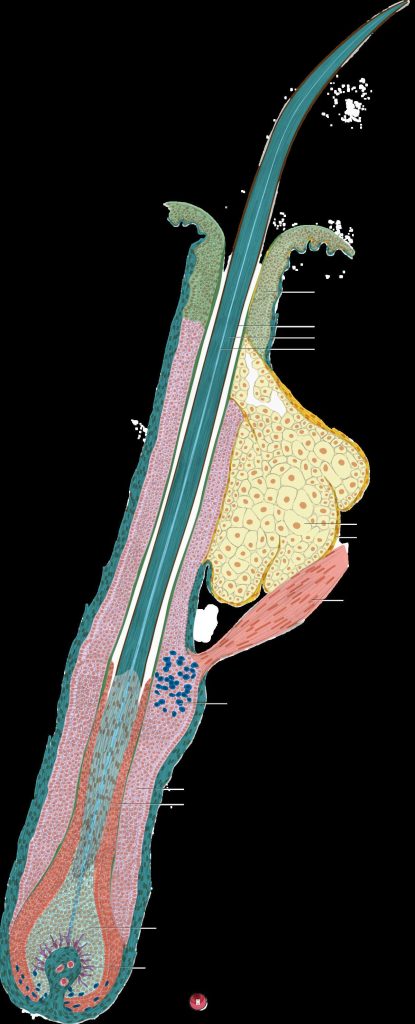
When you take a substance, it travels through the bloodstream. The tiny blood vessels feeding each hair root pass traces of the drug, or the by-products your body makes from it, into the growing strand. As the hair grows out, those traces stay locked inside the shaft. A laboratory then breaks the sample down and looks for them using sensitive analytical methods.
Because hair grows in one direction, the part closest to the scalp is the newest and the tip is the oldest. That is why collectors snip close to the skin and why the length of the sample matters so much. The test is not measuring what is on the surface of the hair, although labs usually wash samples first to reduce the chance of environmental contamination.
How far does a hair follicle go back? The 90 day window
Scalp hair grows at an average of about half an inch a month, although it varies between people and with age, health and hair type. A sample of about 1.5 inches therefore represents around three months of growth. Labs are told what length to use, so the 90 day figure is really a result of the standard sample size rather than a limit of the science.
There is also a delay at the start. It takes several days for hair that has absorbed a substance to grow far enough above the scalp to be cut. In practice that means use in the last five to ten days or so may not appear in a standard sample at all. This is the biggest difference between hair testing and urine or blood testing, which are better at spotting very recent use.
What if your hair is short?
If your head hair is shorter than the needed length, the collector may take what is available, which gives a shorter window. If you have no head hair, they may use body hair instead, which brings us to the next point.
Body hair and longer windows
Hair from the arms, chest or legs grows more slowly than scalp hair and spends a longer time in its resting phase. Each strand therefore holds a longer history, and a lab may say a body hair sample reflects up to a year. The trade-off is that the timeline is harder to pin down, because not every strand is growing at the same moment. Many employers and courts prefer head hair for that reason.
Comparing common drug test types
| Test | Typical look-back | Best for |
|---|---|---|
| Hair | About 90 days | Showing a pattern of repeated use |
| Urine | Days to a few weeks, depending on the substance | Routine workplace screening |
| Saliva | Roughly the last day or two | Roadside or on-site checks |
| Blood | Hours to a day or two | Showing current impairment |
These are broad ranges. The exact figures depend on the substance, how often it was used, how much, and the lab’s own rules. The general background on how testing works is covered on Wikipedia’s drug test page.
What can affect a hair test result
- Frequency and amount: heavy, repeated use leaves more behind than a single occasion, and a one-off may not reach the cut-off level.
- Hair colour and type: some substances bind more readily to darker hair that contains more melanin, a point labs and researchers continue to discuss.
- Cosmetic treatments: bleaching, dyeing and relaxing can reduce some residues, though results vary and labs have ways to check for treated hair.
- Growth rate: faster or slower growth changes how many days a given length represents.
- Contamination: second-hand smoke or handling a substance can in rare cases leave surface traces, which is why washing procedures exist.
What to expect on the day
- The collector confirms your identity and explains the procedure.
- They take a small bundle of hair, often from the crown, cut flush to the scalp and wrapped in foil.
- The sample is sealed, labelled and signed so there is a clear chain of custody.
- The lab screens it and confirms any positive result with a second, more specific method.
- A medical review officer or the employer receives the report, often with a chance to explain legitimate prescriptions.
It is painless and the cut is usually hardly noticeable. Tell the collector about any prescribed medication, since some can be relevant to the report. If you want to read about related health topics while you wait for results, see our notes on dying tooth nerve pain or the side effects of chia beans.
Common misunderstandings
People often assume a hair test can say exactly which day a substance was used. It cannot. At best it gives an approximate period, because hair grows unevenly and the lab typically reports a segment as a whole. Another myth is that shaving the head removes the risk. A collector can simply use body hair instead, and refusing to provide a sample is normally treated as a failed test by the requesting organisation.
It is also worth remembering that policies differ. Some employers use hair testing only for safety critical roles, some courts use it in family cases, and each sets its own cut-off levels. If you are told to take a test, ask the requesting organisation for its written policy and for the list of substances being screened.
Frequently asked questions
How far does a hair follicle go back for a standard test?
About 90 days, based on roughly 1.5 inches of head hair taken close to the scalp.
Can a hair test detect use from last week?
Usually not. It takes around a week for hair containing a substance to grow above the scalp, so very recent use often does not appear.
Can body hair show a longer period?
Yes. Because body hair grows more slowly, a sample may reflect up to a year, though the timeline is less precise.
Does dyeing or bleaching hair change the result?
It may reduce some residues, but the effect is inconsistent and labs may check for treated hair. Do not assume it will change the outcome.
Is a hair test accurate?
Positive results are normally confirmed with a second laboratory method, but no test is flawless. If you disagree with a result, ask about the appeal or retest process.
Conclusion
So, how far does a hair follicle go back? Roughly three months for head hair, and potentially longer for body hair, with a short blind spot for the most recent week or so. If you face a test, ask for the policy in writing, tell the collector about any prescriptions and speak to a qualified professional if you have health or legal questions.
Key takeaways about how far does a hair follicle go back
Here is a short summary of how far does a hair follicle go back so you can find the main points quickly.
- If you are asking how far does a hair follicle go back, the short answer is about 90 days.
- When you take a substance, it travels through the bloodstream.
- Because hair grows in one direction, the part closest to the scalp is the newest and the tip is the oldest.
- Scalp hair grows at an average of about half an inch a month, although it varies between people and with age, health and hair type.
Questions about how far does a hair follicle go back are common, so it helps to compare more than one trustworthy source.
Use this page as a starting point for how far does a hair follicle go back and come back to it when your situation changes.
Good decisions about how far does a hair follicle go back come from checking the facts, comparing your options and taking your time.
Save this guide to how far does a hair follicle go back so you can find it again whenever you need a quick reminder.
Related reading:
- Draco Ammo Type: What Does an AK Pistol Actually Take?
- Basmati Rice to Water Ratio: The Simple Stovetop Method
For general background, you can look up how far does a hair follicle go back on Wikipedia.