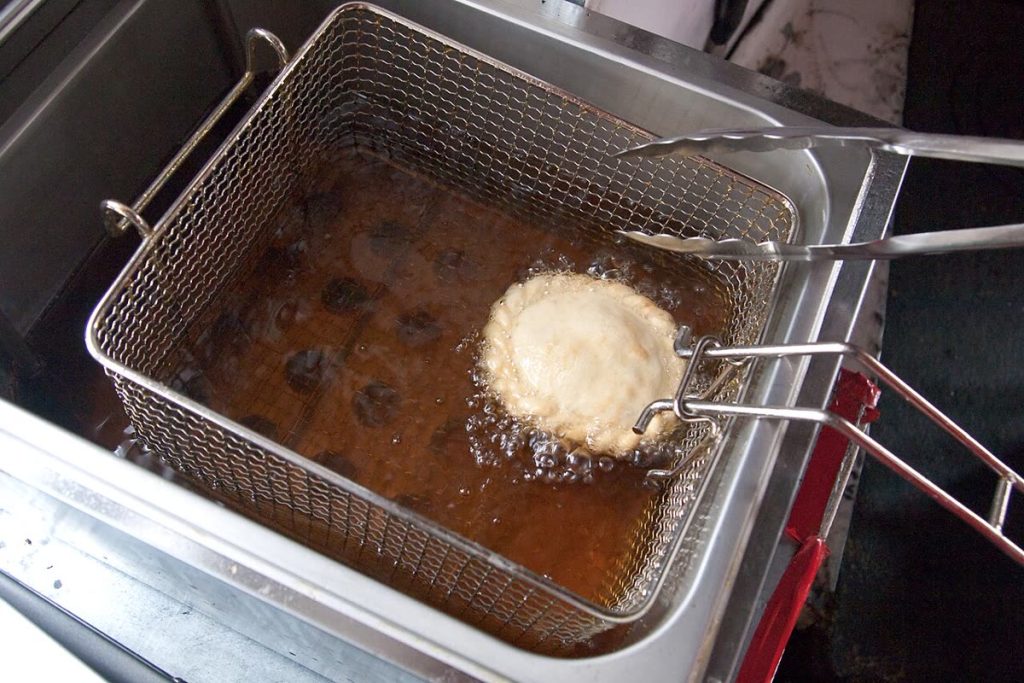
For most foods, the ideal deep fryer oil temp is between 350 and 375 degrees Fahrenheit, which is about 175 to 190 degrees Celsius. That range browns the outside quickly while the inside cooks through, and it keeps the food from soaking up grease. Some foods, such as bone-in chicken and first-fry chips, prefer a lower setting, so it pays to know the exceptions.
Key takeaways
- Most deep frying works best at 175-190C (350-375F); use a thermometer rather than guessing.
- Oil that is too cool makes food greasy; oil that is too hot burns the outside and leaves the middle raw.
- Fry in small batches so the temperature does not crash, and let it recover between batches.
- Never leave hot oil unattended, never add wet food carelessly, and keep a lid nearby for safety.
Temperatures for common foods
Different foods need different heat. These are widely used starting points, so adjust to your recipe and equipment.
| Food | Typical oil temperature | Notes |
|---|---|---|
| Chips / French fries (first fry) | about 130-160C (265-325F) | Cooks the inside without browning |
| Chips / French fries (second fry) | about 175-190C (350-375F) | Crisps and browns the outside |
| Bone-in fried chicken | about 160-175C (325-350F) | Needs longer to cook through to the bone |
| Chicken tenders, fish fillets | about 175-190C (350-375F) | Thin pieces cook quickly |
| Doughnuts | about 175-185C (350-365F) | Too hot and the outside darkens before the centre sets |
| Tempura | about 170-180C (340-355F) | Light batter browns fast |
| Onion rings, battered vegetables | about 175-190C (350-375F) | Fry in small batches |
Always follow the recipe you are using, since batter thickness, food size and starting temperature all make a difference.
Why oil temperature matters
Deep frying works by surrounding food with hot oil. The water at the surface turns to steam and pushes outwards, which creates a barrier that stops too much oil getting in. If the oil is hot enough, this effect is strong and the coating sets quickly, giving a crisp exterior. If the oil is too cool, the barrier is weak, the food sits in the oil for longer and absorbs more fat, leaving it heavy and greasy.
If the oil is too hot, the outside darkens or burns before the inside is cooked. Overheated oil also begins to smoke, break down and taste bitter. For background on the process, see Wikipedia’s deep frying article.
How to measure deep fryer oil temp accurately
- Use a deep-fry or probe thermometer. Clip-on thermometers are made for this job. Do not use a standard meat or mercury thermometer unless it is rated for the temperature.
- Do not rely only on the dial. Built-in fryer thermostats can drift. Check them against a separate thermometer from time to time.
- Measure at the right spot. Place the probe in the middle of the oil, not touching the bottom or side, where it can read too high.
- Check again before each batch. The temperature drops when you add food.
If you have no thermometer
A thermometer is strongly recommended, but there are rough checks. A wooden spoon handle dipped in hot oil should produce a steady stream of small bubbles around it. A cube of bread should brown in about a minute at a typical frying temperature. These tests are imprecise and should be treated only as a back-up.
Step-by-step: getting it right
- Choose a pan or fryer with enough depth. Fill oil no more than about half way, to leave room for bubbling.
- Heat the oil gradually to the target temperature, checking with a thermometer.
- Pat food dry. Moisture causes spitting, and a dry surface crisps better.
- Lower the food in gently, away from you, rather than dropping it.
- Fry in small batches. Overcrowding cools the oil quickly.
- Let the oil return to temperature between batches.
- Drain on a wire rack or kitchen paper, season while hot, and serve promptly.
Choosing the right oil
Pick an oil with a high smoke point and a neutral taste. Commonly used options include rapeseed (canola), sunflower, groundnut (peanut) and vegetable oil blends. Check the label for suitability for high-heat frying. If you are cooking for someone with a nut allergy, avoid groundnut oil. Olive oil is less common for deep frying because of cost and flavour, though refined types can be used.
Troubleshooting
Food is greasy
The oil was probably too cool, the batch too large, or the food was left sitting after frying. Raise the temperature, fry smaller batches and drain on a rack.
Food is dark outside but raw inside
The oil was too hot. Lower the temperature, and for thick items like bone-in chicken, consider finishing in the oven at a moderate heat.
Oil smokes
The oil is past its smoke point or has broken down from repeated use. Turn off the heat, let it cool, and replace it if it smells acrid or looks dark.
Oil foams or bubbles excessively
Wet food, old oil or too much food can cause this. Dry the food, strain the oil, and use fresh oil if needed.
Safety tips
- Never leave hot oil unattended, and keep children and pets away.
- If oil catches fire, do not use water. Turn off the heat if you can safely do so and cover the pan with a lid or a fire blanket. Information about fire safety at home is available from your local fire and rescue service.
- Do not move a pan of hot oil. Let it cool fully first.
- Pat frozen food dry and, where possible, avoid excessive ice crystals before lowering into oil.
- Keep the handle turned inward so it cannot be knocked.
Storing and reusing oil
Let the oil cool completely, strain it through a fine sieve or muslin, and store it in a sealed container in a cool, dark place. You can reuse it a few times, but discard it when it turns dark, smells off, smokes at low heat or foams a lot. Fish and strongly flavoured foods can leave flavours behind, so keep separate oil for them if you can. Do not pour used oil down the sink. Take it to a household recycling centre or follow your local council’s advice.
Pairing with other kitchen skills
Good frying starts with good prep. A pepper dish such as jalapeño poppers needs the right heat in the oil and the right pepper, so see our comparison of poblano, Anaheim and jalapeño peppers. If you want to revive leftover fried food without more oil, our guide to reheating ribs in an air fryer shows a gentler method. Curious about how appliances turn power into heat? Read about toaster energy transformation.
Frequently asked questions
What is the best deep fryer oil temp for chicken?
Bone-in pieces are usually fried at about 160-175C (325-350F), while boneless tenders can go slightly hotter, around 175-190C. Check that the meat is cooked through using a food thermometer.
What temperature should chips be fried at?
For the best results, double-fry: a first fry at a lower temperature, then a second at around 175-190C to crisp them.
Can the oil be too hot?
Yes. If it smokes or the food darkens too fast, it is too hot. Reduce the heat and wait for it to settle.
How long should I wait between batches?
Wait until the thermometer shows the oil is back to the target temperature, usually a few minutes depending on your fryer’s power.
How often should I change the oil?
It depends on what you cook and how often. Replace it when it is dark, smells bad, smokes easily or foams.
Conclusion
Getting the deep fryer oil temp right is the difference between crisp, golden food and a greasy or burnt result. Aim for 175-190C for most dishes, use a reliable thermometer, fry in small batches and put safety first, and your fried food will come out better every time.
Key takeaways about deep fryer oil temp
Here is a short summary of deep fryer oil temp so you can find the main points quickly.
- For most foods, the ideal deep fryer oil temp is between 350 and 375 degrees Fahrenheit, which is about 175 to 190 degrees Celsius.
- Always follow the recipe you are using, since batter thickness, food size and starting temperature all make a difference.
- Deep frying works by surrounding food with hot oil.
- If the oil is too hot, the outside darkens or burns before the inside is cooked.
Use this page as a starting point for deep fryer oil temp and come back to it when your situation changes.
Good decisions about deep fryer oil temp come from checking the facts, comparing your options and taking your time.
Save this guide to deep fryer oil temp so you can find it again whenever you need a quick reminder.
If you only remember one thing about deep fryer oil temp, make it the practical steps covered in this guide.
Related reading:
- Jimmy and Tar Nolan: How to Find Reliable Information
- Define Bouillon: What It Is and What It’s Made Of
For general background, you can look up deep fryer oil temp on Wikipedia.