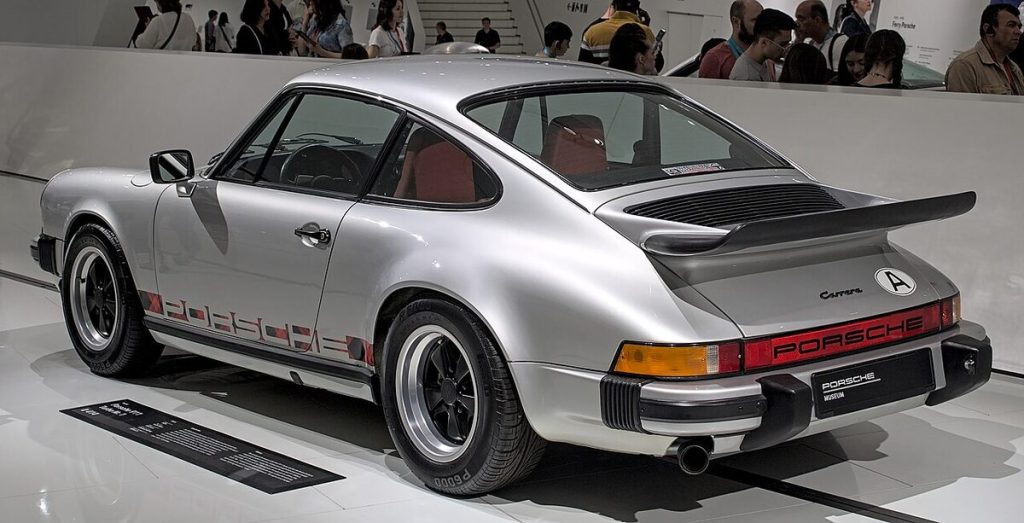
The 2009 Porsche 911 Turbo 0-60 mph time is roughly 3.4 to 3.7 seconds, depending on the transmission, the exact specification and who is doing the timing. It was among the quickest production cars of its era, and independent road tests often recorded figures close to Porsche’s own claims. This guide explains why the number varies, what made the car so fast off the line and how to compare figures fairly.
Key takeaways
- Expect a 0-60 mph time of around 3.4 to 3.7 seconds, with variation between tests.
- All-wheel drive and turbocharged torque are the main reasons for the fast launch.
- Gearbox, test method, surface, weather and car condition all change the result.
- Check the exact model and specification, because 2009 was a transition year in the 997 range.
The car in brief
The 2009 model year belongs to the 997 generation of the 911, with the Turbo using a twin-turbocharged flat-six engine driving all four wheels. Power in the original 997 Turbo was in the region of 480 horsepower from a 3.6-litre engine. Porsche then updated the 997 range, and later Turbos moved to a larger 3.8-litre direct-injection engine and the PDK dual-clutch gearbox. Which version a “2009” car is depends on the market and the build date, so look at the documentation for the specific car you are researching. Background on the generation is available in the Wikipedia article on the Porsche 997.
Why the quoted 2009 Porsche 911 Turbo 0-60 time varies
You will see slightly different figures because many things affect a 0-60 run:
- Gearbox: a manual relies on the driver, while an automatic or dual-clutch transmission with launch control can deliver repeatable, harder launches and quicker shifts.
- Surface and weather: grip, temperature, humidity and altitude change results.
- Test method: some magazines subtract a “rollout” of about a foot, which flatters the figure.
- Tyres and car condition: worn tyres, an unserviced engine or a car that is not at full boost will be slower.
- Driver and fuel: technique, fuel quality and the weight of passengers or gear play a part.
| Source type | Typical claim | Caveat |
|---|---|---|
| Manufacturer figure | Often the most optimistic | Set under ideal conditions, sometimes in metric |
| Magazine road test | Usually close to or slightly above claims | Check if rollout is subtracted |
| Owner-recorded run | Varies widely | Depends on device accuracy and road |
| Forum or video claim | Anything from slow to extreme | Treat with caution unless the method is shown |
Why it is so quick off the line
All-wheel drive is the key. Putting power through all four wheels lets the car use its torque without wheelspin, which is a huge advantage from a standstill. Turbocharged torque arrives low in the rev range, so there is strong thrust straight away, and the engine sits behind the rear axle, which helps traction when the weight shifts back during acceleration. Rear-drive rivals with similar power often struggle to match a 0-60 time that all-wheel drive makes look easy.
0-60 mph versus 0-100 km/h
0-60 mph is an American benchmark, and European sources often quote 0-100 km/h (about 62 mph). The second figure is slightly longer in distance, so a time quoted for 0-100 km/h will generally be a little higher than the same car’s 0-60 mph figure. Do not compare a 0-60 number from one source directly with a 0-100 km/h figure from another without allowing for that gap. A similar mix-up of units appears in everyday measurements too; our guide to days in a year shows how small differences matter when you count carefully.
How to verify a figure
- Check the manufacturer’s original specification for the model year, market and configuration.
- Compare several independent road test reports and note which transmission and options were tested.
- Check whether times are 0-60 mph or 0-100 km/h.
- Look for the test conditions and whether a rollout was deducted.
- Be cautious with a single number copied across many websites, since they often repeat one another.
If you are thinking of buying one
Real-world performance depends on condition. Ask for the full service history, check for modifications or engine remaps, and consider a specialist pre-purchase inspection. A tuned car may be quicker than standard, while a neglected one may not match the brochure. Costs for servicing, tyres and parts can be high, so budget accordingly.
Also check insurance, fuel costs and running costs, which vary by country and by your own circumstances. Official data such as the car’s registration documents and mileage history should be verified through the relevant authority in your country.
What 3.4 to 3.7 seconds feels like
A sub-four-second sprint to 60 mph is still quick by modern standards, and even the newest electric and performance cars have only moved the goalposts rather than made the figure ordinary. For everyday driving, the more telling aspect is the in-gear acceleration, where the Turbo’s mid-range torque lets it overtake with little effort. Remember that legal speed limits apply on public roads, and track days are a safer place to explore a car’s capabilities.
If you enjoy technical topics, you might also like our simple explainers on how many neutrons sodium has and the life cycle of a tiger.
Frequently asked questions
How fast is a 2009 Porsche 911 Turbo?
Its 0-60 mph time is roughly 3.4 to 3.7 seconds in most tests, and its top speed is in the region of 190 mph, though exact figures vary by specification.
Is the PDK faster than the manual?
Where PDK with launch control is fitted, it generally gives quicker and more repeatable launches than a manual. Check which gearbox applies to your car.
Does the car need launch control to be quick?
No, but options such as the Sport Chrono package can improve consistency. A skilled driver can still achieve very good times in a manual.
Why do magazines report different numbers?
They use different test conditions, equipment and methods, including whether they subtract rollout. Small differences are normal.
Is 0-60 the best measure of performance?
It is a useful benchmark for launch, but 0-100 mph, quarter-mile times, handling and braking also matter for the whole picture.
Conclusion
The 2009 Porsche 911 Turbo 0-60 time sits at roughly 3.4 to 3.7 seconds, thanks to all-wheel drive and strong turbo torque. When you compare figures, check the gearbox, the units, the test method and the exact specification, and you will get a fair answer.
Key takeaways about 2009 porsche 911 turbo 0-60
Here is a short summary of 2009 porsche 911 turbo 0-60 so you can find the main points quickly.
- The 2009 Porsche 911 Turbo 0-60 mph time is roughly 3.4 to 3.7 seconds, depending on the transmission, the exact specification and who is doing the timing.
- The 2009 model year belongs to the 997 generation of the 911, with the Turbo using a twin-turbocharged flat-six engine driving all four wheels.
- You will see slightly different figures because many things affect a 0-60 run:
- 0-60 mph is an American benchmark, and European sources often quote 0-100 km/h (about 62 mph).
Save this guide to 2009 porsche 911 turbo 0-60 so you can find it again whenever you need a quick reminder.
If you only remember one thing about 2009 porsche 911 turbo 0-60, make it the practical steps covered in this guide.
Check official sources before acting on anything related to 2009 porsche 911 turbo 0-60, because details can change over time.
Related reading:
- Best Civilization in Rise of Kingdoms: How to Choose
- Hertz Car Rental Amsterdam: Tips Before You Book
For general background, you can look up 2009 porsche 911 turbo 0-60 on Wikipedia.