If you are looking into cardamom uses and side effects, this guide explains the essentials in plain language and points you to the most useful next steps.
Cardamom is a fragrant spice from the ginger family, used in everything from Indian chai to Scandinavian buns. It is safe in normal food amounts, but there are a few things worth knowing if you use it often or in supplement form.
Common uses
- Cooking: curries, rice dishes, pastries, spiced coffee and tea.
- Breath freshening: chewing a pod after a meal is a traditional habit in many countries.
- Home remedies: some people use it for an upset stomach or nausea.
Possible benefits
Cardamom contains antioxidants, and early studies suggest it may help with blood pressure and digestion. The research is limited and often small, so it should be seen as a flavourful extra rather than a treatment.
Side effects to know about
- Allergic reactions. Rarely, people develop a rash, itching or trouble breathing.
- Stomach upset. Large amounts can cause irritation or diarrhoea.
- Gallstones. Cardamom may trigger pain in people with gallstones, so ask your doctor first.
- Medication interactions. It could affect blood thinners or blood pressure medicines in supplement doses.
Pregnancy and breastfeeding
Normal amounts in food are generally considered fine. Concentrated supplements or large doses are best avoided unless a doctor says otherwise.
How much is reasonable?
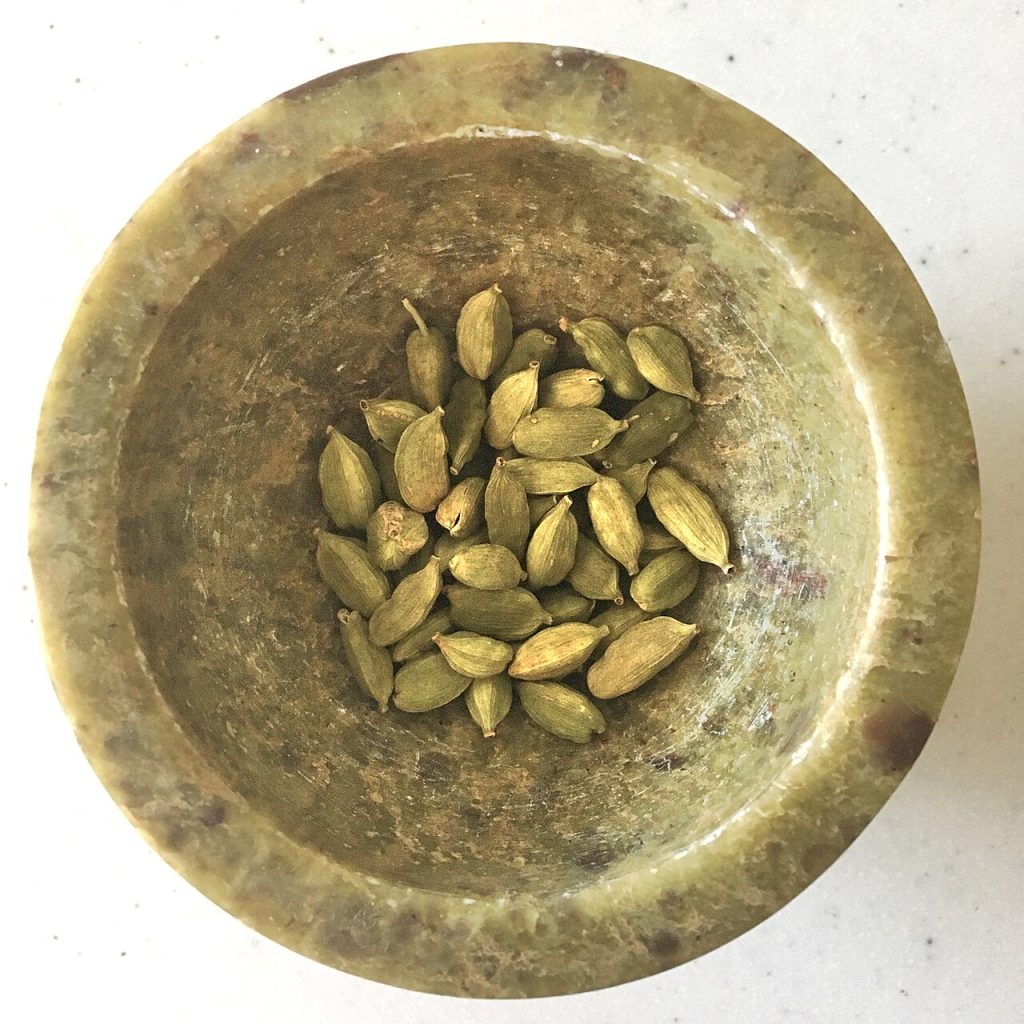
Most recipes use a pinch to half a teaspoon of ground cardamom, or a few crushed pods. Buy whole pods when you can and grind them as needed, since ground cardamom loses its aroma quickly. Store them in an airtight jar away from light.
If you have a medical condition or take regular medication, check with a healthcare professional before taking cardamom supplements.
Treat cardamom as a flavour first. A little in your morning coffee or rice pudding is a pleasant way to enjoy it, and there is no need to chase large doses for any supposed health boost.
Quick questions
Green or black cardamom?
Green is sweet and floral, while black is smoky and used in savoury dishes.
Can I drink cardamom tea daily?
Moderate amounts are fine for most people. Speak to a doctor if you have a medical condition.
How do I crush the pods?
Use a pestle and mortar, split the pod and grind the seeds inside.
Key takeaways about cardamom uses and side effects
Here is a short summary of cardamom uses and side effects so you can find the main points quickly.
- Cardamom is a fragrant spice from the ginger family, used in everything from Indian chai to Scandinavian buns.
- Cardamom contains antioxidants, and early studies suggest it may help with blood pressure and digestion.
- Normal amounts in food are generally considered fine.
- Most recipes use a pinch to half a teaspoon of ground cardamom, or a few crushed pods.
- If you have a medical condition or take regular medication, check with a healthcare professional before taking cardamom supplements.
- Green is sweet and floral, while black is smoky and used in savoury dishes.
- Use a pestle and mortar, split the pod and grind the seeds inside.
Questions about cardamom uses and side effects are common, so it helps to compare more than one trustworthy source.
Use this page as a starting point for cardamom uses and side effects and come back to it when your situation changes.
Good decisions about cardamom uses and side effects come from checking the facts, comparing your options and taking your time.
Save this guide to cardamom uses and side effects so you can find it again whenever you need a quick reminder.
If you only remember one thing about cardamom uses and side effects, make it the practical steps covered in this guide.
Related reading:
For general background, you can look up cardamom uses and side effects on Wikipedia.