Tenderising pork comes down to three ideas: add moisture, break down tough fibres, and match your cooking method to the cut. Brine lean chops, pound thin cutlets, and cook shoulder or belly low and slow, and you will get juicy, tender pork every time.
Key takeaways
- Lean cuts such as loin and chops dry out, so brine them and avoid overcooking.
- Tough cuts such as shoulder and hock need long, gentle cooking in moisture.
- Mallets, scoring and thin slicing against the grain all help physically.
- Cook pork to a safe internal temperature, then rest it.
- Do not marinate for too long in strong acid, or the meat turns mushy.
Match the method to the cut
Pork cuts behave differently. Lean cuts from the back, such as loin, chops and tenderloin, have little connective tissue and little fat. They are naturally tender but dry out fast. Cuts from the shoulder, belly and lower leg work hard on the pig, so they contain collagen that needs time to dissolve into soft, silky gelatine.
| Cut | Character | Best approach |
|---|---|---|
| Loin and chops | Lean | Brine, then sear or grill and rest |
| Tenderloin | Very lean | Quick, hot cooking; do not overcook |
| Shoulder | Fatty, tough | Slow roast, braise or pressure cook |
| Belly | Fatty | Low and slow, then crisp |
| Thin cutlets | Lean | Pound thin and pan-fry quickly |
Method 1: brining
A brine is salty water that helps meat hold on to moisture while it cooks. It is one of the most reliable ways of tenderising pork chops and loin.
- Dissolve about 1 tablespoon of salt per 250 ml of cold water. Add a little sugar, bay leaf or peppercorns if you like.
- Submerge the pork fully in the liquid in a bowl or container.
- Chill in the fridge for 30 minutes to a few hours, depending on thickness. Thin chops need less time.
- Rinse lightly, then pat the surface very dry with kitchen paper.
- Cook as normal, using less added salt.
Always keep brining pork refrigerated, never on the worktop.
Method 2: marinating
Marinades add flavour, and acidic ingredients such as lemon juice, vinegar, yoghurt and pineapple can soften the outer layer. Use them gently. Too long in strong acid or fresh pineapple or papaya, which contain enzymes, can make the surface mushy rather than tender.
- Marinate thin cuts for 30 minutes to 2 hours.
- Marinate thicker cuts for up to 12 hours in the fridge.
- Add oil, garlic, herbs or soy sauce to balance the acid.
- Discard used marinade, or boil it thoroughly if you want to use it as a sauce.
Method 3: physical tenderising
Pounding
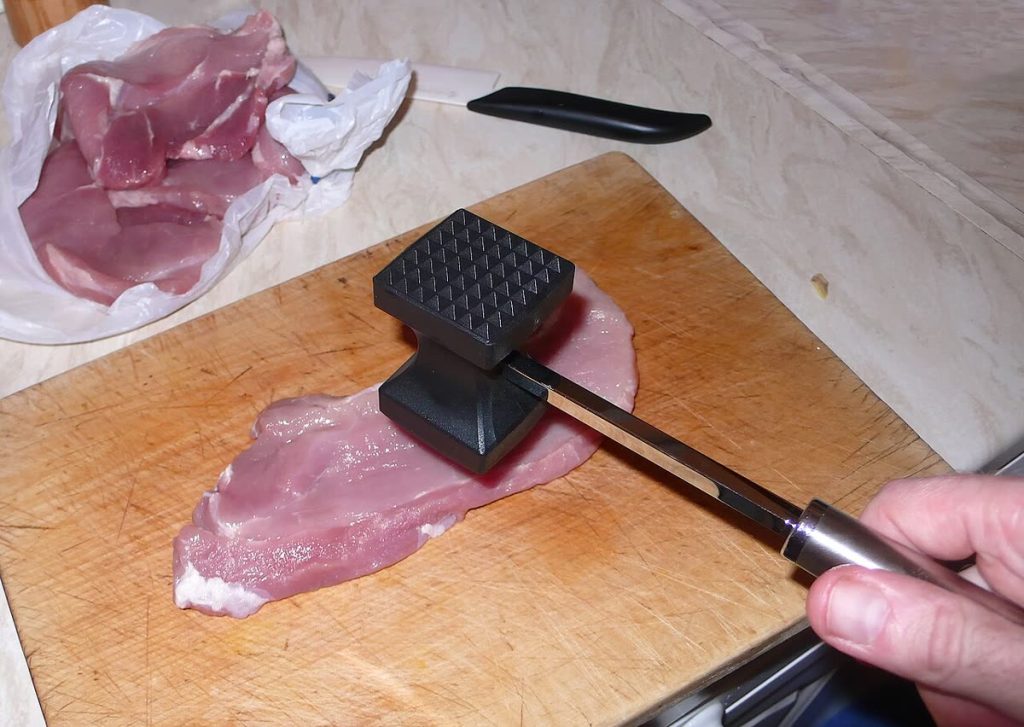
Place a chop or cutlet between sheets of baking paper or cling film and use the flat side of a meat mallet or a rolling pin. Pound gently to an even thickness. Even thickness means even cooking, which prevents dry edges.
Scoring and slicing
Light shallow cuts in a criss-cross pattern help marinades soak in and shorten cooking time. For stir-fries, slice pork thinly across the grain, so the muscle fibres are short and easier to chew.
A pinch of baking soda
Restaurants often “velvet” sliced pork by tossing it with a little bicarbonate of soda and cornflour, resting it for a short time, then rinsing. It gives a very soft texture in stir-fries, but use only a small amount.
Method 4: low and slow cooking
Pork shoulder, belly and hock are best cooked gently for hours. Braise them in stock or cider, roast them covered at a low oven temperature, or use a slow cooker or pressure cooker. The collagen melts, and the meat becomes fork-tender. If the pork is still tough, it usually needs more time, not less.
Cook to a safe temperature, then rest
Overcooking is the biggest cause of dry, tough pork. Use a meat thermometer. Food safety bodies such as the USDA advise cooking whole cuts of pork to an internal temperature of 145°F (63°C), followed by a rest of at least three minutes, while minced pork and sausages should reach 160°F (71°C). In the UK, the Food Standards Agency advises cooking pork until steaming hot throughout with no pink meat, so follow the guidance in your region.
Resting the meat lets the juices settle, so more stay in the pork when you slice it. Rest chops for a few minutes and larger roasts for 15 to 20 minutes, loosely covered.
Quick recipe: tender pan-fried pork chops
- Brine two thick-cut chops for about an hour in the fridge, then dry them thoroughly.
- Take them out of the fridge about 20 minutes before cooking so the chill comes off.
- Brush with a little oil and season with pepper and herbs. You rarely need extra salt after brining.
- Heat a heavy pan until hot and sear the chops for a couple of minutes per side until golden.
- Lower the heat and keep cooking until a thermometer shows the safe internal temperature.
- Add a knob of butter, spoon it over the chops, and rest them on a warm plate for five minutes before serving.
The same approach works on the barbecue. Keep one side of the grill cooler so you can move the pork away from flare-ups.
Common mistakes
- Cooking straight from the fridge, which causes uneven cooking.
- Skipping the dry-off, which leads to steaming instead of browning.
- Using high heat for tough cuts.
- Cutting along the grain.
- Cutting into the meat immediately after cooking.
If you like practical kitchen guides, you might also enjoy our explainer on what bento is in Japan, which is full of ideas for packing a tasty lunch with leftover pork.
Frequently asked questions
Why is my pork chop tough?
Usually because it was overcooked or was a thin lean cut cooked too long. Brining and a thermometer help.
How long should I brine pork?
Thin chops need roughly 30 minutes, thick chops a few hours. Longer brining can make the meat too salty.
Can I tenderise frozen pork?
Thaw it fully in the fridge first. Tenderising works best on fully defrosted meat.
Does baking soda really work?
Yes, in small amounts. It raises the surface pH and keeps the meat soft, but too much leaves an unpleasant taste.
Is slightly pink pork safe?
In the US, guidance allows whole cuts cooked to 145°F (63°C) to have a blush of pink. UK advice is to cook until there is no pink meat, so follow the guidance for where you live and use a thermometer.
Conclusion
Great pork is about choosing the right method for the cut. Brine lean pieces, pound thin ones, cook tough cuts slowly, and always rest the meat before serving. With a thermometer and a little patience, tender pork is easy.
Key takeaways about tenderising pork
Here is a short summary of tenderising pork so you can find the main points quickly.
- Tenderising pork comes down to three ideas: add moisture, break down tough fibres, and match your cooking method to the cut.
- A brine is salty water that helps meat hold on to moisture while it cooks.
- Always keep brining pork refrigerated, never on the worktop.
- Marinades add flavour, and acidic ingredients such as lemon juice, vinegar, yoghurt and pineapple can soften the outer layer.
Check official sources before acting on anything related to tenderising pork, because details can change over time.
Questions about tenderising pork are common, so it helps to compare more than one trustworthy source.
Use this page as a starting point for tenderising pork and come back to it when your situation changes.
Good decisions about tenderising pork come from checking the facts, comparing your options and taking your time.
Save this guide to tenderising pork so you can find it again whenever you need a quick reminder.
Related reading:
- How Many Carbs Are in a Slice of Pizza? A Simple Guide
- Can Tzatziki Be Frozen? What Happens and How to Do It
For general background, you can look up tenderising pork on Wikipedia.