People often ask what are the 7 hills of Rome, and the answer is a short list: the Palatine, Capitoline, Aventine, Caelian, Esquiline, Viminal and Quirinal. Together they formed the heart of the ancient city and still shape the layout of modern Rome. This guide names each hill, says what it is known for and offers tips if you want to walk them.
Key takeaways
- The seven hills are the Palatine, Capitoline, Aventine, Caelian, Esquiline, Viminal and Quirinal.
- The Palatine is tied to Rome’s founding legends and imperial palaces.
- The hills sit east of the Tiber River and surround the Roman Forum.
- You can visit several on foot, but allow time for the climbs.
What are the 7 hills of Rome?
The seven hills are a traditional way of describing the area that ancient Romans regarded as their city. Rome grew from small settlements on elevated ground near the Tiber, where villagers could defend themselves and keep above flood waters. Over time, the settlements joined, and the hills became a symbol of the city itself.
Ancient writers disagree on small points, and the hills are not dramatic mountains. They are modest ridges and rises, but their position made them valuable. For a wider overview, see the Wikipedia page on the seven hills of Rome.
The seven hills at a glance
Use this table as a quick reference.
| Hill | Italian name | Known for |
|---|---|---|
| Palatine | Palatino | Legendary founding of Rome; imperial palaces |
| Capitoline | Campidoglio | Temples and, today, Rome’s city government and museums |
| Aventine | Aventino | Quiet residential hill with gardens and views |
| Caelian | Celio | Green, calm hill with ancient churches |
| Esquiline | Esquilino | Large hill, site of ancient villas and today a busy district |
| Viminal | Viminale | Smallest of the hills; now home to government offices |
| Quirinal | Quirinale | Highest of the hills; presidential residence today |
Palatine and Capitoline: the symbolic centre
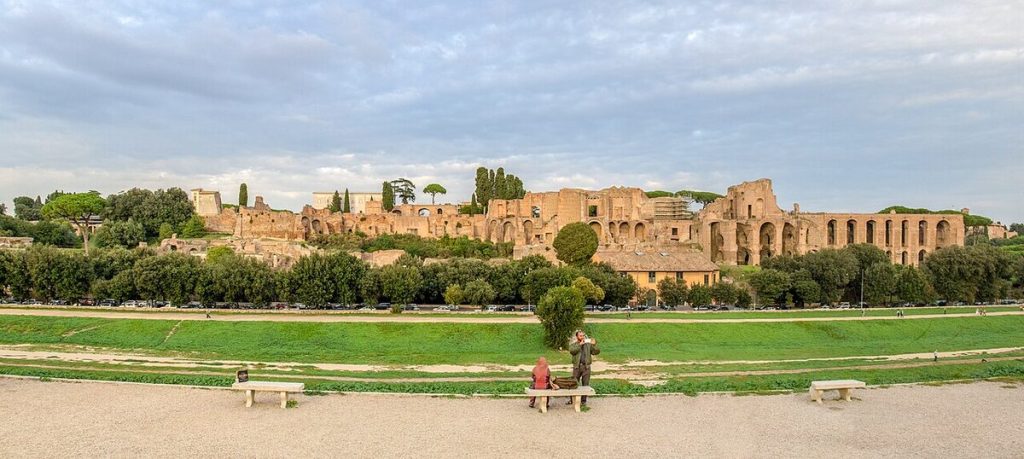
The Palatine is the hill most associated with myth. According to tradition, Romulus founded the city here. Later, emperors built palaces on the slopes, and the English word palace is linked to the hill’s name. Today you can walk through ruins and gardens, with views over the Forum.
The Capitoline was the religious and political centre. It held important temples in antiquity. Today it hosts Rome’s town hall and museums in buildings laid out in a famous square. It is easy to reach on foot from the centre, which makes it a good first stop.
Aventine, Caelian and Esquiline: green and varied
The Aventine is known for quiet streets, gardens and some of the best calm viewpoints. The Caelian is leafy and peaceful, with old churches and parkland near the Colosseum. The Esquiline is the largest hill and now has a busy, mixed character, with a major transport hub nearby.
- Aventine: walk uphill for tranquil lanes and viewpoints.
- Caelian: combine with a visit to the Colosseum area.
- Esquiline: good for exploring local life away from the biggest crowds.
Viminal and Quirinal: the government hills
The Viminal is the smallest hill and is largely built up with government buildings. The Quirinal is the highest and is the site of the presidential palace. Both are less visited by tourists, but they are pleasant for a stroll, with nearby piazzas and fountains.
How to visit the seven hills
You do not need to cover them all in a day. Rome is hilly, hot in summer and full of distractions, so pace yourself.
- Start early, particularly in summer, to avoid heat and queues.
- Wear comfortable shoes; cobbles and slopes are common.
- Group nearby hills: Palatine and Capitoline with the Forum, then Caelian and Aventine on another outing.
- Check official sites or Google Maps for opening hours and ticket details before you go.
- Carry water and sun protection.
If you are planning meals as you go, our posts on what bolognese pasta is and what the word bolognese means are handy for decoding Italian menus.
Why the number seven?
Seven was a significant number in many ancient cultures, and Rome’s tradition of seven hills may reflect both geography and symbolism. Over time, other cities, including Istanbul and Lisbon, were also described as built on seven hills in imitation. Whatever the origin, the list gave Romans a shared image of home.
Language lovers may enjoy learning a few phrases before they go. Our short guide on how to say hi in Arabic shows how brief greetings can transform travel, and the same principle works with a few words of Italian.
Walking route idea for first-time visitors
A simple half-day plan keeps the effort manageable. Begin at the Capitoline for views over the Forum, then head down into the Forum itself and climb the Palatine from there. This order puts the most history together and avoids extra walking between sites.
On another day, take a quieter route. Start at the Caelian near the Colosseum, stroll through its parks, then continue towards the Aventine for a peaceful look across the city. Finish with a meal in a nearby neighbourhood, away from the busiest tourist streets.
A few small habits make a difference. Download an offline map, keep your ticket or booking confirmation handy, and leave time to sit down. The hills are best enjoyed slowly, and the views reward a short rest.
Key tips to remember
If you only remember a few facts about the hills, make them these.
- The Palatine is the legendary birthplace of Rome.
- The Capitoline was the religious heart of the city.
- The Quirinal is the tallest hill.
- The Viminal is the smallest.
- All seven lie on the east side of the Tiber.
Frequently asked questions
What are the 7 hills of Rome called?
They are the Palatine, Capitoline, Aventine, Caelian, Esquiline, Viminal and Quirinal.
Which hill is the most famous?
The Palatine, because of its link with the founding legend of Romulus and Remus and its imperial ruins.
Is the Vatican one of the seven hills?
No. Vatican Hill is on the west bank of the Tiber and is not part of the traditional seven.
Which is the highest of the seven hills?
The Quirinal is usually named as the highest.
Can I see all seven hills in one day?
It is possible in a rushed day, but it is more enjoyable to spread them over two or three visits, combining nearby hills.
Conclusion
Now you know what are the 7 hills of Rome: Palatine, Capitoline, Aventine, Caelian, Esquiline, Viminal and Quirinal. Each tells a different part of the city’s story, from myth and religion to government and quiet green space. Pick two that are close together, wear good shoes and let the slopes do the storytelling.
Key takeaways about what are the 7 hills of rome
Here is a short summary of what are the 7 hills of rome so you can find the main points quickly.
- People often ask what are the 7 hills of Rome, and the answer is a short list: the Palatine, Capitoline, Aventine, Caelian, Esquiline, Viminal and Quirinal.
- The seven hills are a traditional way of describing the area that ancient Romans regarded as their city.
- Ancient writers disagree on small points, and the hills are not dramatic mountains.
- The Palatine is the hill most associated with myth.
Save this guide to what are the 7 hills of rome so you can find it again whenever you need a quick reminder.
If you only remember one thing about what are the 7 hills of rome, make it the practical steps covered in this guide.
Related reading:
- Can a 223 Wylde Shoot 556? What the Chamber Allows
- Is Tuna Fattening? Calories, Types and Healthy Ways to Eat It
For general background, you can look up what are the 7 hills of rome on Wikipedia.