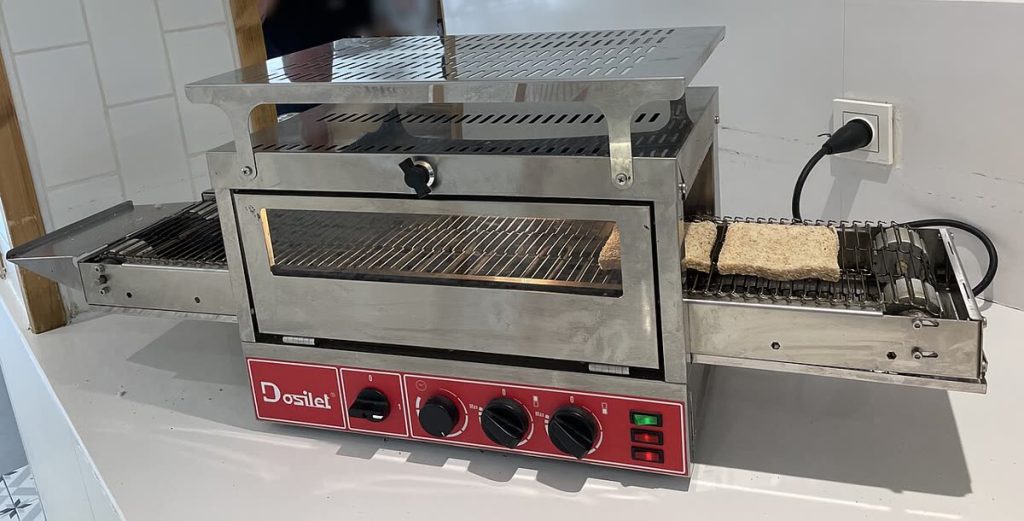
The toaster energy transformation is simple to state: electrical energy from the mains is converted into thermal (heat) energy, with a small amount of light energy as the elements glow. That heat travels to the bread mainly as infrared radiation, which dries and browns the surface. A little kinetic energy and sound are involved too, from the lever, spring and clicks.
Key takeaways
- Main transformation: electrical energy to thermal energy, with some light.
- The heating wires work by electrical resistance, the same principle as in a kettle or fire.
- Most heat reaches the bread as infrared radiation; some warms the toaster and room.
- Energy is never used up. It changes form and spreads into the surroundings.
How a toaster turns electricity into heat
When you push the lever down, a switch closes the circuit and current flows through thin ribbons or wires inside the slots. These are usually made from nichrome, an alloy of nickel and chromium chosen because it has high electrical resistance and can survive high temperatures without quickly oxidising or melting. You can read about the material on the Wikipedia page for nichrome.
As electrons push through the resistive wire they collide with atoms in the metal, making them vibrate more. That vibration is thermal energy, so the wire heats up fast. When it reaches a high enough temperature it glows orange-red, giving off visible light. Most of the radiation, though, is infrared, which our skin feels as heat even though our eyes cannot see it.
The energy chain step by step
- Electrical energy arrives from the mains supply.
- Resistance in the heating wires converts it to thermal energy.
- The hot wires emit infrared radiation and some visible light.
- The bread absorbs the radiation and its surface heats, dries and browns.
- Waste heat warms the casing, the air and the worktop.
In a simple diagram you could write: electrical energy, then heating element, then thermal (heat) energy and light, then toast. Label the arrows leading away from the toast as wasted energy.
Where does the energy go?
Almost all the electrical energy ends up as thermal energy, but not all of it lands in the toast. The table gives a rough picture of the outputs without putting specific percentages on them, as these vary between toasters and settings.
| Energy form | Where it appears | Useful? |
|---|---|---|
| Infrared radiation | Heats the bread surface | Yes, the main useful output. |
| Visible light | Glow of the elements | No, a small by-product. |
| Heat to the casing and air | Warm toaster body, room | No, wasted. |
| Kinetic energy | Lever, spring, carriage lift | Part of operation. |
| Sound | Click and pop of the mechanism | No, minor loss. |
Eventually every bit becomes thermal energy dispersed in the surroundings. That fits the principle of conservation of energy: the total stays the same, but it becomes less concentrated and less useful.
How toast actually browns
The colour and flavour change comes from the Maillard reaction, a set of chemical changes between sugars and amino acids in the bread that begins when the surface gets hot and dry. It is why toast tastes different from warm bread. Some thermal energy is therefore stored in new chemical compounds, while the rest drives off water as steam. If you are interested in controlling heat for crisp results in other kinds of cooking, our guide to the right deep-fryer oil temperature looks at a very different heating method with similar browning chemistry.
The pop-up mechanism
Pushing the lever down compresses a spring and latches the bread carriage in place. This stores elastic potential energy. A timer, a bimetallic strip that bends as it warms, or an electronic control then releases the latch, and the spring pushes the carriage up. Plenty of toasters also use a small electromagnet to hold the carriage down while current flows, which is released when the cycle ends. So a full description of the appliance can include chemical-to-kinetic energy from your arm, then stored elastic energy, then kinetic energy again.
Writing a school answer
If you are asked to describe the energy transformation in a toaster for a test, the standard answer is: electrical energy to thermal (heat) energy, with some light and sound. You can gain extra marks by naming the process (electrical resistance in the heating element), the transfer method (radiation to the bread) and the wasted outputs (heat to the surroundings).
A good model answer might read: “Electrical energy is transformed into thermal energy in the nichrome wires. Some is given out as light, but most is transferred by infrared radiation to the bread. Some energy is wasted as heat to the surroundings and sound.” Draw an energy transfer diagram, if the question allows, and do not forget to mention conservation of energy.
Comparing toasters with other appliances
A kettle also converts electrical energy to thermal energy by resistance, but the heat passes into water through conduction and convection rather than radiation. An old filament bulb pushes the same idea further, heating a wire so hot that more of the energy appears as light, although most of it is still heat. A fan motor is different: electrical energy turns mainly into kinetic energy, with some heat and sound.
The toaster is one of many everyday examples of heating through baking and drying. If you enjoy the science of food, take a look at what is in matzo meal, which is made from a dry-baked flatbread. For general background on the appliance, the Wikipedia article on toasters covers its history and design.
Common mistakes
- Saying energy is “used up” or “lost”. It is transformed and spread out, not destroyed.
- Forgetting that heat reaching the surroundings still counts as an output.
- Calling the visible glow the main output. Most useful heating is infrared.
- Mixing up the heat transfer methods. Toasters rely mainly on radiation, with some convection and conduction.
- Ignoring the mechanical parts and sound when the question asks about the whole appliance.
Frequently asked questions
Is a toaster 100 percent efficient at making heat?
Nearly all the electrical energy ends up as heat, but only part of it reaches the bread. The rest warms the toaster and the room, so the useful efficiency is lower.
What type of energy is the glow of the elements?
Visible light, which is a form of radiant energy. The invisible infrared radiation given off at the same time is what mostly toasts the bread.
Why do the heating wires not melt?
They are made from alloys such as nichrome, which withstand high temperatures and form a protective oxide layer. They also run well below their melting point.
Does a toaster waste energy?
Yes, in the sense that heat escaping to the casing and air does not toast the bread. Eventually, though, all the energy ends up as thermal energy in the surroundings.
What energy changes happen when the toast pops up?
Stored elastic energy in the spring is released as kinetic energy, which lifts the carriage. A small amount of sound energy is produced too.
Conclusion
The toaster energy transformation is a clear everyday example of how energy changes form. Electrical energy becomes heat through resistance, a little escapes as light, infrared radiation browns the bread, and the remainder warms the surroundings. Name each step in order, mention conservation of energy, and you will have a complete answer.
Key takeaways about toaster energy transformation
Here is a short summary of toaster energy transformation so you can find the main points quickly.
- The toaster energy transformation is simple to state: electrical energy from the mains is converted into thermal (heat) energy, with a small amount of light energy as the elements glow.
- When you push the lever down, a switch closes the circuit and current flows through thin ribbons or wires inside the slots.
- As electrons push through the resistive wire they collide with atoms in the metal, making them vibrate more.
- In a simple diagram you could write: electrical energy, then heating element, then thermal (heat) energy and light, then toast.
Good decisions about toaster energy transformation come from checking the facts, comparing your options and taking your time.
Save this guide to toaster energy transformation so you can find it again whenever you need a quick reminder.
If you only remember one thing about toaster energy transformation, make it the practical steps covered in this guide.
Check official sources before acting on anything related to toaster energy transformation, because details can change over time.
Questions about toaster energy transformation are common, so it helps to compare more than one trustworthy source.
Use this page as a starting point for toaster energy transformation and come back to it when your situation changes.
Related reading:
- Internal Temp of Halibut: When It Is Done and Juicy
- OSRS: How to Get to Hosidius (Routes and Travel Tips)
For general background, you can look up toaster energy transformation on Wikipedia.