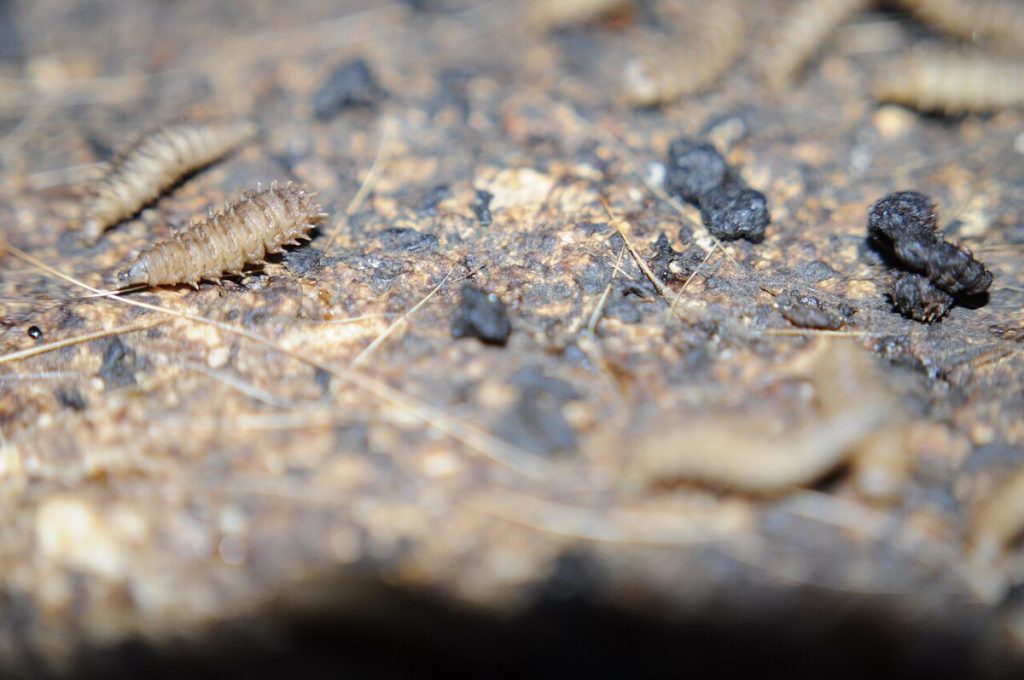
How are maggots formed? They are not made by rubbish or rotting food on its own. Maggots are the larvae of flies, and they hatch from eggs that adult flies lay on rotting food, animal waste or carcasses. In warm weather the eggs can hatch within a day, producing the small, pale, legless grubs most of us find unpleasant. Stop the flies reaching the food and you stop the maggots.
Key takeaways
- Maggots hatch from fly eggs; they do not appear from nowhere.
- Warmth speeds the life cycle, so summer is the main problem season.
- Bins, compost, pet food and dead animals are the usual breeding spots.
- Covering food, cleaning bins and removing waste promptly are the best prevention.
The old myth of spontaneous generation
For centuries, many people believed that living things could arise from decaying matter. Maggots seemed to prove it, as they would turn up in rotting meat as if from nowhere. In the seventeenth century, the Italian physician Francesco Redi tested the idea. He placed meat in jars, leaving some open, covering some with gauze and sealing others. Maggots appeared only where flies could reach the meat, and flies had been seen landing on the open jars. The experiment is a classic example of an early controlled test, and it pointed to flies as the source. You can read more on Francesco Redi on Wikipedia.
The fly life cycle
- Egg. An adult female finds a suitable food source such as meat, fish, food waste, pet food or manure, and lays batches of small, white eggs.
- Larva (maggot). The eggs hatch, often within hours to a day depending on species and temperature. The maggots feed and grow, shedding their skin several times.
- Pupa. When fully grown, the maggot leaves the food, often seeking a drier place, and forms a hard, brown case.
- Adult. After a few days to a couple of weeks, an adult fly emerges, and the cycle begins again.
Heat quickens the whole process and cold slows it. In hot weather a bin can go from clean to crawling in a few days, while in winter the same waste may hardly be touched.
Where maggots turn up at home
- Bins, especially those holding meat, fish or pet food scraps.
- Compost heaps and food waste caddies left uncovered.
- Pet bowls and litter that have not been cleaned.
- Dead animals, such as a mouse in a wall space or a bird in the garden.
- Forgotten food in a cupboard, a bag of shopping or a fridge that has failed.
- Drains with a build-up of organic matter, which can attract small flies.
If you find several maggots indoors with no obvious source, it is worth looking for something dead behind appliances, in loft spaces or under floors.
Different flies, different habits
| Fly | Typical breeding material | Notes |
|---|---|---|
| Bluebottle and greenbottle | Meat, fish, carcasses, bin waste | Fast to find food; often the culprits in bins |
| House fly | Manure, rotting waste | Common near animals and compost |
| Flesh fly | Carrion, waste | Sometimes lays live larvae |
| Fruit and drain flies | Fermenting fruit, sludge in drains | Produce much smaller larvae |
You do not have to identify the species to deal with the problem. The same clean-up and prevention steps work for all of them.
Getting rid of maggots
- Wear gloves and bag up the source: the waste, food or object they are in. Tie the bag and put it in an outside bin.
- Pour boiling water over maggots on hard surfaces such as a bin base or a patio, if it is safe to do so. Take care with scalds.
- Wash the bin with hot water and detergent, then rinse, dry in the sun and consider a disinfectant.
- Wipe the area and nearby surfaces with hot soapy water, and vacuum any that have wandered, emptying the vacuum straight away.
- Clean the cause: spilled liquid, pet bowls or the corner of a cupboard.
- If the source is a dead animal in the building or you cannot find it, contact pest control or your local council.
Maggots in an outdoor bin are common and generally harmless, but they are a sign that the bin needs more care. Maggots in an indoor kitchen mean you should check stored food straight away. Although they rarely bite or sting, flies and larvae can carry bacteria, so wash your hands and keep food covered. If you are looking for tiny pests in other parts of your home, see our guide to little black oval bugs in the house.
Preventing maggots
- Use bins with tight lids and keep them out of direct sun when possible.
- Wrap meat, fish and pet food scraps in sealed bags before binning, and freeze them until collection day in summer.
- Wash bins regularly, especially after emptying.
- Keep food waste caddies lined and emptied often.
- Cover compost with a lid or a layer of dry material, and avoid adding meat or fish.
- Clean pet bowls and litter areas daily.
- Use fly screens on windows and doors in warm weather.
- Keep the fridge cold enough to protect food. See our guide to average fridge temperatures for the settings to aim for.
Maggots and animals
Flies sometimes lay eggs on living animals, especially on soiled or wounded fur, and this condition, called flystrike, is a veterinary emergency. Sheep and rabbits are affected most commonly, but dogs and cats can be too. If you see maggots on a pet, contact a vet immediately. For a related pet topic that also needs prompt attention, our piece on a tick head left in a dog explains when to call a vet.
When maggots are useful
Maggots are not only a nuisance. Fly larvae break down dead plants and animals, returning nutrients to the soil, and some species are farmed as feed for fish and poultry or as bait for anglers. Sterile, specially bred larvae have even been used in medicine to clean certain stubborn wounds, a practice with a long history. None of that makes them welcome in the kitchen bin, but it explains why entomologists regard them as a vital part of natural recycling.
Frequently asked questions
Do maggots come from rotting food by themselves?
No. They hatch from fly eggs. Redi’s experiment in the seventeenth century showed that food protected from flies stays free of maggots.
How quickly do maggots appear?
In warm weather, eggs can hatch within hours to a day, so maggots can appear in a day or two after flies reach the waste.
Are maggots harmful?
They are not usually dangerous, but they signal unhygienic conditions and can spread bacteria. Wash hands and clean surfaces.
What do maggots turn into?
They become pupae, then adult flies, within a couple of weeks, depending on temperature and species.
How do I stop maggots in my bin?
Keep the lid closed, bag waste, especially meat and fish, clean the bin regularly and keep it in the shade.
Conclusion
Maggots come from flies, not from rot itself. Keep flies away from food and waste, clean up promptly in warm weather, and you will rarely meet them.
Key takeaways about how are maggots formed
Here is a short summary of how are maggots formed so you can find the main points quickly.
- For centuries, many people believed that living things could arise from decaying matter.
- Heat quickens the whole process and cold slows it.
- If you find several maggots indoors with no obvious source, it is worth looking for something dead behind appliances, in loft spaces or under floors.
- You do not have to identify the species to deal with the problem.
Save this guide to how are maggots formed so you can find it again whenever you need a quick reminder.
If you only remember one thing about how are maggots formed, make it the practical steps covered in this guide.
Check official sources before acting on anything related to how are maggots formed, because details can change over time.
Questions about how are maggots formed are common, so it helps to compare more than one trustworthy source.
Use this page as a starting point for how are maggots formed and come back to it when your situation changes.
Good decisions about how are maggots formed come from checking the facts, comparing your options and taking your time.
Related reading:
- Can Diabetics Eat Red Meat? What to Know About Beef
- Ice Caps and Snowcaps Weed: What the Slang Means
For general background, you can look up how are maggots formed on Wikipedia.