Yes, you can freeze tzatziki, but you should expect a change in texture. The yogurt separates and the cucumber releases water as it thaws, so the sauce comes back thinner and a little grainy. It is still safe to eat and works nicely in cooked dishes, marinades and dressings, but it is rarely as good as fresh when served as a cold dip. This guide explains why that happens, how to freeze tzatziki so it suffers as little as possible, and how to rescue it afterwards.
Key takeaways
- Tzatziki can be frozen, but the texture becomes watery and grainy once thawed.
- Thawed tzatziki is best used in marinades, sauces, soups and baked dishes rather than as a fresh dip.
- Squeeze the cucumber dry and use thick, full-fat Greek yogurt to get the best result.
- Freeze in small, airtight portions, label them, and use within about two months for best quality.
- Never refreeze tzatziki after it has thawed, and eat it within a day or two of defrosting.
Why tzatziki changes when it is frozen
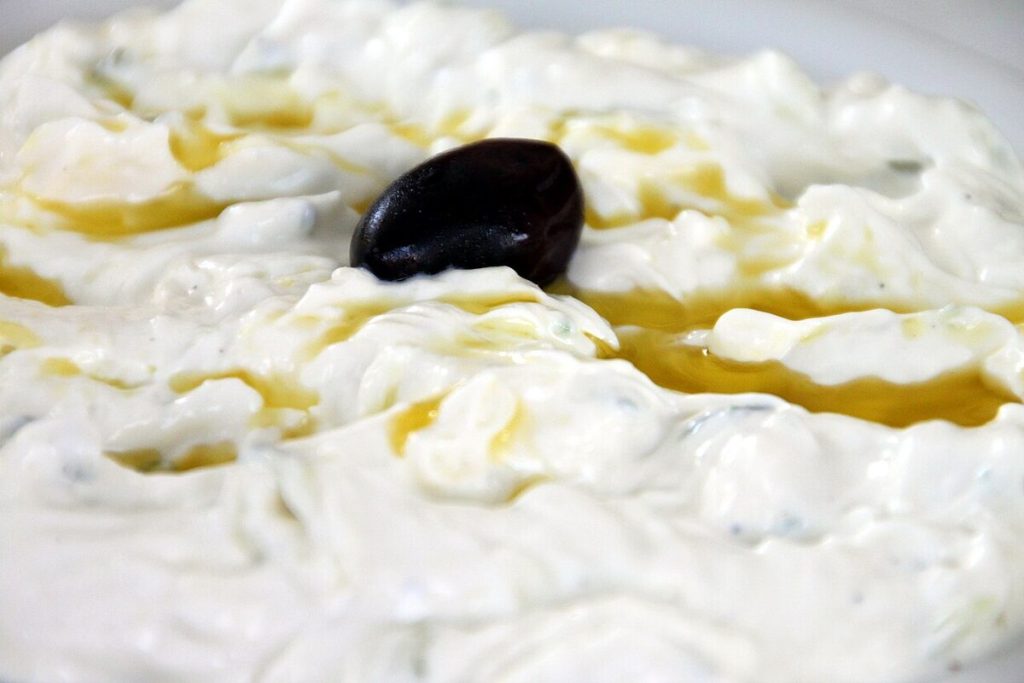
Tzatziki is made from strained yogurt, grated or diced cucumber, garlic, olive oil, lemon juice or vinegar, salt and herbs such as dill or mint. Two of those ingredients, yogurt and cucumber, are mostly water. When that water freezes it forms ice crystals, and the crystals break the delicate structure of the yogurt proteins and the walls of the cucumber cells.
On thawing, the yogurt can no longer hold its liquid, so you see a watery layer (whey) on top and a curdled, slightly grainy texture underneath. The cucumber also turns soft and limp. None of this makes the food unsafe. It simply affects the mouthfeel, which is why many cooks treat frozen tzatziki as an ingredient rather than a finished dip.
How to freeze tzatziki step by step
A little preparation reduces the damage. If you are making tzatziki specifically to freeze, consider leaving out the cucumber and stirring in fresh cucumber after thawing. If you are freezing a batch you have already made, follow these steps.
- Check freshness. Only freeze tzatziki that is fresh and has been kept cold. Do not freeze leftovers that have sat out on a table for hours.
- Drain off liquid. If water has gathered on top, pour it away or spoon the tzatziki into a fine sieve for a few minutes.
- Portion it. Divide into small amounts, such as two or four tablespoons per portion, so you only thaw what you need.
- Choose a container. Use airtight freezer-safe tubs, or spoon portions into an ice cube tray, freeze solid, then move the cubes to a freezer bag.
- Leave headroom. Liquid expands as it freezes, so leave a little space at the top of any rigid container.
- Label it. Write the date and contents on the container.
- Freeze quickly. Place it in the coldest part of the freezer, ideally at -18 C (0 F) or below.
Best ingredients for freezing
Thick, full-fat Greek yogurt freezes better than low-fat or loose yogurt because it contains less water and more fat to keep the texture smooth. Squeezing grated cucumber in a clean tea towel, or salting it and leaving it to drain, removes a good portion of the water that would otherwise leak out later.
How to thaw and fix frozen tzatziki
Always thaw tzatziki slowly in the fridge, not on the worktop. Leave small portions overnight, and larger tubs for a full day. Once thawed, you will probably see separation. Do not worry; this is normal.
- Pour off any watery liquid that has collected on top.
- Stir vigorously with a spoon or whisk to bring the yogurt back together.
- If it is still thin, stir in a spoonful of fresh thick Greek yogurt.
- Add freshly grated, well-drained cucumber for crunch.
- Taste and adjust with lemon juice, a little salt, fresh garlic or chopped herbs, because freezing dulls the flavour of garlic and herbs.
A splash of good olive oil on top at the end makes it look and taste more like the original. You will not get a perfect copy, but it can be surprisingly good after a bit of rescue work.
How long can you keep tzatziki?
Exact times depend on your recipe, your fridge and your freezer, so treat the figures below as general guidance rather than strict rules. Home-made versions generally last a shorter time than shop-bought ones, which are produced with preservatives or in controlled conditions. Always follow the date on shop-bought packaging and the storage instructions printed on it.
| Situation | Guideline | Notes |
|---|---|---|
| Home-made, in the fridge | About 3 to 4 days | Keep covered and cold, below 5 C (41 F) |
| Shop-bought, unopened | Until the use-by date | Follow the pack |
| Shop-bought, opened | Check the label, often a few days | Use a clean spoon each time |
| Frozen | Best within about 2 months | Safe for longer, but quality declines |
| Thawed in the fridge | Use within 1 to 2 days | Do not refreeze |
Best ways to use thawed tzatziki
Because the texture changes, think of defrosted tzatziki as a cooking ingredient. A few ideas that hide the graininess:
- Marinade for chicken or lamb. The acidity and yogurt tenderise meat, and any grainy texture disappears when cooked.
- Salad dressing. Whisk with extra lemon juice and olive oil until pourable.
- Sauce for baked potatoes or roasted vegetables. Warm dishes forgive texture problems.
- Flatbread spread. Spread on pitta or wraps with grilled vegetables or falafel.
- Soup swirl. Stir a spoonful into cold cucumber soup or a warm lentil soup.
- Blend it smooth. A quick pulse in a blender can bring back a creamy consistency, although the cucumber will no longer be chunky.
Freezer tips and common mistakes
Most failures with frozen tzatziki come down to a few avoidable errors.
- Freezing in a large tub. You end up thawing far more than you need. Small portions are far more practical.
- Leaving all the water in. Undrained cucumber is the biggest cause of a watery result.
- Refreezing. Every freeze-thaw cycle worsens the texture and raises food safety concerns. Freeze once and use what you thaw.
- Thawing at room temperature. This lets bacteria multiply. Use the fridge.
- Forgetting to label. Frozen white sauces look alike, and nobody wants a mystery tub.
If you enjoy preparing food in advance, you may also like our guides to how to freeze fresh mango and whether borscht can be frozen, which follow similar principles of portioning, cooling and thawing safely. For background on the dish itself, see the overview of tzatziki on Wikipedia.
When to throw it away
Food safety comes before saving money. Discard tzatziki if it smells sour in an unpleasant way, shows mould, has an unusual colour, or has been out of the fridge for more than a couple of hours. Do not rely on taste alone to decide. If you are pregnant, elderly, or have a weakened immune system, be extra careful with dairy-based foods that have been stored for a long time, and follow the advice of your national food safety agency.
Frequently asked questions
Can you freeze shop-bought tzatziki?
Yes, the same rules apply. Check the packaging first, because some products say not to freeze. Portion it into smaller containers rather than freezing the original tub, and expect a thinner texture when thawed.
Can you freeze tzatziki with cucumber in it?
You can, but the cucumber turns soft and releases water. For better results, freeze the yogurt base with garlic, lemon and herbs only, then add freshly grated, drained cucumber after defrosting.
How do you fix watery tzatziki after freezing?
Pour off the liquid, stir well, and mix in a spoonful of thick Greek yogurt. If you want a smooth sauce, blend it briefly. Adjust the seasoning with lemon juice, salt and fresh garlic.
Is it safe to eat tzatziki that has been frozen and thawed?
Yes, provided it was fresh when frozen, kept at a steady freezing temperature, thawed in the fridge and eaten within a day or two. Do not refreeze it.
Can you freeze homemade tzatziki in ice cube trays?
Yes, and it is one of the most convenient methods. Freeze the cubes on a tray, move them into a freezer bag, and drop a few into soups or marinades straight from the freezer.
Conclusion
You can freeze tzatziki, and with a bit of care it is useful for reducing waste, as long as you accept that it will no longer be the same silky dip. Drain the cucumber, choose thick yogurt, freeze in small portions, thaw it in the fridge and bring it back to life with fresh yogurt, lemon and herbs. Use it in cooking where texture matters less, and make a fresh batch when you want to serve it cold with warm pitta and crunchy vegetables.
Key takeaways about freeze tzatziki
Here is a short summary of freeze tzatziki so you can find the main points quickly.
- Yes, you can freeze tzatziki, but you should expect a change in texture.
- Tzatziki is made from strained yogurt, grated or diced cucumber, garlic, olive oil, lemon juice or vinegar, salt and herbs such as dill or mint.
- On thawing, the yogurt can no longer hold its liquid, so you see a watery layer (whey) on top and a curdled, slightly grainy texture underneath.
- Thick, full-fat Greek yogurt freezes better than low-fat or loose yogurt because it contains less water and more fat to keep the texture smooth.
Questions about freeze tzatziki are common, so it helps to compare more than one trustworthy source.
Related reading:
- How to Cook Frozen Meatballs on the Stove
- How to Say Hello in Ukrainian: Greetings and Pronunciation
For general background, you can look up freeze tzatziki on Wikipedia.