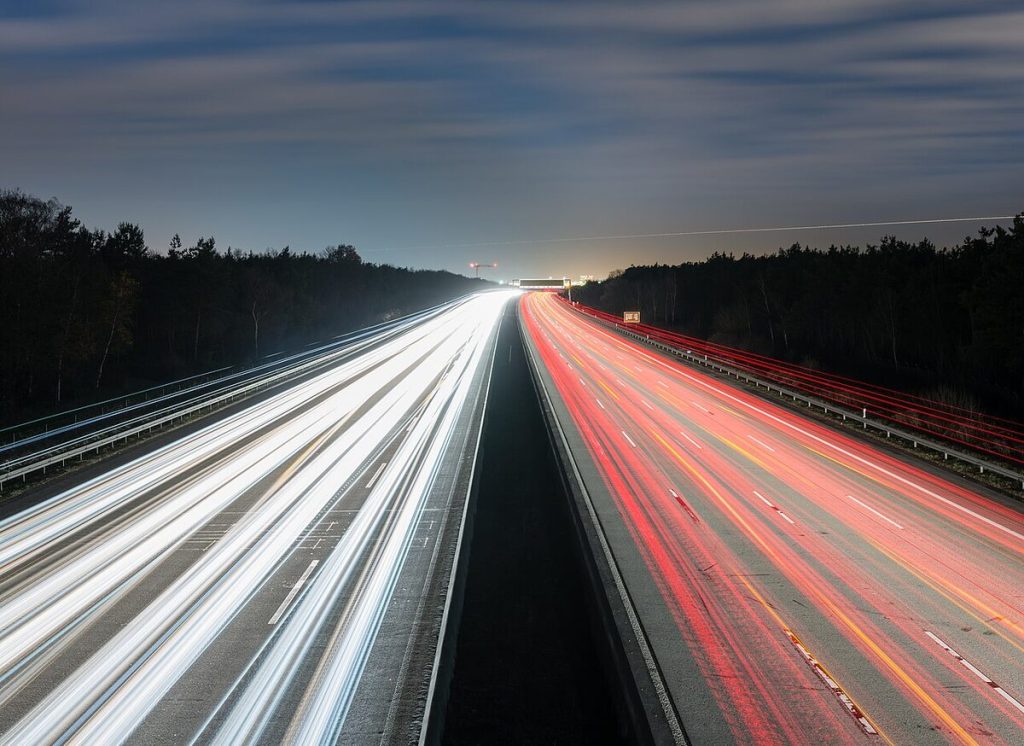
Germany has no general, nationwide speed limit on its autobahns, but many sections do have posted limits, so any autobahn speed limit map is only a snapshot. Where no limit sign is shown, a recommended speed of 130 km/h applies. There is no single fixed map of unrestricted stretches, because limits change with roadworks, traffic, weather and local decisions.
Key takeaways
- The 130 km/h figure is an advisory speed, not a legal maximum, on unrestricted sections.
- Many stretches have posted limits because of traffic, safety, noise or roadworks.
- Always obey signs and electronic gantries, which override any map you saw earlier.
- Drive on the right, overtake on the left only, and keep a long following distance.
How the autobahn speed rules work
On motorways without a posted limit, drivers are advised to keep to 130 km/h. This is a recommendation, not a legal maximum, but it matters: if you are involved in a crash at higher speed, you may be held partly responsible even if you were not breaking a posted limit. Insurance and liability rules are complicated, so treat the advisory speed as a sensible reference point.
Limits are also applied in many places for safety or noise reasons, around junctions, in built-up areas, at roadworks and on busy sections. Some stretches use electronic signs that change the limit according to traffic, weather or time of day. A section with no limit in the morning can have one in the afternoon.
Why a fixed autobahn speed limit map is hard to find
People often search for a map showing unrestricted stretches. Reliable ones are hard to produce for a few reasons.
- Constant change. Roadworks, new signs and local decisions alter limits regularly.
- Variable signs. Gantries can switch a section from unrestricted to limited in minutes.
- Different data sources. Navigation apps and community maps use different datasets and may disagree.
- Time lag. A map made last year may be out of date.
The practical lesson is to use maps for planning and the signs on the road for decisions.
How to plan using maps and apps
- Use a current navigation app. Many show speed limits and warn of changes, and some mark sections with no known limit.
- Check traffic and roadworks. Live traffic information helps you avoid slow stretches.
- Treat community maps as a guide. They can be useful, but they are not official.
- Read the signs as you drive. A circular sign with a number is a limit, and a sign with the end of limit marking tells you it has finished.
- Check official travel advice. The UK government publishes travel advice for Germany with driving information.
Sign guide
| What you see | What it means |
|---|---|
| Round sign with a red border and number | Maximum speed in km/h |
| Grey-striped end-of-restriction sign | The previous limit or restriction has ended |
| Electronic gantry sign | Current limit, which may change with conditions |
| Blue rectangular sign with a number | Recommended speed |
Driving on the autobahn: practical tips
Lane discipline
Keep to the right unless you are overtaking. The left lane is for passing, and fast cars can approach very quickly. Overtaking on the right is not allowed on the autobahn, so be patient when faster vehicles are behind you. Check mirrors early and often, and signal clearly.
Distance and braking
Speed makes stopping distances much longer. Keep a generous gap, and slow down early for traffic ahead. Sudden braking at high speed is dangerous.
Vehicle preparation
If you are driving a hire car or your own, check tyre pressures and condition, oil, coolant and lights before a long journey. Tyres matter more at sustained high speed, and our article on Iron Man tyre origins is a reminder to know your brand and its ratings. Check the speed rating of your tyres matches how you will drive.
Emergencies
If traffic stops, drivers are expected to create a corridor for emergency vehicles: those in the left lane move left and the others move right. If your vehicle breaks down, move it to the hard shoulder if you can, put on hazard lights, wear a high-visibility vest and place the warning triangle at a distance. Wait behind the barrier and call for help.
Rules for visitors from the UK
- Drive on the right and remember that roundabouts and junctions work the opposite way round.
- Carry required equipment such as a warning triangle, first-aid kit and reflective vest, and check current requirements before travelling.
- Have your licence, vehicle documents and insurance ready, and confirm cover for driving abroad.
- Look out for low-emission zones in German cities, which may need a sticker.
- Speed cameras are used, and fines can be sent to the vehicle keeper, including hire car companies.
For background on the network, see the Autobahn article on Wikipedia.
Is faster really better?
Driving fast is tiring and uses much more fuel. Many experienced drivers cruise near the advisory speed, which is smoother, cheaper and less stressful. Also remember that traffic is often heavy, especially near cities and in holiday periods, so you may rarely get the chance to go quickly anyway.
Common myths about the autobahn
- Myth: the whole network is a free-for-all. In reality, a large part of the network carries a posted limit, and congestion often keeps real speeds low.
- Myth: signs only matter in towns. Limits are also used on rural stretches with hazards, junction-heavy sections and wet-weather zones.
- Myth: tourists get special treatment. Foreign drivers follow the same rules and can receive the same penalties as local drivers.
Best times to drive
Early mornings, late evenings and mid-week travel generally mean lighter traffic than rush hours, Friday afternoons or the start and end of school holidays. Roadworks are common in summer, so check live traffic information before leaving. Allow breaks every couple of hours, because concentration drops on long, fast journeys.
Frequently asked questions
Is there really no speed limit on the autobahn?
There is no general limit, but many sections have limits. Where none is posted, 130 km/h is advised.
Where are the unrestricted sections?
They change over time. Use up-to-date navigation and watch for signs rather than relying on an old map.
Can I be fined for going over 130 km/h?
Not for the advisory speed alone, but you can be held partly liable in an accident, and posted limits are enforced.
Can I overtake on the right?
No, overtaking on the right is generally not allowed on the autobahn.
Are hire cars allowed on unrestricted sections?
Usually yes, but check your rental agreement and insurance terms.
Conclusion
An autobahn speed limit map can help you plan, but it can never replace the signs in front of you. Remember that 130 km/h is a recommendation, limits change often, and safe, calm driving matters more than top speed.
Key takeaways about autobahn speed limit map
Here is a short summary of autobahn speed limit map so you can find the main points quickly.
- Germany has no general, nationwide speed limit on its autobahns, but many sections do have posted limits, so any autobahn speed limit map is only a snapshot.
- On motorways without a posted limit, drivers are advised to keep to 130 km/h.
- Limits are also applied in many places for safety or noise reasons, around junctions, in built-up areas, at roadworks and on busy sections.
- People often search for a map showing unrestricted stretches.
Questions about autobahn speed limit map are common, so it helps to compare more than one trustworthy source.
Use this page as a starting point for autobahn speed limit map and come back to it when your situation changes.
Good decisions about autobahn speed limit map come from checking the facts, comparing your options and taking your time.
Save this guide to autobahn speed limit map so you can find it again whenever you need a quick reminder.
Related reading:
- Charles Coleman Jr.: Finding Reliable Biographical Information
- Is Seafood High in Cholesterol? What You Need to Know
For general background, you can look up autobahn speed limit map on Wikipedia.