Converting 3/4 cup to g depends entirely on what you are measuring, because a cup is a measure of volume and grams measure weight. Three quarters of a cup of water is about 177 grams, but the same volume of plain flour is roughly 90 to 95 grams, and sugar is around 150 grams. This guide gives you a reliable table of common ingredients, explains the differences between cup sizes, and shows you how to measure without errors.
Key takeaways
- There is no single answer: 3/4 cup in grams depends on the ingredient’s density.
- Quick values: water about 177 g, plain flour about 90 to 95 g, granulated sugar about 150 g, butter about 170 g.
- Cup size differs by country; an Australian metric cup is 250 ml, so 3/4 cup is 187.5 ml.
- A kitchen scale is the most accurate way to follow a recipe.
Why a cup does not convert to one number of grams
A cup holds a fixed amount of space. How much it weighs depends on how heavy the ingredient is for its size. A cup of honey is dense and heavy, while a cup of cocoa powder is light and fluffy. Packing also matters: flour scooped straight from the bag can weigh up to 20 percent more than flour spooned lightly into the cup.
That is why professional bakers weigh ingredients. If a recipe offers weights in grams, use them. If it gives cups only, use the table below as a close approximation, and remember that results can vary by brand and technique.
3/4 cup to g for common ingredients
The figures below use the US customary cup of about 237 ml. They are approximate.
| Ingredient | 1 cup (approx.) | 3/4 cup (approx.) |
|---|---|---|
| Water or milk | 237 g | 177 g |
| Plain (all-purpose) flour | 120 to 125 g | 90 to 94 g |
| Granulated sugar | 200 g | 150 g |
| Caster (superfine) sugar | 200 g | 150 g |
| Brown sugar, packed | 213 g | 160 g |
| Icing (powdered) sugar | 120 g | 90 g |
| Butter | 227 g | 170 g |
| Honey or golden syrup | 340 g | 255 g |
| Uncooked white rice | 185 g | 140 g |
| Rolled oats | 90 g | 68 g |
| Cocoa powder | 85 to 100 g | 64 to 75 g |
| Chopped nuts | 120 to 140 g | 90 to 105 g |
If the ingredient you need is not listed, look for a trustworthy conversion chart or weigh one cup on your own scales and multiply by three quarters.
Australian, Canadian and UK cups
Because the question often comes from Australia, here is the key difference. An Australian metric cup is 250 ml, a little larger than the US cup. That makes 3/4 cup equal to 187.5 ml. A tablespoon is 20 ml in Australia versus 15 ml in the US. Weights per cup therefore go up slightly.
| Ingredient | Australian 3/4 cup (approx.) |
|---|---|
| Water or milk | 187 g |
| Plain flour | About 112 g |
| Caster sugar | About 165 g |
| Butter | About 170 g |
| Brown sugar, firmly packed | About 140 g |
| Rolled oats | About 70 g |
Canada uses a mix of metric and imperial recipes, with a typical cup of 250 ml in newer recipes. Older UK recipes may use an imperial cup of around 284 ml. See the Wikipedia page on cooking weights and measures for the background. If a recipe came from overseas, check which cup it assumes.
How to measure 3/4 cup accurately
Using cups
- Use dry measuring cups for dry ingredients and a jug for liquids.
- Fluff the flour with a spoon, then spoon it into the cup and level it with a knife.
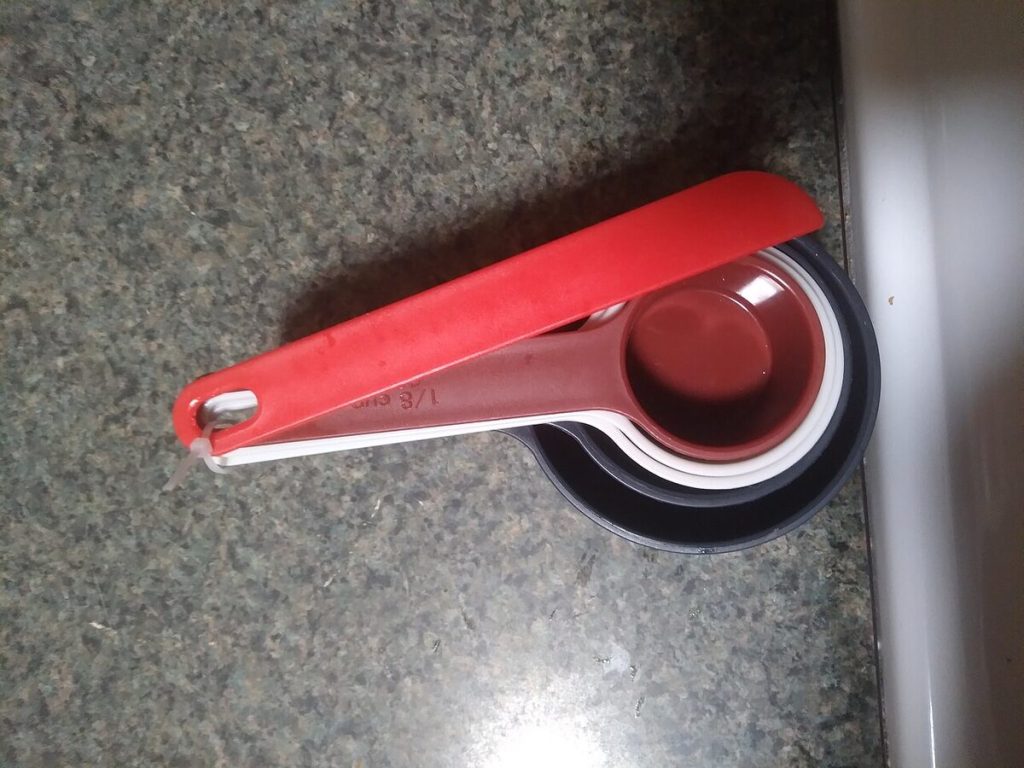
- If you only have a 1/4 cup and 1/2 cup, use both, or use a 1/4 cup three times.
- Pack brown sugar firmly unless told otherwise.
Using a scale
- Place a bowl on the scale and press tare to zero it.
- Add the ingredient until you reach the gram weight.
- Tare again before adding the next ingredient.
This is faster, creates fewer dishes and gives more consistent bakes.
No scale and no 3/4 cup measure?
You can build 3/4 cup from smaller measures. In the US system it equals 12 tablespoons, 6 fluid ounces or about 177 ml. For metric cups, it is 187.5 ml, or 9 and three quarter Australian tablespoons, which is awkward, so use a 1/4 cup three times instead. If you are curious about the smaller quantities, our quick page on whether 100 ml equals 1/4 cup lays out that conversion.
Common recipes where this matters
Rice is a good example, since cups are commonly used for both the grain and the water. Our articles on the water to rice ratio for jasmine and the ratio of rice to water for basmati show how to turn a cup measure into a reliable result. For grains with more fibre, you might be interested in our overview of pearled barley.
Scaling a recipe up or down
Three quarters of a cup is a common amount when you are halving a one-and-a-half cup recipe or cutting down a larger one. The easiest approach is to convert everything into grams first, then do the arithmetic. For example, if a recipe needs 1½ cups of sugar, that is about 300 grams; halving it gives 150 grams, which matches the 3/4 cup figure above. Weighing removes the fractions and reduces washing up.
Remember that small errors compound in baking. A tablespoon too much flour can make a cake dry, and too little sugar can change both texture and browning. If you convert a recipe often, write the gram weights next to the cup amounts in your cookbook or on a note on the cupboard door, so you will not need to look them up again.
Frequently asked questions
How many grams is 3/4 cup of flour?
About 90 to 94 grams of plain flour with the US cup, or around 112 grams if you use a 250 ml Australian cup. It varies with how you pack the cup.
How many grams is 3/4 cup of sugar?
About 150 grams of granulated or caster sugar with a US cup. Brown sugar is about 160 grams when packed.
How many grams is 3/4 cup of butter?
Roughly 170 grams, which is also 12 tablespoons or one and a half US sticks.
Is 3/4 cup the same in grams everywhere?
No. The number depends on both the ingredient and the cup standard used in your country.
What is 3/4 cup in ml?
About 177 ml for a US cup, and 187.5 ml for a 250 ml metric cup.
Conclusion
For 3/4 cup to g, always start by asking what the ingredient is and which cup size the recipe uses. Use the tables here for quick estimates, and if you bake often, a digital scale will pay for itself in consistent results.
Key takeaways about 3/4 cup to g
Here is a short summary of 3/4 cup to g so you can find the main points quickly.
- Converting 3/4 cup to g depends entirely on what you are measuring, because a cup is a measure of volume and grams measure weight.
- A cup holds a fixed amount of space.
- The figures below use the US customary cup of about 237 ml.
- If the ingredient you need is not listed, look for a trustworthy conversion chart or weigh one cup on your own scales and multiply by three quarters.
Save this guide to 3/4 cup to g so you can find it again whenever you need a quick reminder.
If you only remember one thing about 3/4 cup to g, make it the practical steps covered in this guide.
Check official sources before acting on anything related to 3/4 cup to g, because details can change over time.
Related reading:
- Which US Military Branch Is the Oldest? The Army, 1775
- ipconfig on a Mac: What to Type Instead (Terminal Guide)
For general background, you can look up 3/4 cup to g on Wikipedia.