How many neutrons does Na have? The common, naturally occurring form of sodium, sodium-23, has 12 neutrons. Sodium’s atomic number is 11, so every sodium atom has 11 protons, and 23 minus 11 leaves 12 neutrons in the nucleus.
Key takeaways
- Sodium (symbol Na) has 11 protons, and the usual isotope, sodium-23, has 12 neutrons.
- Neutrons = mass number minus atomic number (23 – 11 = 12).
- The ion Na+ has the same nucleus, so it still has 12 neutrons; only its electrons change.
- Other isotopes, such as sodium-22 and sodium-24, have different neutron counts but are radioactive.
The simple calculation
Na is the chemical symbol for sodium, taken from its Latin name natrium. To find the neutrons in any atom, you only need two numbers.
- Find the atomic number. It is the whole number shown on the periodic table, and it equals the number of protons. For sodium it is 11.
- Find the mass number of the isotope you are interested in. This is the total of protons plus neutrons. For ordinary sodium it is 23.
- Subtract: 23 – 11 = 12 neutrons.
In a neutral atom the number of electrons equals the number of protons, so a neutral sodium atom has 11 electrons too. The neutron count does not affect the charge, which is why neutrons are described as neutral.
Summary of particles in a sodium atom
| Particle | Neutral Na-23 | Na+ ion |
|---|---|---|
| Protons | 11 | 11 |
| Neutrons | 12 | 12 |
| Electrons | 11 | 10 |
Why the periodic table shows about 22.99
If you look at sodium on the periodic table, you will see an atomic mass of roughly 22.99, not a neat 23. That figure is a weighted average of the masses of the isotopes found in nature, measured in atomic mass units. It is not a count of particles, so it is never the right thing to subtract from directly.
Sodium is lucky because it has only one stable isotope, so the average sits extremely close to a whole number. Rounding 22.99 to 23 and subtracting 11 gives the correct answer for ordinary sodium. For elements with several common isotopes, such as chlorine (roughly 35 and 37), rounding the average can lead you wrong, so it pays to know which isotope a question refers to.
Other isotopes of sodium
Isotopes are atoms of the same element, meaning the same number of protons, but with different numbers of neutrons. Sodium-23 is the only stable isotope found in nature in meaningful amounts. Several others have been made in laboratories and nuclear reactions, and they are radioactive, meaning they decay over time.
| Isotope | Protons | Neutrons | Notes |
|---|---|---|---|
| Sodium-22 | 11 | 11 | Radioactive, made artificially |
| Sodium-23 | 11 | 12 | The only stable, natural isotope |
| Sodium-24 | 11 | 13 | Radioactive, short-lived |
The half-lives and uses of the radioactive isotopes are specialist data, so if you need exact figures for coursework or research, check a current reference such as the periodic table pages of a university or national standards body. The isotopes of sodium page on Wikipedia gives a good overview.
What about sodium ions?
In table salt and inside your body, sodium usually exists as the ion Na+. Sodium has just one electron in its outer shell, and it loses that electron easily, leaving a positively charged ion.
This change affects only the electrons. The nucleus is untouched, so Na+ still has 11 protons and 12 neutrons. The electron count drops from 11 to 10, giving a net charge of +1. A common exam mistake is to subtract the charge from the neutrons; remember that charge relates to electrons and protons only.
Common mistakes to avoid
- Using the atomic mass as the mass number. Round it to the nearest whole number for the common isotope, or use the stated mass number.
- Confusing atomic number and mass number. The smaller number is the atomic number (protons); the larger is the mass number.
- Changing the neutron count for ions. Ions form by gaining or losing electrons, not neutrons.
- Forgetting the isotope. A question about “sodium” in school chemistry almost always means sodium-23.
A quick method for any element
You can use the same routine for any element. Look up the atomic number, decide which isotope you need, and subtract. For example, carbon-12 has 6 protons and 6 neutrons, while carbon-14 has 6 protons and 8 neutrons. The calculation always follows the same pattern: mass number minus atomic number.
It is a bit like other everyday conversions where you need to be sure which number is which. If you enjoy working with quick calculation rules, our guide to grams in half a pound and the explainer on converting cups of butter to sticks follow the same “know your starting number” approach.
Why sodium matters
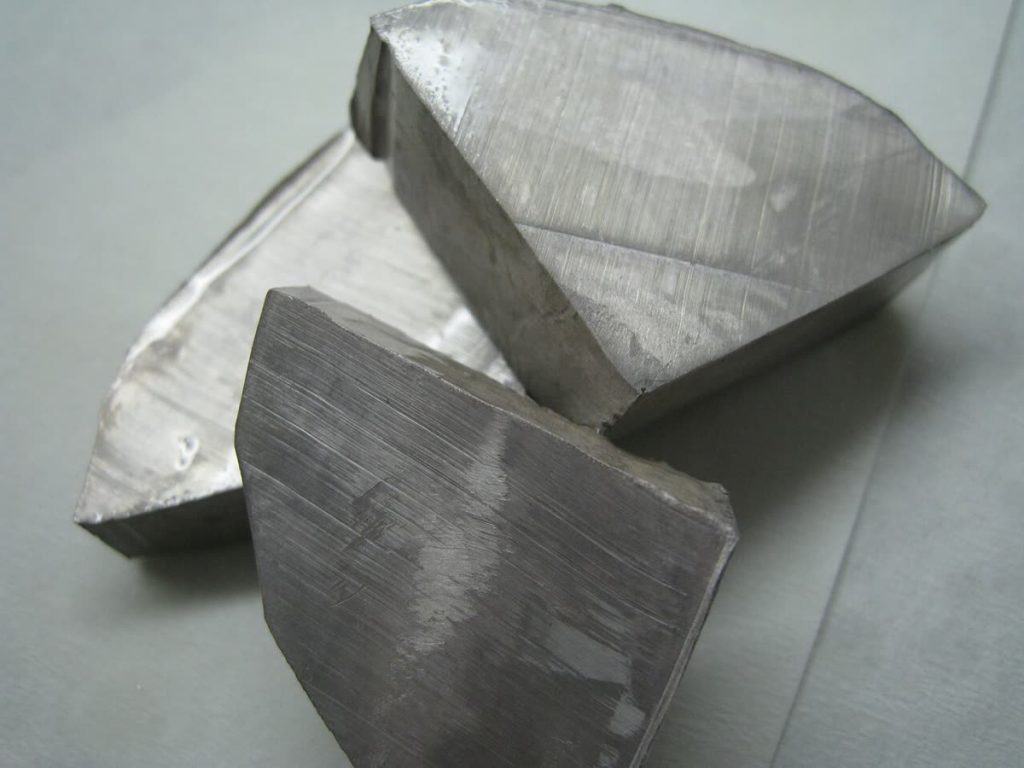
Sodium is a soft, silvery alkali metal that reacts vigorously with water, so it is stored under oil in laboratories. In nature it is found only in compounds, the most familiar being sodium chloride, or table salt.
Sodium ions are essential in the human body. They help nerves send signals, muscles contract and fluids stay in balance. If you want advice on how much salt is healthy, the NHS has guidance at nhs.uk; this is a health question, not a chemistry one, so rely on official sources for it.
A worked example you can try
Suppose a worksheet asks for the neutrons in an atom written as 23Na with the atomic number 11. Read the superscript as the mass number (23) and the subscript as the atomic number (11). Subtract to get 12. Now try magnesium-24, which has atomic number 12: 24 minus 12 gives 12 neutrons as well. Practising on a few neighbouring elements on the periodic table makes the pattern stick, and it shows that the neutron count is often close to the proton count in lighter elements.
Frequently asked questions
How many neutrons does sodium-23 have?
Twelve. Sodium-23 has 11 protons, and 23 minus 11 equals 12 neutrons.
How many protons, neutrons and electrons does Na have?
A neutral sodium atom of the common isotope has 11 protons, 12 neutrons and 11 electrons.
Does the Na+ ion have a different number of neutrons?
No. Na+ has 11 protons, 12 neutrons and 10 electrons. Forming an ion only changes the electron count.
Why is sodium’s atomic mass 22.99 and not 23?
The figure is a weighted average of isotope masses, and the mass of a nucleus is slightly less than the sum of its protons and neutrons because of binding energy. For quick calculations, round to 23.
What is the symbol Na short for?
It comes from natrium, the Latin name for sodium. The English name comes from “soda”.
Conclusion
When someone asks how many neutrons Na has, the answer for ordinary sodium is 12. Remember the formula (mass number minus atomic number), keep ions and isotopes separate in your head, and the same method will work for every other element on the periodic table.
Key takeaways about how many neutrons does na have?
Here is a short summary of how many neutrons does na have? so you can find the main points quickly.
- Na is the chemical symbol for sodium, taken from its Latin name natrium.
- In a neutral atom the number of electrons equals the number of protons, so a neutral sodium atom has 11 electrons too.
- If you look at sodium on the periodic table, you will see an atomic mass of roughly 22.99, not a neat 23.
- Sodium is lucky because it has only one stable isotope, so the average sits extremely close to a whole number.
Good decisions about how many neutrons does na have? come from checking the facts, comparing your options and taking your time.
Save this guide to how many neutrons does na have? so you can find it again whenever you need a quick reminder.
If you only remember one thing about how many neutrons does na have?, make it the practical steps covered in this guide.
Check official sources before acting on anything related to how many neutrons does na have?, because details can change over time.
Questions about how many neutrons does na have? are common, so it helps to compare more than one trustworthy source.
Use this page as a starting point for how many neutrons does na have? and come back to it when your situation changes.
Related reading:
- Is Rabies Airborne? How the Virus Really Spreads
- How to Pull a Tooth at Home for Adults: Safety First
For general background, you can look up how many neutrons does na have? on Wikipedia.