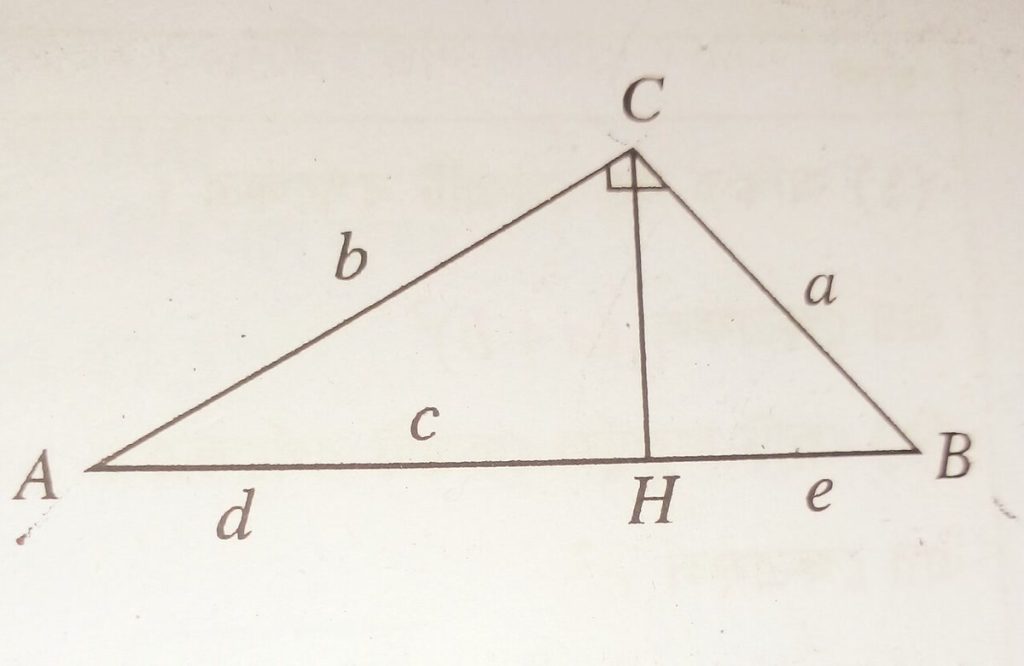
In the theorem vs postulate question, the short answer is that a postulate is a statement accepted as true without proof, used as a starting point, while a theorem is a statement that has been proved from postulates and from other theorems. Postulates are the foundations; theorems are the buildings constructed on them. Everything else in the vocabulary of proof, from axiom to lemma to conjecture, fits around that basic split.
Key takeaways
- A postulate is assumed; a theorem is proved.
- In modern usage, “postulate” and “axiom” mean nearly the same thing.
- Theorems rely on a chain of logic back to accepted starting points.
- A conjecture is a claim not yet proved; once proved, it becomes a theorem.
- Lemmas and corollaries are theorems with particular jobs: stepping stone and consequence.
What a postulate is
A postulate is a statement a mathematician agrees to accept as true so that reasoning can begin. You cannot prove everything, because every proof needs something to rest on. Mathematics therefore picks a small set of starting statements, makes them explicit, and builds from them. Good postulates are simple, believable and not contradictory with one another.
The classic example comes from geometry. Euclid’s Elements, written around 300 BC, opens with five postulates, including that a straight line can be drawn between any two points and that all right angles are equal. His fifth, the parallel postulate, says in effect that through a point not on a given line there is exactly one line parallel to it (in the version most textbooks use). For centuries mathematicians wondered if it could be proved from the others. In the nineteenth century they showed it could not, and that replacing it creates other consistent geometries. The Wikipedia page on Euclid’s Elements tells the story in more detail.
What a theorem is
A theorem is a statement that has been shown to be true by a logical proof. The proof starts with postulates, definitions and previously proved theorems and moves step by step to the conclusion. Once a theorem is proved, it can be used without redoing the proof. The Pythagorean theorem, which says that in a right-angled triangle the square on the hypotenuse equals the sum of the squares on the other two sides, is the best-known example. The Wikipedia article on theorems is a good overview of how the word is used.
Notice that a theorem is not a guess or a rule of thumb. If a proof has a gap, the statement is not yet a theorem, whatever the evidence from examples. This is why mathematicians treat proof as the gold standard.
Theorem vs postulate: side by side
| Feature | Postulate | Theorem |
|---|---|---|
| Status | Assumed true | Proved true |
| Needs a proof? | No | Yes |
| Role | Starting point of a system | Result derived within the system |
| Example | Euclid’s: any two points can be joined by a straight line | The angles of a triangle add up to 180 degrees in Euclidean geometry |
| Can it change? | Yes, if you change the system | Only if the postulates change |
Is a postulate the same as an axiom?
Historically, the Greeks drew a line between the two: axioms were general truths about quantity (for instance, things equal to the same thing are equal to each other), while postulates were claims specific to geometry. Today the distinction has largely faded. In modern textbooks, both words describe unproved starting assumptions, and different books use them interchangeably. Some authors keep “postulate” for geometry and “axiom” for algebra and logic, and you might see both in the same course. The Wikipedia entry on axioms explains the shifts in meaning.
The wider family of terms
- Definition: fixes what a word means, such as what a prime number is.
- Conjecture: a claim believed to be true but not yet proved. Famous examples have stood for decades or centuries.
- Lemma: a smaller proved statement used as a stepping stone for a bigger theorem.
- Corollary: a result that follows quickly from a theorem.
- Proposition: a proved statement of lesser importance than a theorem, depending on the author.
Not every author uses the same labels, and importance is partly a matter of taste. The logic is what matters: everything except the starting assumptions has to be justified.
How to tell them apart when you meet them
- Look at the wording. Statements introduced with “assume” or “we accept” are postulates; statements followed by a “proof” are theorems.
- Ask whether the book supplies an argument. If there is a proof, it is a theorem.
- Check the context. In a geometry course, the first handful of numbered statements are usually postulates.
- If you are unsure, ask what would happen if the statement were false. If the whole system changes, it is likely a postulate; if a contradiction appears from the other statements, it is a theorem.
Why the difference matters
Understanding which statements are assumed helps you see why different mathematical worlds exist. Change the parallel postulate and you get spherical or hyperbolic geometry, where triangle angles do not sum to 180 degrees. Both are internally consistent. Changing the starting assumptions gives new theorems, not wrong ones. This idea also matters in logic, computing and physics, where models are built on stated assumptions and conclusions are only as sound as those assumptions.
It also helps with study. When students learn geometry by memorising theorems with no sense of the foundations, they find it harder to see how results connect. Identifying postulates gives a map. Precision about definitions is a habit in other fields as well; the same care applies when converting units, as in the explainer on how many ounces are in half a pint, where the answer depends entirely on which definition of a pint you start from. Likewise, the post on the US dry pint shows how a changed starting definition gives a different result.
Frequently asked questions
Can a postulate ever be proved?
Within the same system, no, because it is assumed. But a statement that is a postulate in one system can sometimes be proved as a theorem in another set of assumptions.
Is the Pythagorean theorem a postulate?
No. It is a theorem, with many known proofs from the basic postulates of Euclidean geometry.
What is the difference between a theorem and a conjecture?
A conjecture is an unproved claim; a theorem is proved. Once a conjecture is proved, it is promoted to a theorem.
Are axioms and postulates the same thing?
In most modern contexts, yes. Older sources separate them, with axioms being general and postulates geometric, but many texts use the terms interchangeably.
What is the difference between a theorem and a lemma?
Both are proved. A lemma is mainly valued as a helper for a larger result, while a theorem is a result of interest in its own right.
Conclusion
The theorem vs postulate distinction comes down to proof: postulates are the agreed starting points, and theorems are what you can prove from them. Keep that in mind and the rest of the terminology, from axiom to corollary, falls into place.
Key takeaways about theorem vs postulate
Here is a short summary of theorem vs postulate so you can find the main points quickly.
- A postulate is a statement a mathematician agrees to accept as true so that reasoning can begin.
- A theorem is a statement that has been shown to be true by a logical proof.
- Notice that a theorem is not a guess or a rule of thumb.
- Historically, the Greeks drew a line between the two: axioms were general truths about quantity (for instance, things equal to the same thing are equal to each other), while postulates were claims specific to geometry.
Use this page as a starting point for theorem vs postulate and come back to it when your situation changes.
Good decisions about theorem vs postulate come from checking the facts, comparing your options and taking your time.
Save this guide to theorem vs postulate so you can find it again whenever you need a quick reminder.
If you only remember one thing about theorem vs postulate, make it the practical steps covered in this guide.
Check official sources before acting on anything related to theorem vs postulate, because details can change over time.
Questions about theorem vs postulate are common, so it helps to compare more than one trustworthy source.
Related reading:
- World Record for the Longest Poop: Is There an Official One?
- Sturgeon Stardew Valley: A Step-by-Step Fishing Technique Guide
For general background, you can look up theorem vs postulate on Wikipedia.