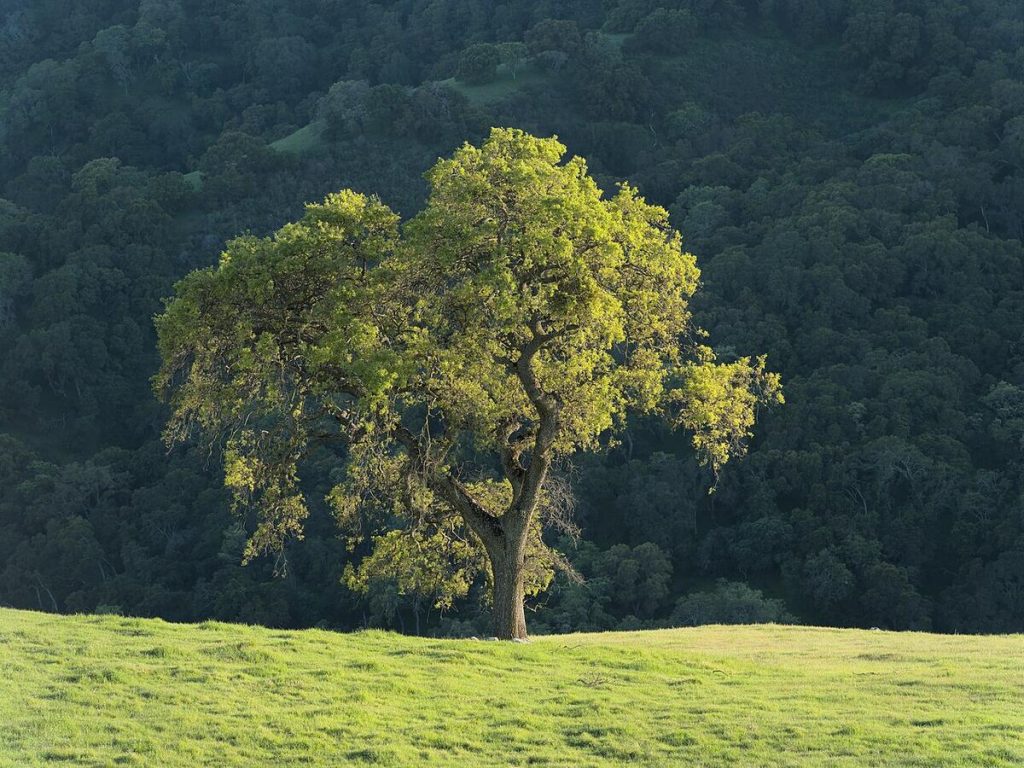
The best multicellular examples are the living things you see every day: humans, dogs, oak trees, roses, mushrooms, earthworms, fish and seaweed. A multicellular organism is simply a living thing made of many cells that work together, as opposed to a unicellular organism such as a bacterium or an amoeba, which is a single cell doing everything itself.
Key takeaways
- Multicellular organisms are built from many cells, usually with different cell types doing different jobs.
- Examples occur in animals, plants, fungi and several groups of algae.
- Cells in complex organisms are organised into tissues, organs and systems.
- Not every fungus or alga is multicellular: yeast and many algae are single-celled.
What does multicellular mean?
“Multi” means many, so a multicellular organism has many cells. Crucially, these cells do not live independently; they stick together, communicate and, in most cases, specialise. Your skin cells, nerve cells and muscle cells all carry the same genetic material, but they behave very differently because different genes are switched on in each. This division of labour is what allows large, complex bodies to exist.
A unicellular organism, by contrast, carries out all life processes inside one cell: feeding, respiration, reproduction and response to the environment. Bacteria, many protozoa and yeasts are common examples.
Multicellular examples in animals
Practically every animal you can name is multicellular. They range from simple to highly complex.
- Sponges. Among the simplest animals, with several cell types but no true organs.
- Jellyfish and corals. Have tissue layers and specialised stinging cells.
- Earthworms and other worms. Show organ systems such as digestion and circulation.
- Insects, spiders and crabs. Arthropods with hard outer skeletons and complex organs.
- Fish, frogs, reptiles, birds and mammals. Vertebrates with skeletons, nervous systems and many organ systems.
- Humans. A well-known estimate is that the adult body contains many trillions of cells, though exact numbers vary between studies.
Multicellular examples in plants
Land plants are multicellular, with specialised tissues for photosynthesis, support and transport of water and sugars.
- Trees such as oak, beech and pine.
- Flowering plants such as roses, daisies, tomatoes and wheat.
- Ferns, which reproduce with spores rather than seeds.
- Mosses and liverworts, which are small and lack true roots but still have many cells.
Within a plant, you can find root cells that absorb water, leaf cells packed with chloroplasts, and xylem and phloem cells that act as the plumbing.
Multicellular examples in fungi
Many fungi are multicellular, though they are organised differently from animals and plants. The body of a typical fungus is a network of thread-like hyphae, forming a mycelium, and the part we see, such as a mushroom, is the reproductive structure.
- Field mushrooms and other mushrooms
- Bracket fungi growing on trees
- Moulds such as the ones seen on old bread (these form filamentous networks)
Yeast, used in baking and brewing, is a notable exception because it is typically single-celled.
Algae and other multicellular life
Algae are a mixed group. Some are single-celled, such as many phytoplankton, while others are clearly multicellular, such as seaweeds like kelp, wrack and sea lettuce. Colonial organisms such as Volvox sit in a fascinating middle ground, with cells that cooperate in a hollow ball and a basic split between body cells and reproductive cells. Biologists study these to understand how multicellular life first evolved. A general overview can be found in the Wikipedia article on multicellular organisms.
Unicellular versus multicellular at a glance
| Feature | Unicellular | Multicellular |
|---|---|---|
| Number of cells | One | Many |
| Specialisation | None; one cell does everything | Cells specialise for different jobs |
| Size | Usually microscopic | Often visible, from tiny to enormous |
| Examples | Bacteria, amoeba, yeast, Paramecium | Humans, oak trees, mushrooms, kelp |
| Reproduction | Often simple division | Often sexual, with special reproductive cells |
| Repair | Limited to the single cell | Damaged cells can be replaced by others |
How multicellular organisms are organised
Biology classes often describe levels of organisation, from small to large: cell, tissue, organ, organ system and organism. A heart is an organ made of cardiac muscle tissue, connective tissue and nerve tissue, and it belongs to the circulatory system. In plants, a leaf is an organ made of epidermis, mesophyll and vascular tissue, and the plant overall includes root and shoot systems.
Not every multicellular organism has all of these levels. Sponges, for instance, have specialised cells but no true organs, while some algae are simple sheets or filaments with little differentiation.
Why multicellularity matters
- Larger size. More cells allow bigger bodies, which can help with moving, hunting or reaching light.
- Specialisation. Different cells can be good at different tasks, so the whole organism works more efficiently.
- Replaceability. A single damaged cell does not mean the organism dies.
- Complex behaviour. Nervous systems, hormones and immune systems depend on many cells working together.
The trade-offs include needing a way to move nutrients and oxygen to inner cells, and a risk that cells may stop cooperating, as in cancer.
If you are revising for exams, our other science explainers, such as convex lens examples and the radicand definition, follow the same plain, example-led approach.
Tips for remembering the examples
- Group them by kingdom: animals, plants, fungi, algae.
- Remember the exceptions: yeast (fungus) and phytoplankton (algae) are single-celled.
- Link each example to one specialised cell type, such as nerve cells for animals or guard cells for plants.
- Draw a quick table in your own words and test yourself.
Frequently asked questions
What are three examples of multicellular organisms?
Humans, oak trees and mushrooms are three clear examples, one from each of the animal, plant and fungal groups.
Is a mushroom multicellular?
Yes, most mushrooms are, being formed of many fungal cells arranged as hyphae. Yeast is a single-celled fungus and is a notable exception.
Are all plants multicellular?
All land plants are. Some algae, which are not true plants, are single-celled, while others like seaweed are multicellular.
Is a sponge multicellular even though it has no organs?
Yes. Sponges are animals made of many cells with different types, even though they lack true tissues and organs in the way other animals have.
What is the difference between multicellular and colonial?
A colony is a group of similar cells living together with little or no specialisation, while a multicellular organism has cells that are interdependent and specialised. Some organisms fall between the two.
Conclusion
Whether you are studying biology or just curious, the clearest multicellular examples are the familiar ones: people, animals, trees, flowers, mushrooms and seaweeds. What unites them is cooperation between many cells, often specialised, and that is what separates them from single-celled life.
Key takeaways about multicellular examples
Here is a short summary of multicellular examples so you can find the main points quickly.
- The best multicellular examples are the living things you see every day: humans, dogs, oak trees, roses, mushrooms, earthworms, fish and seaweed.
- "Multi" means many, so a multicellular organism has many cells.
- A unicellular organism, by contrast, carries out all life processes inside one cell: feeding, respiration, reproduction and response to the environment.
- Practically every animal you can name is multicellular.
Save this guide to multicellular examples so you can find it again whenever you need a quick reminder.
Related reading:
- Basmati Rice to Water Ratio: Cups, Methods and Tips
- Bolognese Meaning: What the Word Really Refers To
For general background, you can look up multicellular examples on Wikipedia.