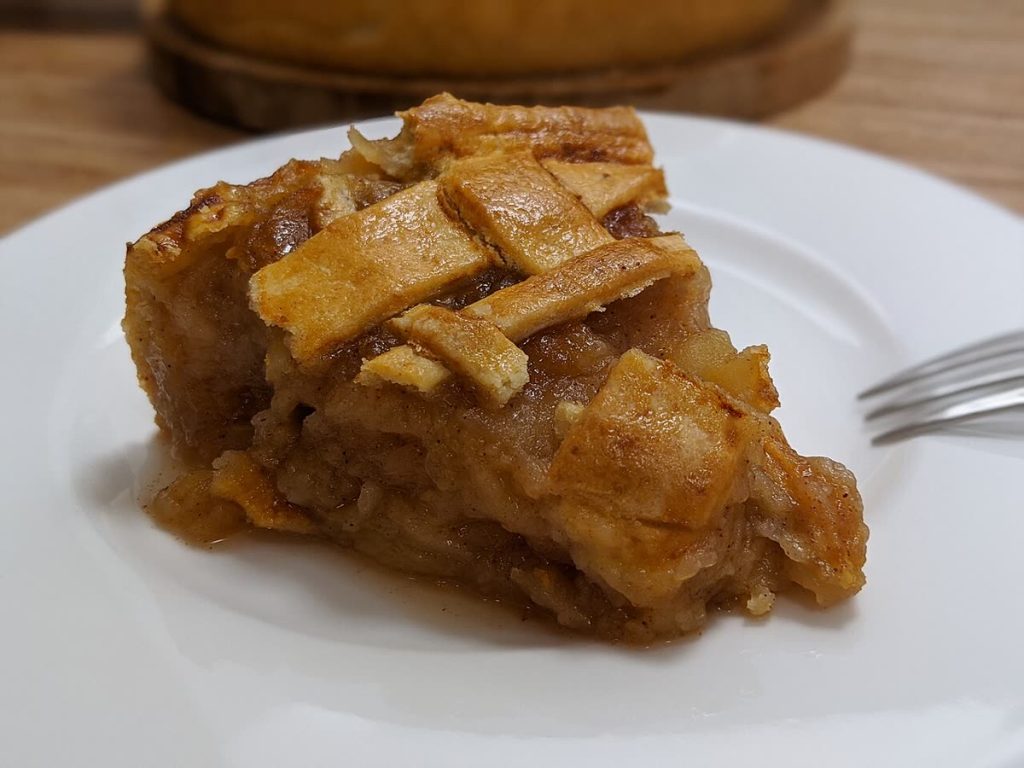
Reheating pie in oven conditions gives the best results of any method, because dry, steady heat re-crisps the pastry while warming the filling gently. For a fruit pie such as apple, 350°F (175°C, or about gas mark 4) is a reliable setting. A single slice usually needs 10 to 15 minutes, and a whole pie 20 to 30 minutes, both loosely covered with foil if the crust is browning too fast. This guide covers timings for different pie types, how to avoid a soggy base, and the food safety points worth knowing.
Key takeaways
- Reheat fruit pie at about 350°F (175°C): about 10 to 15 minutes for a slice, 20 to 30 for a whole pie.
- Cover loosely with foil if the crust or edges brown too quickly, then remove it for the last few minutes to crisp.
- Meat, egg and cream-based pies need to be piping hot throughout, so check the centre.
- Use the oven rather than the microwave when you care about a crisp crust.
Why the oven beats the microwave
A microwave heats by exciting water molecules, which produces steam that softens pastry. The result is often a hot filling and a limp crust. An oven heats from the outside in, drying the surface slightly, so butter and flour in the pastry crisp again. It takes longer, but the texture is far closer to freshly baked. A toaster oven or air fryer also works for slices if they have a gentle setting, though air fryers can brown tops quickly, so keep an eye on them.
Reheating times and temperatures
| Pie type | Oven temperature | Slice | Whole pie |
|---|---|---|---|
| Apple, cherry or other fruit | 350°F (175°C) | 10 to 15 min | 20 to 30 min |
| Pumpkin, custard or cream (baked) | 300 to 325°F (150 to 160°C) | 8 to 12 min, only until just warm | Better to serve cool or at room temperature |
| Pecan | 325 to 350°F (160 to 175°C) | 10 to 12 min | 20 to 25 min |
| Meat or savoury pie | 350°F (175°C) | 15 to 20 min | 30 to 40 min, until piping hot throughout |
Times are guides. Ovens vary, and a pie from the fridge takes longer than one at room temperature. For a fan oven, reduce the temperature by about 20°C (25°F). Pie size, depth and starting temperature all matter, so check regularly.
Step-by-step: reheating apple pie
- Take it out of the fridge about 20 to 30 minutes before heating if you can. A less chilly pie warms more evenly.
- Preheat the oven to 350°F (175°C).
- Place the pie or slice on a baking tray, ideally lined with baking parchment, so it is easy to move and catches drips.
- Cover loosely with foil if the top or edges are already well browned. Tent it so the foil does not touch the crust.
- Heat for 10 to 15 minutes for a slice or 20 to 30 minutes for a whole pie.
- Uncover for the last 3 to 5 minutes to re-crisp the crust.
- Check the centre. The filling should be warm all through. A thermometer should read around 165°F (74°C) for any pie with meat, egg or dairy.
- Rest for 5 minutes before serving, since fruit filling is very hot.
How to avoid a soggy or burnt result
Soggy bottom
Place the pie on a preheated baking sheet, or on the lowest rack, so the base receives direct heat. A wire rack set over a tray lets air circulate underneath. Avoid wrapping the pie fully in foil, which traps steam.
Burnt edges
Use a foil ring or strips around the rim, and lower the temperature a little if your oven runs hot. Because the crust has already baked once, it browns quickly the second time.
Dry filling
Do not overheat. If the filling looks tight, tent the top with foil for the entire time and extend the heating slightly at a lower temperature.
Food safety and storage
Pies containing eggs, cream, cheese or meat need to be handled more carefully than fruit pies. Cool leftovers promptly and refrigerate them in a covered container, ideally within two hours of baking. Eat refrigerated pie within a few days, and reheat meat or egg-based pies until piping hot all the way through, with steam rising from the centre. For wider advice on cooling, storing and reheating leftovers, see the NHS food safety pages. Fruit pies with a high sugar content can be left covered at room temperature for a short time, but refrigeration is safer in warm weather.
The same cautious approach applies to rice. Our guide to the basmati rice to water ratio includes storage and reheating advice for cooked rice, and our guide to cornbread internal temperature shows how a thermometer can tell you when baked goods are ready.
Freezing and reheating from frozen
Many pies freeze well, especially fruit and savoury ones. Wrap them tightly, label the date and keep them for a couple of months for best quality. To reheat from frozen, you can either thaw overnight in the fridge and follow the times above, or bake directly from frozen at 325°F (160°C) for noticeably longer, often 40 to 60 minutes for a whole pie, covering with foil for most of that time. Always check that the centre is hot. Custard and cream pies do not freeze well because the texture breaks down.
Serving ideas
- Add a scoop of vanilla ice cream, custard or cream.
- Dust with icing sugar or cinnamon after heating.
- Warm a little caramel or fruit compote to pour over.
- For breakfast, serve a slice with plain yoghurt.
Frequently asked questions
What temperature should I reheat apple pie at?
About 350°F (175°C) works well. Reduce slightly in a fan oven.
How long does a slice take?
Usually 10 to 15 minutes from the fridge, a little less from room temperature.
Should I cover the pie with foil?
Yes, loosely, if the crust is already brown. Remove it near the end to restore crispness.
Can I reheat pie more than once?
It is best not to. Reheat only what you plan to eat, and for meat or egg-based pies, do not reheat repeatedly.
Is it safe to leave pie out overnight?
Savoury, egg and cream pies should not be. Fruit pies are lower risk, but refrigeration is the safer option.
Conclusion
For crisp pastry and a warm centre, reheating pie in oven conditions at around 350°F (175°C), loosely covered and uncovered at the end, is hard to beat. Adjust for pie type, check the middle is hot, and handle leftovers safely, and yesterday’s pie can taste almost as good as new.
Key takeaways about reheating pie in oven
Here is a short summary of reheating pie in oven so you can find the main points quickly.
- Reheating pie in oven conditions gives the best results of any method, because dry, steady heat re-crisps the pastry while warming the filling gently.
- A microwave heats by exciting water molecules, which produces steam that softens pastry.
- Place the pie on a preheated baking sheet, or on the lowest rack, so the base receives direct heat.
- Use a foil ring or strips around the rim, and lower the temperature a little if your oven runs hot.
Check official sources before acting on anything related to reheating pie in oven, because details can change over time.
Questions about reheating pie in oven are common, so it helps to compare more than one trustworthy source.
Use this page as a starting point for reheating pie in oven and come back to it when your situation changes.
Good decisions about reheating pie in oven come from checking the facts, comparing your options and taking your time.
Save this guide to reheating pie in oven so you can find it again whenever you need a quick reminder.
Related reading:
For general background, you can look up reheating pie in oven on Wikipedia.