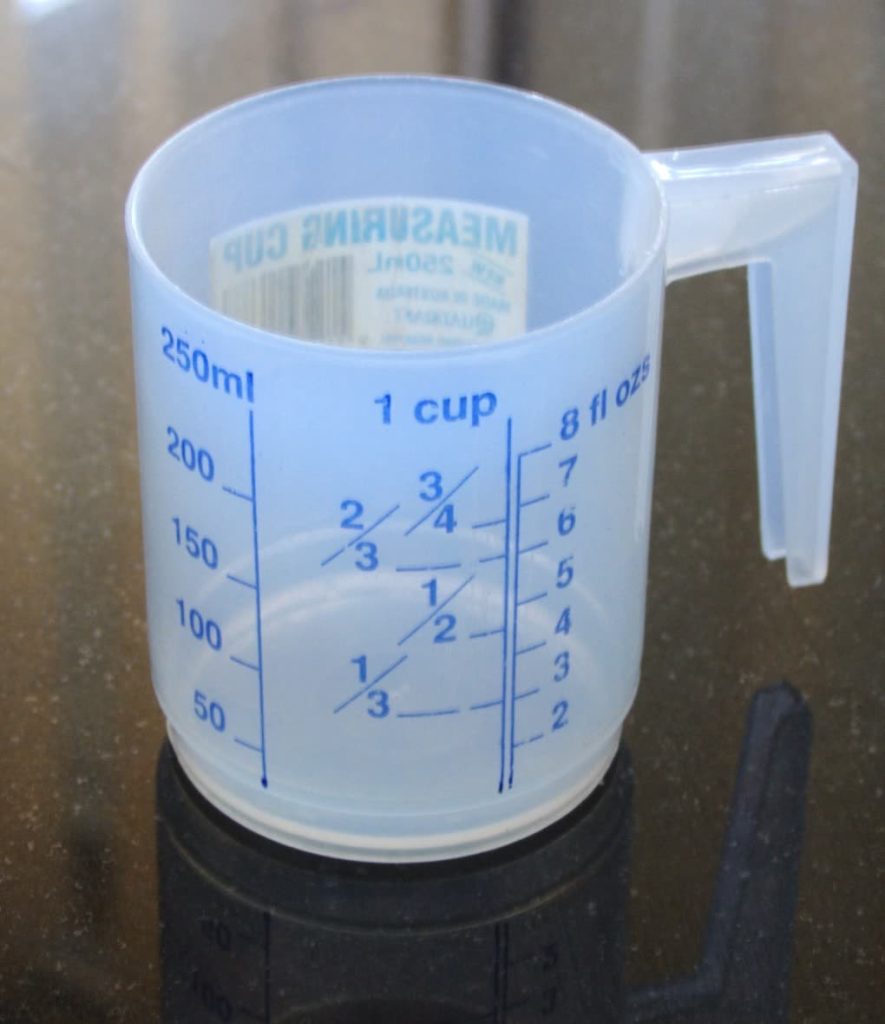
What does 1/4 cup equal? In the US system, a quarter cup is 4 tablespoons, 2 fluid ounces, or about 59 millilitres (rounded to 60 ml in most recipes). That also answers a popular question: 100 ml is not equal to a quarter cup. 100 ml is a little over 6 tablespoons, or roughly 0.42 of a US cup.
Key takeaways
- ¼ US cup = 4 tablespoons = 12 teaspoons = 2 fl oz = about 59 ml.
- 100 ml is about 6¾ tablespoons, which is closer to ⅖ of a cup than ¼ of a cup.
- Cups differ by country: a metric cup is 250 ml, so ¼ is 62.5 ml.
- For dry goods such as flour, weigh ingredients when you can for accurate results.
The quick answer: what does 1/4 cup equal
A US customary cup holds 8 fluid ounces, or roughly 237 millilitres. Divide that by four and you get 2 fluid ounces, or about 59 ml. Cooks usually round that to 60 ml, which makes recipe conversions simpler. In tablespoons, a cup contains 16, so a quarter cup is 4 tablespoons. With teaspoons at three per tablespoon, that is 12 teaspoons.
Common equivalents
| Measure | Tablespoons | Teaspoons | Fluid ounces (US) | Millilitres (approx.) |
|---|---|---|---|---|
| ¼ cup | 4 | 12 | 2 | 59 (often 60) |
| ⅓ cup | 5⅓ | 16 | 2⅔ | 79 |
| ½ cup | 8 | 24 | 4 | 118 |
| ¾ cup | 12 | 36 | 6 | 177 |
| 1 cup | 16 | 48 | 8 | 237 |
Quarter cup is also half of a half cup and one eighth of a pint. If you only have a tablespoon, measure four level spoonfuls.
Is 100 ml equal to 1/4 cup?
No. A US quarter cup is about 59 ml, so 100 ml is noticeably more, about 1.7 times as much. Here is how 100 ml translates:
- Around 0.42 of a US cup, or just under ½ cup.
- About 6¾ tablespoons.
- About 3.4 US fluid ounces.
- Roughly ⅓ cup plus 1½ tablespoons.
The confusion often arises because some metric cups are 250 ml, making a quarter cup 62.5 ml, but even then 100 ml is well above it. If a recipe gives 100 ml, use a measuring jug marked in millilitres for the best result. For a slightly more approximate approach, ⅓ cup plus 1½ tablespoons will do.
Different countries, different cups
Not every cup is the same size, which explains many recipe mishaps. The Wikipedia page on cooking weights and measures sets out the differences in detail. In summary:
| Region | 1 cup | ¼ cup | 1 tablespoon |
|---|---|---|---|
| United States | About 237 ml | About 59 ml | About 15 ml |
| Metric (Australia, Canada, NZ, many recipes) | 250 ml | 62.5 ml | 15 ml (20 ml in Australia) |
| UK imperial (older recipes) | About 284 ml (half pint) | About 71 ml | About 17.7 ml |
Australian tablespoons are 20 ml, which is larger than elsewhere, so a quarter cup is 3¼ Australian tablespoons. Always check where a recipe comes from if a dish does not turn out as expected.
Measuring a quarter cup properly
Liquids
Use a clear jug with markings and read it at eye level on a flat surface. A quarter cup of liquid in a dry cup can spill or be inaccurate.
Dry ingredients
Use nested dry measuring cups. Spoon flour into the cup and level the top with a knife. Do not scoop directly from the bag, which packs the flour and adds up to 20 percent extra. For brown sugar, press it firmly into the cup unless the recipe says otherwise.
Sticky ingredients
Lightly oil the cup before measuring honey or syrup, and it will slide out easily.
Cup volume is not the same as weight
A quarter cup of water weighs about 59 grams, but a quarter cup of flour weighs around 30 grams, and a quarter cup of sugar about 50 grams. These are approximations and vary with packing and ingredient. If you need grams, see our worked examples in the guide to how many grams are in ¾ cup. Cup measures also matter for cooking rice, as shown in our look at the water to rice ratio for jasmine rice, and for bakery work like feeding yeast, which our troubleshooting piece on why yeast is not foaming explains.
Tips for converting without a quarter-cup measure
- Use 4 level tablespoons.
- Fill a 2-ounce shot glass to the brim, if it is marked as 60 ml.
- Use ½ of a ½ cup measure.
- Use a kitchen scale for water and milk: 59 g is about 59 ml.
- Keep a small chart on the inside of a cupboard door for quick reference.
Worked examples
Suppose a recipe asks for ¼ cup of milk and you only have a tablespoon. Measure four level tablespoons and you have it. If a recipe asks for 120 ml of stock, that is about twice a quarter cup, or ½ cup. If you need ¼ cup of oil but the recipe is Australian, use 62.5 ml, which is about 3 Australian tablespoons plus a teaspoon. These small differences rarely ruin a soup, but they matter in baking, where the balance between liquid and flour decides the crumb.
When you convert a recipe to a different standard, change all measures together rather than one at a time. Mixing US cups with metric millilitres in the same dish is the quickest way to end up with a batter that is too thick or too thin.
Frequently asked questions
How many tablespoons are in 1/4 cup?
Four level US tablespoons. That is 12 teaspoons.
Is 100 ml equal to 1/4 cup?
No. A quarter US cup is about 59 ml. 100 ml is just under half a cup, about 0.42 cups.
How many ounces is 1/4 cup?
Two US fluid ounces. In weight, it depends on what you are measuring.
What is 1/4 cup in ml in Australia?
A metric cup is 250 ml, so a quarter cup is 62.5 ml, often rounded to 60 ml.
Does 1/4 cup of flour weigh the same as 1/4 cup of sugar?
No. Flour is lighter, around 30 g, while sugar is about 50 g per quarter cup. Weigh when accuracy matters.
Conclusion
So, what does 1/4 cup equal? Four tablespoons, two fluid ounces, or about 59 to 62.5 ml depending on the cup standard. Remember that 100 ml is more than a quarter cup, measure carefully, and weigh dry ingredients when accuracy matters.
Key takeaways about what does 1/4 cup equal
Here is a short summary of what does 1/4 cup equal so you can find the main points quickly.
- A US customary cup holds 8 fluid ounces, or roughly 237 millilitres.
- Quarter cup is also half of a half cup and one eighth of a pint.
- The confusion often arises because some metric cups are 250 ml, making a quarter cup 62.5 ml, but even then 100 ml is well above it.
- Not every cup is the same size, which explains many recipe mishaps.
Check official sources before acting on anything related to what does 1/4 cup equal, because details can change over time.
Questions about what does 1/4 cup equal are common, so it helps to compare more than one trustworthy source.
Use this page as a starting point for what does 1/4 cup equal and come back to it when your situation changes.
Related reading:
- Audi Inspection Due Reset: How to Clear the Service Reminder
- What Military Branch Is the Oldest? A Quick Answer
For general background, you can look up what does 1/4 cup equal on Wikipedia.