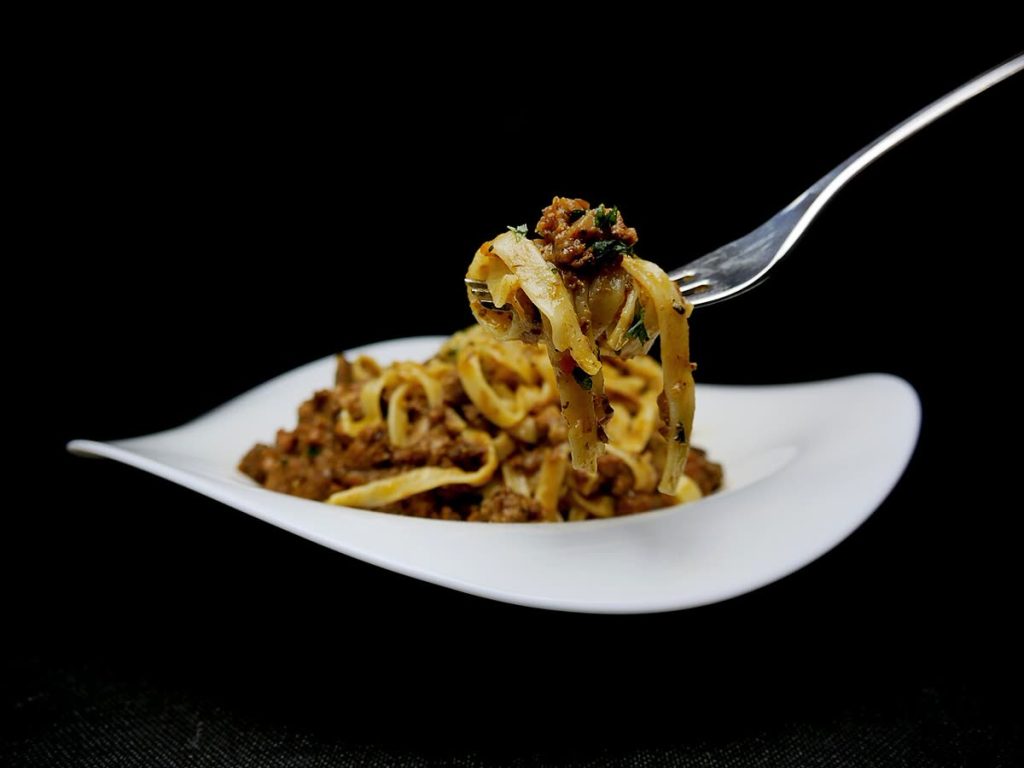
The bolognese meaning is simple: the word describes something “from Bologna”, the Italian city, and in cooking it refers to a slow-cooked meat sauce in the style of that region. Outside Italy most people use it for the minced-beef-and-tomato sauce served with spaghetti. In Italy the real dish is called ragù alla bolognese, and it is a little different from the version many of us grew up with.
Key takeaways
- Bolognese comes from Bologna, a city in northern Italy, and means “in the style of Bologna”.
- The classic sauce is a ragù: meat cooked slowly with vegetables, a little tomato, wine and milk.
- It is traditionally served with fresh egg pasta such as tagliatelle, not spaghetti.
- “Spaghetti bolognese” is a popular adaptation abroad rather than a traditional Italian dish.
The bolognese meaning explained
In Italian, *bolognese* is an adjective. It means something that belongs to Bologna or comes from there. People from Bologna are *bolognesi*, and the sauce is known in full as ragù alla bolognese, “meat sauce in the style of Bologna”. English speakers shortened it to “bolognese” or “bol” and began using it as a noun for the sauce itself.
You will also see the word in other contexts. There is a small dog breed called the Bolognese, which gets its name from the same city. Whenever the word appears in cooking, however, it points to the sauce, and that is the bolognese meaning most people are searching for.
Where the word and the dish come from
Bologna is the capital of the Emilia-Romagna region, famous across Italy for its food culture. The city has a long reputation for rich dishes, fresh pasta, cured meats and cheeses. A meat ragù developed there over time, and home cooks and restaurants each had their own recipe.
You can read the wider story of the sauce on the Wikipedia page for Bolognese sauce, which also mentions that a registered recipe was deposited by a Bologna trade body to record a classic version. Treat that as one reference point rather than the only correct way, because Italian families have always argued over the details.
What goes into a traditional ragù
A traditional ragù is more meat than tomato. The sauce is built slowly, and each step adds depth.
| Ingredient | Role in the sauce |
|---|---|
| Soffritto (onion, carrot, celery) | Gentle sweet base cooked in fat |
| Minced beef, sometimes with pork | The main body of the sauce |
| Pancetta | Savoury, salty richness |
| Wine | Acidity and depth |
| Milk | Softens the acidity and tenderises the meat |
| Tomato (paste or passata) | A modest amount for colour and tang |
| Stock | Keeps the sauce moist during long cooking |
Notice what is not on the list in most traditional versions: lots of garlic, heaps of herbs, or a big tin of chopped tomatoes. Some cooks do add them, and that is fine, but the classic character is meaty and mellow.
How it differs from the bolognese you know
If you have eaten spaghetti bolognese at home or in a cafe, you have probably tasted a looser, tomato-forward sauce with lots of herbs and garlic. That is not wrong, but it is a different style. It is a friendly cousin of the Italian original.
- Tomato level: the Italian sauce uses less tomato and more meat.
- Pasta choice: tagliatelle or other broad ribbons hold the heavy sauce better than thin strands.
- Cooking time: the traditional version simmers for hours, often two or three.
- Seasoning: salt, pepper and perhaps a little nutmeg, rather than a herb mix.
Many Italians are good-humoured about the difference, but you may find that asking for “spaghetti bolognese” in Bologna gets a polite smile. The local pairing is tagliatelle al ragù. For more on the broader category, see our explanation of what bolognese pasta actually is.
Bolognese meaning in everyday English: how to say it and spell it
Pronounce it *bol-oh-NYAY-zeh* in a close approximation of Italian, or *bol-uh-NAYZ* in common English. Both are understood. Spelling-wise, the word is a proper adjective in Italian, but in English recipes it is often written in lower case (“bolognese sauce”) and sometimes shortened to “bolognaise”, a variant spelling influenced by French. Use whichever fits your audience, but “bolognese” is the standard.
Cooking a simple bolognese at home
Here is a straightforward approach that respects the traditional method.
- Finely chop one onion, one carrot and one celery stick.
- Soften them gently in butter and olive oil for ten minutes, without browning.
- Add chopped pancetta and let the fat run.
- Brown the minced meat in batches so it colours rather than steams.
- Pour in a splash of wine and let it bubble away.
- Stir in a spoonful of tomato paste, then add stock.
- Simmer very gently, partly covered, for two to three hours, stirring now and then.
- Add a splash of milk near the end and season to taste.
Cook your pasta until cooking pasta al dente and toss it in the sauce with a little pasta water. If you love cured meats on a pizza, you might also enjoy reading what pepperoni is made of, which shows how Italian-American food has its own story.
Common mistakes when cooking it
- Rushing the simmer: a quick sauce tastes thin and sharp.
- Drowning the meat in tomato: you lose the savoury depth.
- Overloading with herbs: the sauce should taste of meat and vegetables first.
- Skipping the soffritto: this is where the sweetness comes from.
- Serving it on thin spaghetti: wider ribbons carry the sauce better.
Frequently asked questions
What does bolognese mean in English?
It means “from Bologna” or “in the style of Bologna”. In the kitchen it refers to a slow-cooked meat sauce.
Is bolognese the same as ragù?
Bolognese is one type of ragù. Italy has many ragù recipes, and the Bologna version is just the best known abroad.
Is spaghetti bolognese Italian?
Not in the traditional sense. It is a popular adaptation abroad. The local pairing is tagliatelle with ragù.
Does authentic bolognese contain milk?
Many traditional recipes do. The milk balances acidity and tenderises the meat, though some cooks leave it out.
How do you pronounce bolognese?
A close version is bol-oh-NYAY-zeh. In everyday English you will hear bol-uh-NAYZ.
Conclusion
The bolognese meaning goes back to a single Italian city and a patient, meaty ragù cooked slowly with simple ingredients. Whether you serve it with tagliatelle, spaghetti or in a baked dish, knowing the origin helps you cook it better and talk about it with confidence.
Key takeaways about bolognese meaning
Here is a short summary of bolognese meaning so you can find the main points quickly.
- The bolognese meaning is simple: the word describes something "from Bologna", the Italian city, and in cooking it refers to a slow-cooked meat sauce in the style of that region.
- You will also see the word in other contexts.
- Bologna is the capital of the Emilia-Romagna region, famous across Italy for its food culture.
- You can read the wider story of the sauce on the Wikipedia page for Bolognese sauce, which also mentions that a registered recipe was deposited by a Bologna trade body to record a classic version.
Good decisions about bolognese meaning come from checking the facts, comparing your options and taking your time.
Related reading:
- El Paso Police Department Mugshots: How to Find Records
- What to Write on a Funeral Card With Flowers: Ideas
For general background, you can look up bolognese meaning on Wikipedia.