Whether you are new to how long is an ants lifespan or just need a quick refresher, the sections below walk through the key points.
How long is an ant’s lifespan? It depends on which ant you mean. Males usually live only weeks, workers typically live from a few months to a few years depending on species, and queens can live for many years, with some species reaching a decade or more. There is no single figure for “an ant”, because thousands of species live in very different conditions.
Key takeaways
- Lifespan depends on caste: males are shortest, workers medium, queens by far the longest.
- Species, climate and food supply change the numbers dramatically.
- Queens live longest because they stay in the protected nest and are fed by workers.
- For pest control, the colony and its queen matter more than the lifespan of individual ants.
Lifespan by caste
| Ant type | Typical role | Typical adult lifespan |
|---|---|---|
| Males | Mate with new queens | Weeks to a few months; they die soon after mating |
| Workers | Foraging, nursing young, building and defence | Several weeks to a few years, depending on species |
| Queens | Lay eggs to found and grow the colony | Often many years; some species far longer |
These are broad ranges. A tropical worker with plentiful food may live differently from a worker of a temperate species facing winter, and lab records often exceed what happens in the wild because predators and weather are removed.
Why queens outlive everyone else
A colony only survives while its queen can lay eggs, so evolution has strongly favoured long-lived queens. She stays inside the nest, where workers feed and groom her and defend against threats. She does not forage, fight rivals or face the weather. That sheltered life, along with biological differences in how queens manage ageing, helps explain why queens can outlive workers of the same colony by a huge margin. Researchers have recorded queens living well over a decade under observation, and a few reports describe queens surviving past twenty years, but exact records depend on species and circumstances. Treat any single number as specific to that species instead of a rule for all ants. For an overview of ant biology you can start with the Wikipedia article on ants.
What shortens a worker’s life
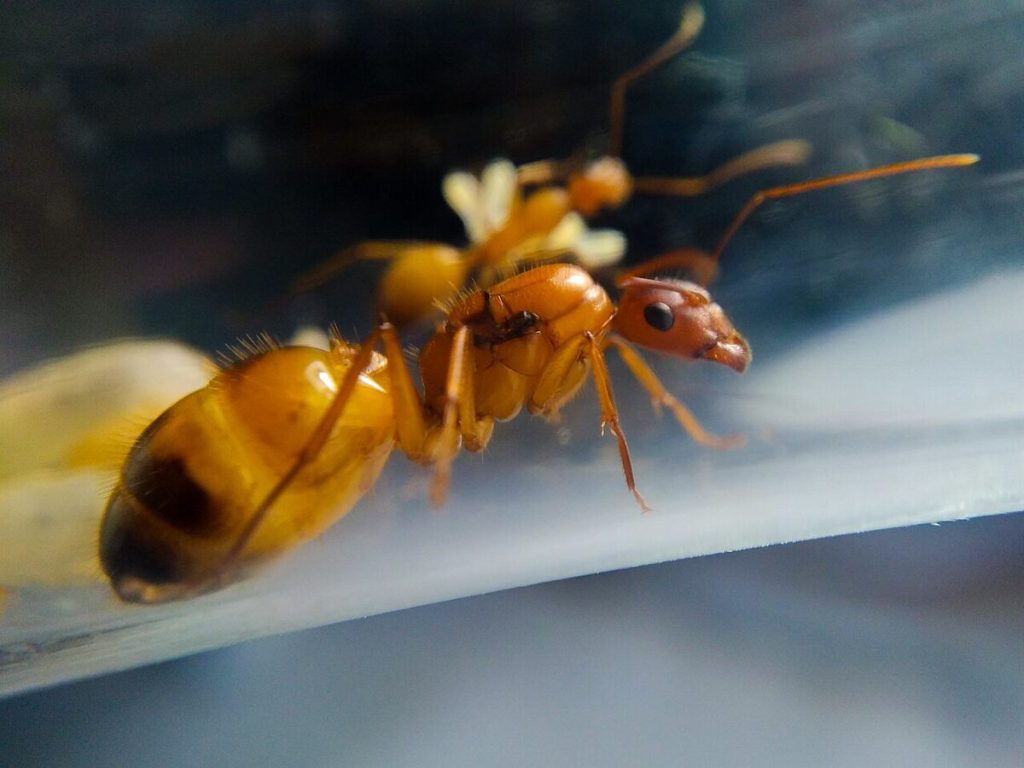
Workers are the ants you see on the pavement or in the kitchen, and their lives can be tough.
- Foraging risks: Leaving the nest exposes workers to predators such as birds and spiders, to weather and to fights with other colonies.
- Food and water: Poor access to either reduces survival, and colonies in dry or crowded areas lose workers faster.
- Temperature: In cold climates many species slow down or go dormant in winter, which can stretch the apparent lifespan of workers that overwinter. You can see how low temperatures work in general in our explainer on what the freezing temperature is.
- Disease and parasites: Fungi, mites and other parasites can spread quickly in densely packed colonies.
- Job type: In many species workers begin with safer indoor jobs such as tending larvae and move to outdoor foraging as they age. Because foraging is dangerous, older workers tend to die sooner after they begin it.
From egg to adult
Ants undergo complete metamorphosis, passing through egg, larva, pupa and adult. Depending on the species and temperature, this takes from a few weeks to a couple of months. When people quote lifespans, check whether they mean adult life or the full age counted from the egg, because the totals differ. Warmth speeds development, while cold slows it, and some species hold larvae through winter and finish developing in spring.
How do scientists know?
Lifespans are measured in two main ways. In the lab, researchers keep colonies or individually marked ants and record when each dies. In the field, they mark workers with tiny dots of paint or tags and revisit the nest. Each method has limits. Lab ants avoid predators and often get steady food, so they may live longer than their wild relatives. Field marking can lose track of ants that wander off. This is why a figure for a species may come with a wide range and the caveat that wild conditions vary.
What this means for pest control
If you have ants in your home, killing the workers you see will not solve the problem, because the queen keeps producing more. Many control methods therefore rely on workers carrying a slow-acting bait back to the nest, where it spreads through the colony. Seal entry points, clean up crumbs and spills, store sugary food securely and keep pet food off the floor. Putting open food in the fridge or sealed containers cuts the supply, and the guidance in our piece on the normal temperature inside a fridge helps you keep perishables safe at the same time.
A nest can persist for years, so persistence matters more than counting how long one ant lives. If an infestation is large, returns repeatedly or involves species that damage structures, such as carpenter ants, a professional pest controller can find the nest and treat it properly.
Keeping ants as pets
People who keep ant colonies in formicaria often want to know how long they will last. A colony with a healthy queen can run for years because the queen keeps laying, while the workers you see turn over continually as old ones die and new ones hatch. If the queen dies, the colony will usually decline and end once the remaining workers die, unless the species has more than one queen or workers can lay a few eggs. Ask a reputable seller about the species, its needs and local rules about keeping them, and never release non-native species outdoors.
Frequently asked questions
How long do worker ants live?
From several weeks to a few years, depending on species, food, climate and the dangers of their job.
How long do queen ants live?
Often many years, and in some species a decade or more. Exact records depend on the species.
Why do male ants die so quickly?
Their main job is mating. They usually die within weeks or shortly after mating and do not contribute to colony work.
Do ants live longer in winter?
In some species, workers that slow down or shelter over winter live longer in calendar terms, since they are less active and less exposed to risk.
Does killing a few ants end an infestation?
No. The queen and nest keep producing workers. Bait and sealing entry points are more effective, and a pest controller can help with larger problems.
Conclusion
When asking how long is an ant’s lifespan, the right answer is: weeks for males, months to years for workers and often years for queens. The queen and the colony matter more than any single ant, whether you are curious about biology or trying to deal with a kitchen invasion.
Key takeaways about how long is an ants lifespan
Here is a short summary of how long is an ants lifespan so you can find the main points quickly.
- A colony only survives while its queen can lay eggs, so evolution has strongly favoured long-lived queens.
- Workers are the ants you see on the pavement or in the kitchen, and their lives can be tough.
- Ants undergo complete metamorphosis, passing through egg, larva, pupa and adult.
- If you have ants in your home, killing the workers you see will not solve the problem, because the queen keeps producing more.
Questions about how long is an ants lifespan are common, so it helps to compare more than one trustworthy source.
Use this page as a starting point for how long is an ants lifespan and come back to it when your situation changes.
Good decisions about how long is an ants lifespan come from checking the facts, comparing your options and taking your time.
Save this guide to how long is an ants lifespan so you can find it again whenever you need a quick reminder.
If you only remember one thing about how long is an ants lifespan, make it the practical steps covered in this guide.
Check official sources before acting on anything related to how long is an ants lifespan, because details can change over time.
Related reading:
For general background, you can look up how long is an ants lifespan on Wikipedia.