This China in Ten Words summary covers a book of essays by the Chinese novelist Yu Hua, who explains modern China through ten everyday words. Each chapter mixes personal memory, history and social comment, and together they trace how the country moved from the Mao era to a period of fast economic growth, inequality and imitation.
Key takeaways
- The book uses ten common words, such as people, leader, reading and copycat, as doors into Chinese history.
- Yu Hua draws on his own childhood during the Cultural Revolution and his adult life in reform-era China.
- Its tone moves between humour, sadness and irony rather than formal analysis.
- It works well as a first book on modern China, as long as you remember it is one writer’s view.
About the book and the author
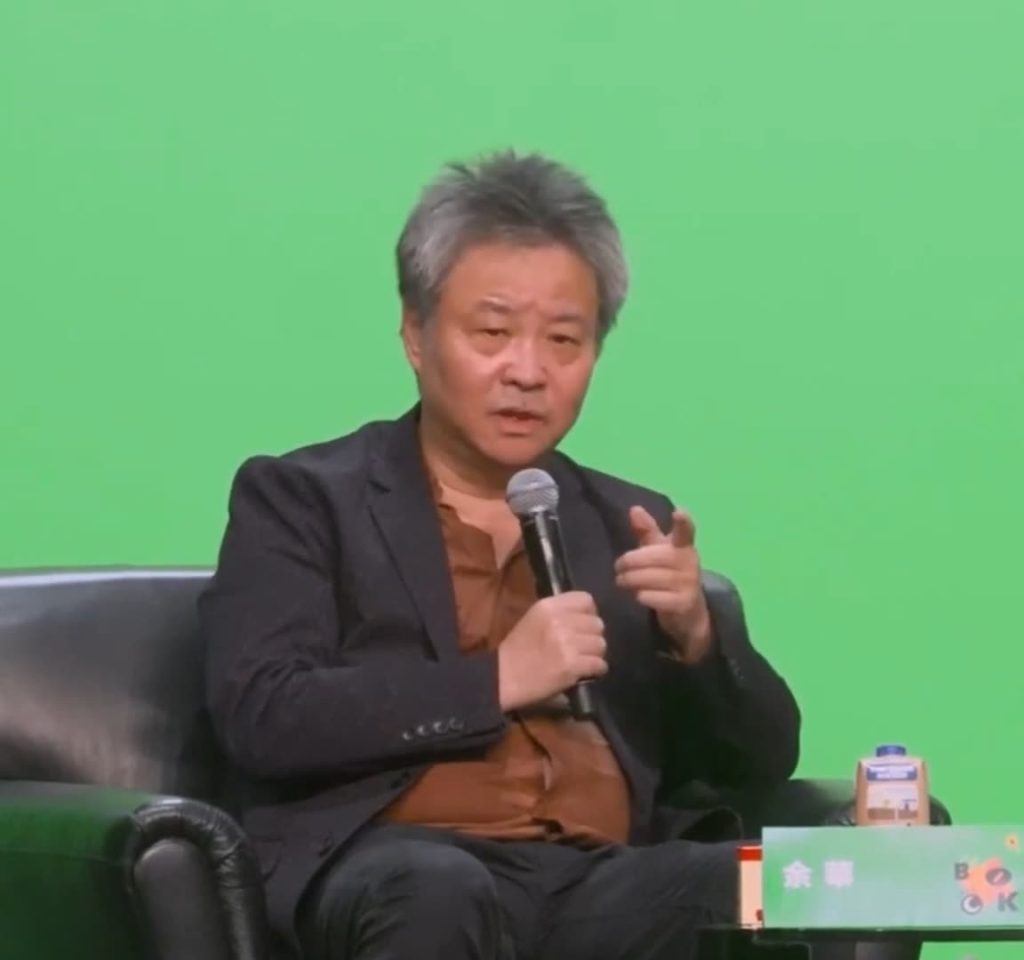
Yu Hua was born in 1960 and grew up in Zhejiang province. He worked briefly as a dentist before turning to writing, and became well known for novels such as To Live, Chronicles of a Blood Merchant and Brothers. China in Ten Words is different from his fiction: it is a collection of personal essays. It was published in English in 2011, in a translation by Allan H. Barr. The book was written for readers outside China, and it is not available in the same form in mainland China, so it is worth knowing it reflects an author speaking with some freedom. You can find background on the writer in the Wikipedia article on Yu Hua.
How the book is organised
Each chapter takes one word and unpacks it. The words are chosen because they show up in daily talk, newspapers and slogans, and their meanings have shifted as society changed. The ten words are:
- People
- Leader
- Reading
- Writing
- Lu Xun
- Revolution
- Disparity
- Grassroots
- Copycat
- Bamboozle
Chapter-by-chapter themes
| Word | Main idea |
|---|---|
| People | How the word “the people” was used in politics, and what it meant to ordinary individuals, including reflections on the 1989 protests |
| Leader | The cult of Mao Zedong and the way a leader’s image shaped everyday life |
| Reading | Book hunger in a time when few books were allowed, and the joy of passing books around |
| Writing | How Yu Hua became a writer and what writing means in a changing society |
| Lu Xun | The influence of the great modern writer, and how his work was used or misused |
| Revolution | The Cultural Revolution, seen through a child’s eyes and later memory |
| Disparity | The widening gap between rich and poor in the reform era |
| Grassroots | Ordinary people who rise to fame, and the new culture of popular talent contests |
| Copycat | Imitation and knock-off products as both creativity and problem |
| Bamboozle | Deception and trickery as a feature of social and economic life |
Main themes in China in Ten Words
Continuity and rupture
Yu Hua keeps asking how a society could swing from the extreme politics of the Cultural Revolution to extreme commercialism a few decades later. He suggests that the two eras share an intensity, a tendency for people to rush in the same direction, which he finds both funny and frightening.
Language as a mirror
Words in the book carry political baggage. Slogans of one decade become jokes in the next. By choosing everyday vocabulary, he shows how language reflects power, fear and aspiration.
Memory and childhood
Many of the most vivid passages are personal. His accounts of growing up in a small town, of scarce books and violent political campaigns, give the essays emotional weight. These memories are told simply, without heavy theory.
Inequality and moral change
The later chapters look at rapid growth and its cost, from the gap between rich and poor to the casual acceptance of cheating. Yu Hua is not hostile to progress, but he asks what has been lost along the way.
Style and tone
The prose is clear and often ironic. He uses stories and anecdotes more than statistics, which makes the book very readable. Some readers enjoy the dark humour; others may want more evidence behind big claims. It is best read as personal essay and reflection, not as a history textbook.
Who should read it, and how
This is a good choice for readers curious about modern China, for students of contemporary literature, and for fans of Yu Hua’s fiction. Read it slowly, one chapter at a time, and take notes on the words that interest you. If you want more context, pair it with a general history of China from 1949 onward. For a quick background on the country itself, see the Wikipedia article on China.
Reading a thoughtful book like this often makes you hungry for something simple afterwards. If so, try our guide to how to tenderise pork for an easy home-cooked meal.
Why the book still matters
Books about China often focus on politics or economics, but this one succeeds because it listens to ordinary speech. Readers who know little about the country can follow the stories, while readers who know more will notice how carefully the words were chosen. It also shows how a novelist handles non-fiction: scenes, jokes and memories carry the argument, rather than footnotes. Book clubs often find it a good discussion starter, because every chapter raises a question that people can disagree on, such as whether rapid growth is worth the social price, or whether copying is a form of creativity. Reading it alongside his novels adds another layer, since many of their themes appear here in plain form.
Frequently asked questions
Who wrote China in Ten Words?
Yu Hua, a Chinese novelist known for To Live and Brothers. The English translation is by Allan H. Barr.
What are the ten words?
People, Leader, Reading, Writing, Lu Xun, Revolution, Disparity, Grassroots, Copycat and Bamboozle.
Is it fiction or non-fiction?
It is non-fiction: a collection of personal essays that blend memoir, history and commentary.
Do I need to know Chinese history first?
No. Yu Hua explains the key events and terms, though a basic timeline of the Mao era and the reform period helps.
Is it a balanced history of China?
Not in the strict sense. It is one writer’s viewpoint, powerful and honest, but subjective. Read other sources too.
Conclusion
Our China in Ten Words summary shows a book that is short, accessible and thought-provoking. Through ten ordinary words, Yu Hua gives readers a human view of China’s turbulent recent history, and invites them to think about language, memory and change.
Key takeaways about china in ten words summary
Here is a short summary of china in ten words summary so you can find the main points quickly.
- This China in Ten Words summary covers a book of essays by the Chinese novelist Yu Hua, who explains modern China through ten everyday words.
- Yu Hua was born in 1960 and grew up in Zhejiang province.
- Each chapter takes one word and unpacks it.
- Yu Hua keeps asking how a society could swing from the extreme politics of the Cultural Revolution to extreme commercialism a few decades later.
Good decisions about china in ten words summary come from checking the facts, comparing your options and taking your time.
Save this guide to china in ten words summary so you can find it again whenever you need a quick reminder.
If you only remember one thing about china in ten words summary, make it the practical steps covered in this guide.
Check official sources before acting on anything related to china in ten words summary, because details can change over time.
Questions about china in ten words summary are common, so it helps to compare more than one trustworthy source.
Related reading:
- What Is Barbacoa Beef? Origins, Flavour and How to Cook It
- Cast Away: How Long Was Chuck Noland on the Island?
For general background, you can look up china in ten words summary on Wikipedia.