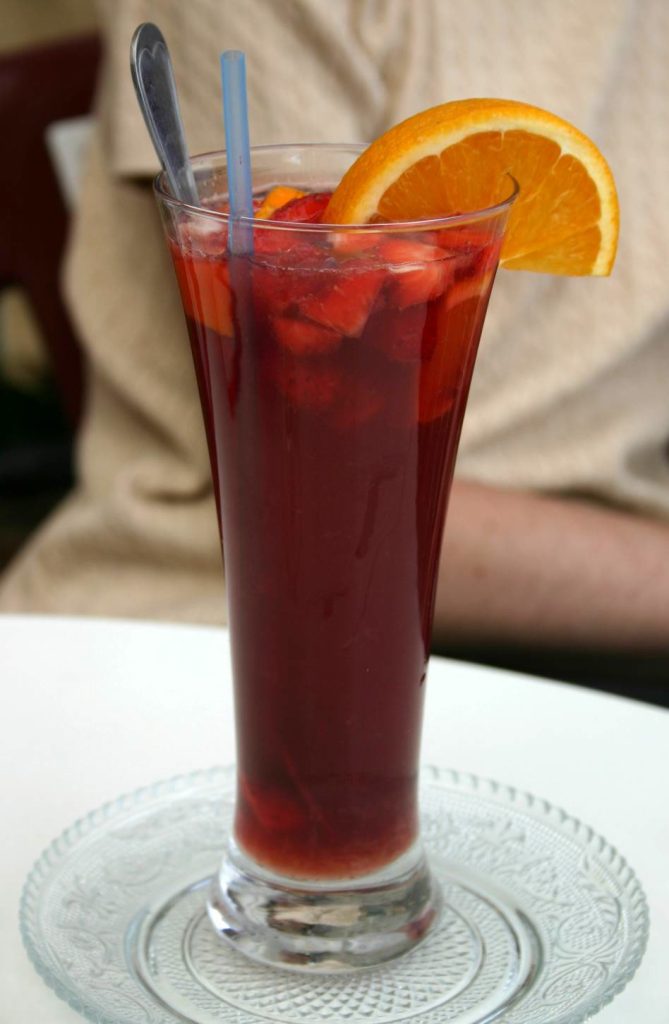
What is a sangria? It is a chilled Spanish wine punch, usually made with red wine, chopped fruit, a little sweetener and often a splash of brandy or another spirit, topped with something fizzy and served over ice from a jug. It is the drink many people picture when they think of long summer lunches in Spain and Portugal.
Key takeaways
- Sangria is a fruity wine punch, not a single fixed recipe; every bar and family has a version.
- A young, fruity, inexpensive red wine is the classic base, but white, rose and sparkling versions exist.
- Chill it for a couple of hours so the fruit and wine mingle, then add the fizz and ice at the last moment.
- It can be stronger than it tastes, so drink water and food alongside it.
Where the name and the drink come from
The word comes from the Spanish sangre, meaning blood, a nod to the deep red colour of the drink. Wine mixed with fruit and sweetener has a long history around the Mediterranean, because it was a way to make rough wine more palatable and refreshing in warm weather. Sangria became widely known outside Spain in the twentieth century, helped by tourism and by a display of Spanish food and drink at the 1964 New York World’s Fair. Today it is served across Spain, in neighbouring Portugal and in restaurants around the world. For a short history, Wikipedia’s sangria page is a reasonable starting point.
What goes into a sangria
There is no single official recipe, but most versions share the same building blocks.
- Wine. A young, fruity red such as Tempranillo or Garnacha is the classic base. Nothing expensive is needed, because fruit and other ingredients cover subtle flavours.
- Fruit. Oranges, lemons and apples are the usual trio. Peaches, nectarines, berries and melon are common additions, and the soaked fruit becomes a treat at the bottom of the glass.
- Sweetener. A spoonful of sugar, honey or syrup, or a splash of orange juice, softens the wine.
- A spirit. Brandy is the traditional choice, though orange liqueur, vermouth or rum appear in plenty of recipes.
- Fizz. Soda water, lemonade or a citrus soft drink adds lightness.
The main styles
| Style | Base | Typical flavour |
|---|---|---|
| Classic red sangria | Red wine, orange, lemon, brandy | Fruity and rich |
| Sangria blanca | White wine, peach, apple, citrus | Crisp and lighter |
| Sangria rosada | Rose wine, berries | Fresh and summery |
| Cava sangria | Spanish sparkling wine, fruit | Festive and bubbly |
| Alcohol-free version | Grape or cranberry juice, fruit, sparkling water | Sweet and non-alcoholic |
A simple recipe to try at home
- Slice one orange, one lemon and one apple, and put the pieces in a large jug.
- Add a tablespoon or two of sugar and a measure of brandy, and stir until the sugar has dissolved.
- Pour in a bottle of red wine and stir again.
- Chill in the fridge for at least two hours. Overnight is fine, and the flavours will deepen.
- Just before serving, add a splash of soda water or lemonade, and plenty of ice.
- Taste, then adjust: a squeeze of lemon if it is too sweet, a little more sugar if it is too sharp.
The recipe scales up easily for parties. A standard wine bottle holds 750 ml, which is a little more than a US pint and a half; if you are scaling a jug for a crowd, our guide to what a pint equals in ounces, cups and millilitres helps with the sums.
Tinto de verano and other lookalikes
Tourists often confuse sangria with tinto de verano, which means “summer red”. It is simpler: red wine mixed with a fizzy lemon soft drink or soda water and ice, with no chopped fruit or spirit, and it is lighter and more common among locals. In Portugal you will see sangria on many menus, particularly in the Algarve, and you will also find refreshing wine drinks built on white or Vinho Verde. If you are fond of mixed drinks, our note on whether cocktail bitters need refrigerating may also be useful for your home bar.
How strong is sangria?
Sangria is wine-based, but the added spirit and the sweetness can make it stronger than it tastes, because cold sweet drinks go down quickly. The alcohol content depends entirely on the recipe, and restaurant jugs can be large. Drink it with food and with water in between, share the jug, and avoid it if you are driving, pregnant or taking medication that interacts with alcohol. Drinkaware has plain guidance on units and sensible limits at drinkaware.co.uk.
Ordering sangria abroad
In Spain you can usually order by the glass or by the jug (una jarra), and a half jug (media jarra) is often an option. In tourist hot spots, sangria may be made from a pre-mixed base and be very sweet. If you want a more traditional wine-forward style, look for bars full of local customers or ask what wine they use. Prices vary widely, so check the menu before ordering a large jug.
Tips for a better jug
- Cut the fruit generously. Thick slices release flavour without turning to mush in the first hour.
- Use cold wine. Starting cold means less ice melts and dilutes the drink.
- Add spices sparingly. A cinnamon stick or a few cloves gives a winter version, but too much dominates the fruit.
- Balance sweetness last. Fruit juice and soft drinks add sugar, so taste before adding more.
- Use big ice cubes. They melt slowly and keep the jug lively through a long lunch.
What to serve with it
Sangria suits tapas, olives, cheese, cured ham, grilled prawns, paella and barbecue food. The fruit and acidity cut through oily and salty dishes. Keep the jug cold, and if you are saving leftovers, remove the fruit after a day because it turns soft and can make the drink bitter.
Frequently asked questions
Is sangria always red?
No. White, rose and sparkling versions exist, and some are made with Cava.
What fruit goes in sangria?
Oranges, lemons and apples are the standard choices. Peaches, berries and melon are popular additions.
Can I make sangria ahead of time?
Yes. Mix and chill the base for a few hours, and add fizz and ice only when serving.
Is sangria Spanish or Portuguese?
It is most associated with Spain, but sangria is also popular in Portugal, and the recipe varies by region.
How do I make a non-alcoholic sangria?
Use grape or cranberry juice in place of wine, add sliced fruit and top with sparkling water. Chill before serving.
Conclusion
So, what is a sangria? It is a flexible, fruit-packed wine punch that rewards a little patience in the fridge. Start with a fruity red, add citrus and a touch of sweetness, keep the fizz for the end, and enjoy it slowly.
Key takeaways about what is a sangria
Here is a short summary of what is a sangria so you can find the main points quickly.
- The word comes from the Spanish sangre, meaning blood, a nod to the deep red colour of the drink.
- There is no single official recipe, but most versions share the same building blocks.
- Tourists often confuse sangria with tinto de verano, which means "summer red".
- Sangria is wine-based, but the added spirit and the sweetness can make it stronger than it tastes, because cold sweet drinks go down quickly.
Use this page as a starting point for what is a sangria and come back to it when your situation changes.
Good decisions about what is a sangria come from checking the facts, comparing your options and taking your time.
Save this guide to what is a sangria so you can find it again whenever you need a quick reminder.
If you only remember one thing about what is a sangria, make it the practical steps covered in this guide.
Check official sources before acting on anything related to what is a sangria, because details can change over time.
Questions about what is a sangria are common, so it helps to compare more than one trustworthy source.
Related reading:
- How to Tenderise Pork: Simple Methods for Juicy Results
- How Many Carbs Are in a Slice of Pizza? A Simple Guide
For general background, you can look up what is a sangria on Wikipedia.