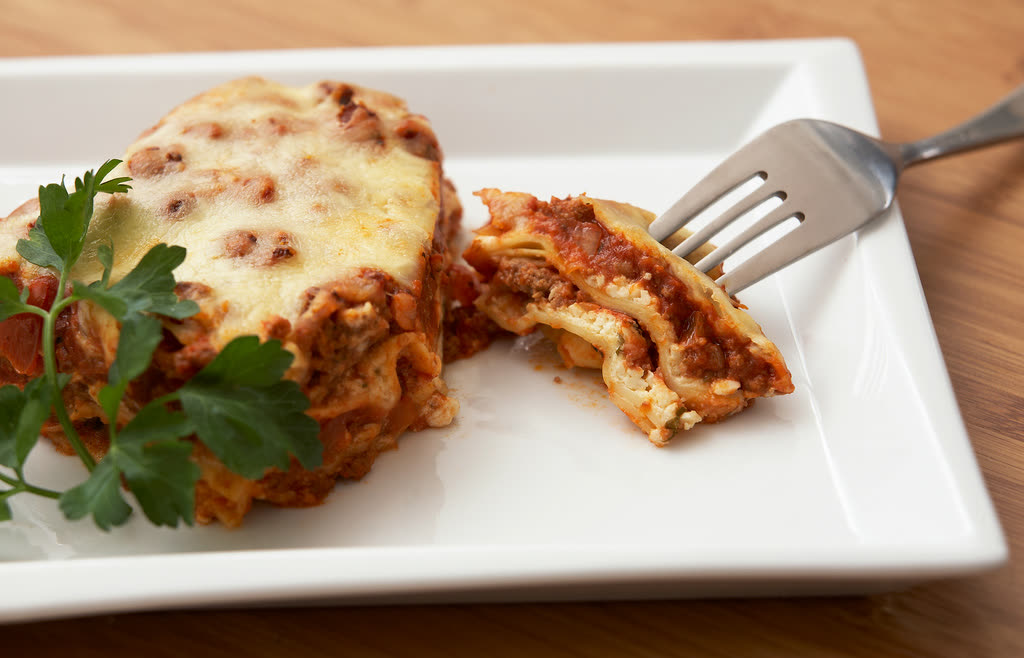
What temp and how long to bake lasagna? For a typical fresh homemade tray, 375°F (190°C) for about 45 minutes covered with foil, then 10 to 15 minutes uncovered, until bubbling at the edges and hot through the middle. Rest it for 15 minutes before cutting. Frozen lasagna needs lower, longer cooking, and the best test is always a thermometer reading rather than the clock.
Key takeaways
- Fresh lasagna: 375°F (190°C), about 45 minutes covered plus 10 to 15 minutes uncovered.
- Frozen, unbaked lasagna: about 350°F (175°C), often 1.5 to 2 hours, with the final stretch uncovered.
- The centre should reach 165°F (74°C) for safe reheating.
- Resting for 15 minutes makes slicing neat.
Timing table for common situations
| Situation | Oven temperature | Approximate time |
|---|---|---|
| Freshly assembled, cooked fillings | 375°F / 190°C | 45 min covered + 10-15 min uncovered |
| Assembled ahead, straight from the fridge | 375°F / 190°C | Add 10-15 minutes |
| Unbaked and frozen, baked from frozen | 350°F / 175°C | 1.5 to 2 hours, mostly covered |
| Frozen, thawed overnight in the fridge | 375°F / 190°C | About 1 hour 10 minutes, covered then uncovered |
| Single leftover portion | 350°F / 175°C | 20 to 30 minutes covered |
| Store-bought chilled or frozen | Follow packet | Follow packet |
Treat these as starting points. Pan depth, material, how full the layers are and your oven’s accuracy all shift the timing, so use the visual cues below as well.
Step-by-step baking method
- Heat the oven to 375°F (190°C) and put a rack in the centre. Slide a baking sheet underneath to catch drips.
- Cover the dish loosely with foil. A light spray of oil on the shiny side stops cheese from sticking to it.
- Bake for about 45 minutes, until the pasta is soft when pierced and the sauce is hot.
- Remove the foil and bake for another 10 to 15 minutes, until the cheese is golden and the edges bubble.
- Rest for 15 minutes on a rack or trivet so the layers set.
- Cut into squares with a sharp knife and serve with a spatula.
How to tell when it is done
Look for bubbling sauce at the edges and a golden top. Insert a thermometer into the centre, and aim for 165°F (74°C) if you are heating a dish made of cooked ingredients, which is the figure recommended for leftovers by the USDA Food Safety and Inspection Service. A thin knife pushed into the middle should come out hot to touch. If the edges are bubbling but the middle is cool, cover again with foil and give it more time at the same temperature, rather than raising the heat and burning the cheese.
Baking from frozen
Frozen lasagna is the trickiest case. A thick tray from the freezer needs long, gentle cooking so the middle thaws and heats through without the top turning to leather.
- Remove any plastic or cardboard lids and cover tightly with foil.
- Bake at about 350°F (175°C) for roughly 1.5 hours.
- Check the centre with a thermometer. If it is still cold, cover again and bake longer in 15-minute steps.
- Uncover for the last 15 to 20 minutes to brown the top.
- Rest before serving, as frozen lasagna releases extra liquid.
Thawing overnight in the fridge saves oven time and gives a more even result. Never thaw on the counter for hours, as food kept at room temperature can grow bacteria.
Make-ahead tips
- Cool the sauce before layering so the pasta does not turn gluey in advance.
- Assemble a day early, cover and refrigerate, then add 10 to 15 minutes to the baking time.
- Use no-boil sheets with extra sauce, or cook ordinary sheets al dente before layering, because they continue to soften in the oven.
- Simmer a parmesan rind in the ragu for extra depth. Our article on how to use a parmesan rind explains how.
- Freeze in portions you can reheat quickly.
Common problems and fixes
| Problem | Likely cause | Fix |
|---|---|---|
| Watery lasagna | Sauce too thin, no rest | Simmer the sauce thicker and rest 15 minutes |
| Dry top, cold middle | Oven too hot or not covered | Cover with foil and lower the temperature |
| Hard pasta edges | Not enough sauce at the sides | Spread sauce to the edges and cover |
| Burnt cheese | Uncovered too early | Uncover only for the last 10 to 15 minutes |
| Collapsing slices | Cut too soon | Rest before cutting |
Choosing the dish and layers
Metal, glass and ceramic dishes all work but heat differently. Glass and ceramic hold heat and can take a little longer to reach the middle, while thin metal pans brown the base and edges faster. A deep dish with many layers needs the longer end of the time range, and a shallow tray with three layers finishes sooner. Fill the dish so the top layer of pasta is fully covered by sauce, because exposed pasta dries into stiff corners.
Cheese choices matter for texture. Mozzarella melts and stretches, ricotta or a white sauce adds creaminess and a sprinkle of grated hard cheese on top gives a deeper golden crust. Use plenty of sauce in total: the pasta absorbs moisture as it cooks, and an under-sauced lasagna is dry however carefully it is timed.
Oven quirks worth knowing
Ovens often run hotter or cooler than their dials claim, so an inexpensive oven thermometer is a worthwhile purchase. Fan ovens cook faster, and the usual rule is to lower the temperature by about 20°C (25°F) or follow your manual. If your oven has hot spots, rotate the dish halfway through the uncovered stage. For a crisp top without overcooking the inside, finish under the grill or broiler for the last couple of minutes while watching closely, as cheese goes from golden to burnt very quickly.
Serving and storing
Serve with a crisp salad or garlic bread, and keep leftovers in the fridge within two hours of cooking in a shallow, covered container. Eat within three to four days, or freeze portions for longer storage. Reheat until steaming hot throughout, and do not reheat more than once.
Frequently asked questions
Should lasagna be covered when baking?
Yes, for most of the cooking time, then uncover to brown the cheese.
What temperature is best for lasagna?
Between 350°F and 375°F (175-190°C) works well; the higher end browns the top faster.
How long do I bake frozen lasagna?
Around 1.5 to 2 hours at 350°F for a full tray from frozen, but follow the packet if it is store-bought.
How do I reheat leftover lasagna?
Cover a portion with foil and bake at 350°F for 20 to 30 minutes, until it reaches 165°F in the centre.
Does lasagna need to rest?
Yes, about 15 minutes so the layers set and the portions hold their shape.
Conclusion
The simple answer to what temp and how long to bake lasagna is 375°F for around an hour in two stages, covered then uncovered, with more time if the dish is chilled or frozen. Use a thermometer, rest the tray and enjoy tidy slices.
Key takeaways about what temp and how long to bake lasagna
Here is a short summary of what temp and how long to bake lasagna so you can find the main points quickly.
- What temp and how long to bake lasagna?
- Look for bubbling sauce at the edges and a golden top.
- Thawing overnight in the fridge saves oven time and gives a more even result.
- Metal, glass and ceramic dishes all work but heat differently.
Good decisions about what temp and how long to bake lasagna come from checking the facts, comparing your options and taking your time.
Save this guide to what temp and how long to bake lasagna so you can find it again whenever you need a quick reminder.
If you only remember one thing about what temp and how long to bake lasagna, make it the practical steps covered in this guide.
Check official sources before acting on anything related to what temp and how long to bake lasagna, because details can change over time.
Questions about what temp and how long to bake lasagna are common, so it helps to compare more than one trustworthy source.
Related reading:
- How to Get Sturgeon in Stardew Valley: Location and Tips
- What Does a Red Light on a Smoke Detector Mean? Blinking Explained
For general background, you can look up what temp and how long to bake lasagna on Wikipedia.