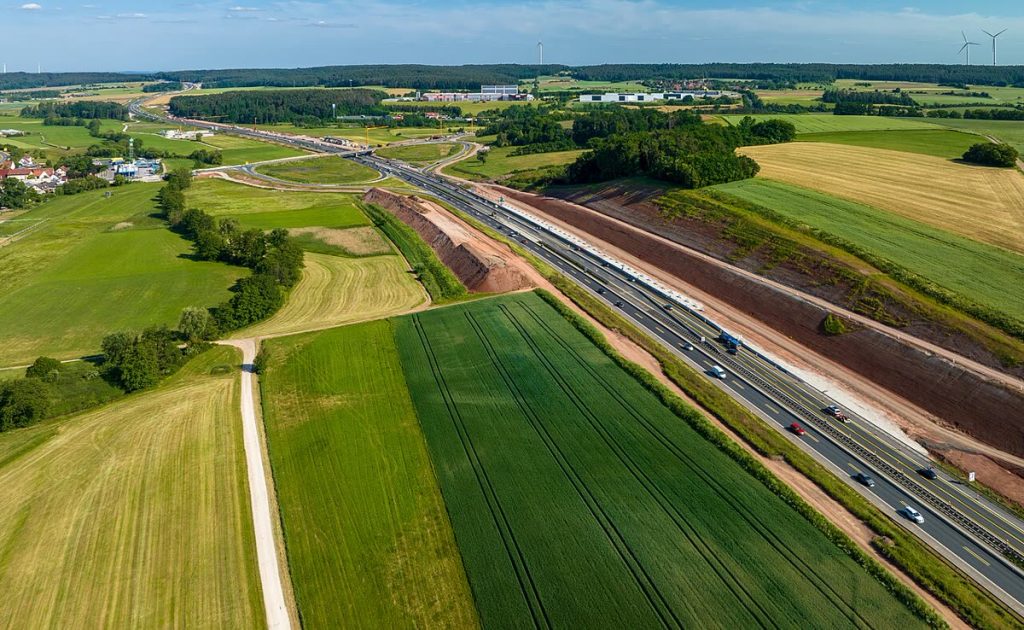
There is no single official autobahn no speed limit map, because limits on Germany’s motorways are set section by section and are altered for roadworks, traffic and weather. What exists instead are community and live maps, plus the road signs themselves, which are the only authority when you are driving. Much of the network has no general limit, but a large share of stretches near cities, junctions and building sites do carry a signed limit, so treat any map as a planning aid, not a promise.
Key takeaways
- Germany has no blanket motorway speed limit, but a recommended speed of 130 km/h applies.
- Signs override everything; a limit stays in force until a sign cancels it.
- Cities, junctions, roadworks and noise-sensitive stretches are the most likely places for limits.
- Maps can be out of date, so check live information and drive to the conditions.
How the German rules work
Germany does not set a nationwide maximum speed on its motorways. There is a recommended speed, the Richtgeschwindigkeit, of 130 km/h (about 81 mph). You are allowed to go faster where no limit applies, but if you are involved in a crash at higher speed, you may be held partly responsible even if another driver was mainly at fault, because courts and insurers often take the recommended speed into account. Where a sign shows a limit, you must follow it until a sign cancels it. The cancelling sign is a white circle with a diagonal grey band, which marks the end of all restrictions.
Where limits are most common
- Around big conurbations such as the Ruhr area, Frankfurt, Hamburg, Berlin, Munich and Stuttgart.
- At motorway junctions, interchanges and merging lanes.
- In roadwork zones, which often use temporary limits such as 80 or 100 km/h.
- On sections with a history of accidents, or where homes need noise protection.
- Where electronic gantries adjust limits for traffic and weather.
It is the overhead gantries that make a static map tricky. A stretch that is unrestricted late at night may show a limit at rush hour, in rain, or after an accident, so the same kilometre of road can be open at one moment and capped at another.
Types of map and where to look
| Source | Strength | Weakness |
|---|---|---|
| Community maps built on open map data | Show which sections have fixed limits | Depend on volunteers; may lag behind changes |
| Satnav and navigation apps | Display the current limit for the road you are on | Cannot always show variable limits in advance |
| Traffic information from the authorities | Report roadworks and incidents | Not designed to map unlimited stretches |
| Road signs | The legal authority | Only visible as you approach |
OpenStreetMap-based tools are popular because contributors tag a road’s maximum speed, and some websites turn that into a colour-coded map of the network. Search for these, but keep in mind that “unlimited” in the data really means “no sign has been recorded”, and signs change. The Wikipedia article on the autobahn gives a good overview of the rules and history.
How to use a map sensibly
- Plan your route in a navigation app to see the road names and approximate distances.
- Open a community map layer to spot long stretches without fixed limits.
- Check live traffic for roadworks and incidents on the day of travel.
- On the road, rely on signs and any gantries, not on your memory of the map.
- Leave plenty of time, since congestion often prevents high speeds anyway.
Driving fast on an autobahn: practical points
If you do find yourself on an unrestricted stretch, a few habits matter more than the number on the speedometer. Keep to the right unless overtaking; passing on the right is illegal and dangerous. Cars approaching from behind can close at very high speed, so check your mirrors early and often. Leave a longer gap than you would at home, and be prepared for a sudden queue, which appears often. The inside lanes are commonly full of lorries, which are subject to speed limits of their own, so lane changes are frequent.
Vehicle condition matters too. Tyres, brakes and fluids need to be in good shape, and tyre speed ratings should suit your speed. If you are renting, read the contract, as some companies restrict very high speeds or void insurance conditions. The speed you choose should reflect your car, your experience and the conditions, not what the law merely allows.
Common misconceptions
Many visitors imagine the whole network as a free-for-all. In practice, only a portion of the network is without a fixed limit, and busy corridors are often slow. Another myth is that the recommended speed is merely decorative. It has legal weight in determining liability after an accident. Finally, people assume a map from a few years ago is still accurate. Limits are added, removed and made permanent as local authorities respond to noise, safety and environmental policy.
If you want another angle on the same subject, see our other pages: the map of where Germany has no limit and the piece on unrestricted sections of the autobahn approach the topic from different directions.
If you are renting a car in Germany
Check the rental agreement for speed-related clauses and the insurance excess. Ask what tyres the car has, and whether it is suited to high speeds. Take photographs of the car before you set off, and make sure you know the fuel type. Remember, too, that Germany has environmental zones in many cities that require a sticker, so check the rules for your itinerary. Motorway service stations are frequent, so you can take breaks every couple of hours; tiredness is a bigger danger at high speed than most drivers admit.
Frequently asked questions
Is there an official autobahn no speed limit map?
No single official map exists. Limits change often, so use community maps, navigation apps and, above all, road signs.
Does the whole German autobahn have no speed limit?
No. Germany has no general maximum, but many sections have signed limits and temporary restrictions.
What is the recommended speed on the autobahn?
130 km/h, about 81 mph. It is a recommendation, but it can influence liability after an accident.
How do I know when a limit ends?
A sign with a white circle and a diagonal band marks the end of all restrictions. Otherwise a limit continues until a sign cancels it.
Can limits change during a journey?
Yes. Overhead gantries can lower limits in response to traffic, weather or incidents.
Conclusion
An autobahn no speed limit map is a useful starting point, but the signs and conditions on the day decide what is legal and sensible. Use maps to plan, stay alert, and drive at a speed you can control.
Key takeaways about autobahn no speed limit map
Here is a short summary of autobahn no speed limit map so you can find the main points quickly.
- There is no single official autobahn no speed limit map, because limits on Germany's motorways are set section by section and are altered for roadworks, traffic and weather.
- Germany does not set a nationwide maximum speed on its motorways.
- It is the overhead gantries that make a static map tricky.
- OpenStreetMap-based tools are popular because contributors tag a road's maximum speed, and some websites turn that into a colour-coded map of the network.
Good decisions about autobahn no speed limit map come from checking the facts, comparing your options and taking your time.
Save this guide to autobahn no speed limit map so you can find it again whenever you need a quick reminder.
If you only remember one thing about autobahn no speed limit map, make it the practical steps covered in this guide.
Check official sources before acting on anything related to autobahn no speed limit map, because details can change over time.
Related reading:
- What Is a Pint Equal To? Quarts, Gallons and Beer Pints
- Funeral Card Messages Examples: What to Write in a Sympathy Card
For general background, you can look up autobahn no speed limit map on Wikipedia.