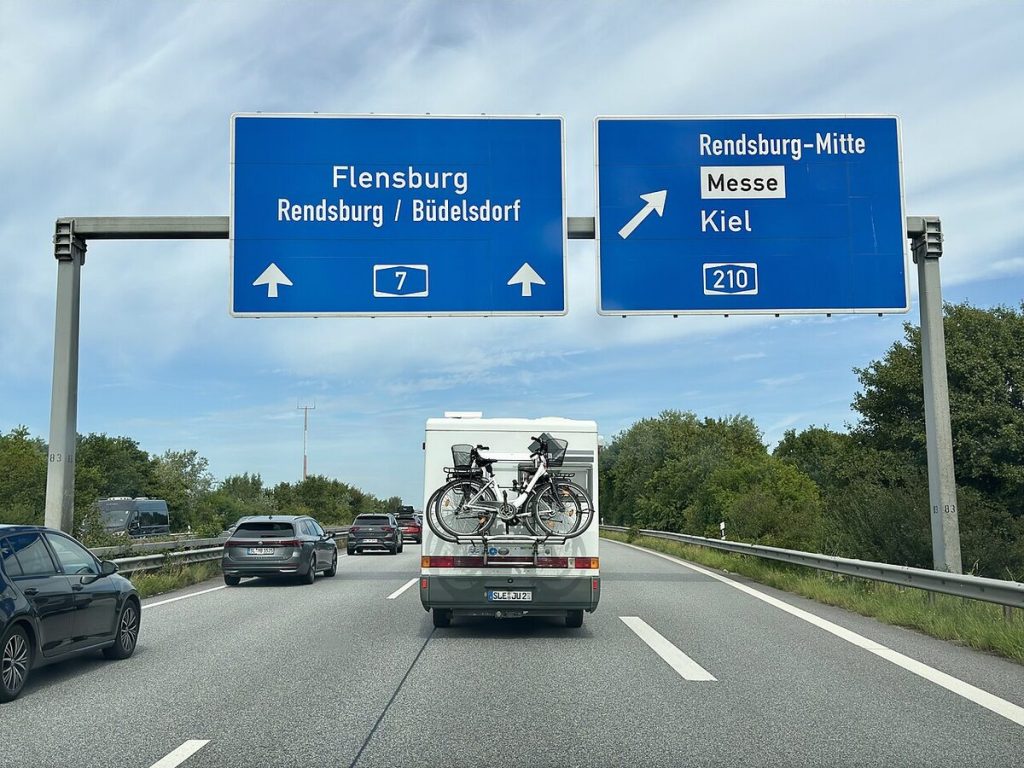
There is no single official, permanent autobahn no speed limit map, because the limits on Germany’s motorways change with roadworks, weather, traffic load and local decisions. The practical answer is to combine a mapping app or community map that shows speed limits with the signs you see on the road, and to treat any static picture as a rough guide only.
Key takeaways
- No official, always-current map of unrestricted autobahn exists; limits shift with roadworks and traffic systems.
- Unrestricted sections still carry an advisory speed of 130 km/h (about 81 mph).
- A round white sign with grey diagonal lines marks the end of a limit; a red-ringed number marks a limit.
- Stretches near cities, junctions and roadworks are the most likely to be restricted.
- Driving far faster than traffic can lead to shared blame after a crash, even without a fine.
What “no speed limit” actually means
Germany has no blanket national maximum on its motorways. Where nothing else is signed, the advisory speed, called the Richtgeschwindigkeit, is 130 km/h. You will not be stopped simply for exceeding that figure, yet it matters after an incident: a driver travelling far above it may be given a share of the responsibility by insurers and courts, even if another driver made the first mistake.
That is why the phrase “no limit” can mislead. It describes the absence of a fixed legal maximum on a given section, not a licence to ignore conditions. Rain, dense traffic, darkness and a tired driver all change what is sensible, and the rules on keeping a safe distance and adjusting speed to the situation always apply.
Why a fixed map does not work
People search for an autobahn no speed limit map expecting a simple coloured network. The trouble is that the network is constantly adjusted. A stretch that is open one month can be restricted the next because of repairs, a new noise-protection measure or an accident-reduction decision by the state authorities. Some motorways also use electronic gantries that lower the limit when traffic builds up, when the road is wet, or when fog sets in, then lift it again when conditions improve.
So a section can be “unlimited” in the morning and capped at 100 or 120 km/h in the afternoon. Any map drawn from a single snapshot will go stale, which is why the better approach is a live or frequently updated source.
How to check an unrestricted stretch before you drive
- Open a navigation app that shows limits. Google Maps, Apple Maps, HERE WeGo and similar apps show the current limit on many roads. A motorway segment with no figure is often unrestricted, but the data can lag behind reality.
- Look at OpenStreetMap-based viewers. Volunteers tag roads with a maxspeed value, and several community viewers colour motorways by that tag. A road tagged “none” is generally one without a fixed limit. Because anyone can edit the data, treat it as a good indication, not a guarantee.
- Check traffic information. German traffic radio, the ADAC and regional traffic centres publish roadworks and temporary restrictions. Look at your route the day before and again just before you leave.
- Trust the signs over the screen. If a sign shows a limit, that is the law, whatever your phone says.
Reading the signs
| Sign or marking | What it tells you |
|---|---|
| Round sign, red ring, number | A maximum speed in km/h applies from here. |
| Round white sign with grey diagonal lines | Previous restrictions end; if no other limit is posted, none applies. |
| Blue rectangular sign with a number (130) | The recommended speed, not a legal maximum. |
| Electronic gantry above the lanes | A variable limit that can change within minutes. |
| Roadworks signs and temporary lane markings | A lower limit normally applies throughout the works. |
A related page, our autobahn without speed limit map and where it applies, looks at the same question from a different angle if you want a second explanation of how the sections are described.
Where unrestricted sections tend to be
As a general pattern, sections without a limit are more common on long, straight, well-engineered rural stretches with good sight lines and gentle junctions. Restricted sections are the norm around dense urban areas, near busy interchanges, through tunnels, over certain bridges, in zones with a high crash record and in areas where residents are protected from noise. Expect lower limits wherever traffic merges heavily or lanes narrow.
Rather than memorising a route list, think of the autobahn as a patchwork. You might see a 120 sign, then the end-of-limit sign, then a 100 sign within a short distance. Enjoying an unrestricted stretch simply means noticing when the sign appears and when it disappears.
Practical tips for visitors
- Hire cars: Check the vehicle’s tyres and ask about any speed rules in the rental contract. Some firms recommend staying below a certain speed.
- Lane discipline: Keep right unless overtaking. Overtaking on the right is not allowed on the autobahn, and fast traffic can approach from far behind with little warning.
- Check mirrors often: A car at 200 km/h closes a long gap in seconds.
- Know the units: 130 km/h is about 81 mph and 100 km/h is about 62 mph, so a quick conversion helps if your car’s dashboard shows miles.
- Foreign plates are not exempt: The same laws, fines and cameras apply to visitors.
- Do not rely on speed-camera apps: Rules on using them differ and can lead to penalties.
A sensible way to plan a long autobahn drive
Treat the day like any long road trip, with extra attention to the things that differ in Germany. Start with a full tank and a rested driver, because services are frequent but queues at roadworks can be long. Build in breaks every couple of hours. Check the weather, since rain and fog trigger lower limits and make high speeds far riskier than they look on a dry afternoon.
It also helps to agree on a conservative pace with your passengers. Many experienced drivers on the network cruise at 130 to 150 km/h, which keeps fuel use sensible and leaves a margin for the occasional car that appears in the mirror at much higher speed. Leave the fastest cars to those who know the road and are prepared for the extra stopping distance.
Frequently asked questions
Is there an official map of German motorways without a speed limit?
No. No authority publishes a permanent, official map, because limits change with roadworks, signals and local decisions. Use live navigation data and road signs instead.
Is the whole autobahn network unlimited?
No. Only certain sections have no fixed maximum, and large parts of the network, especially around cities and construction zones, carry limits.
What is the 130 km/h figure?
It is the advisory speed, the Richtgeschwindigkeit. It is not a legal limit, but driving much faster can count against you if an accident happens.
Can the limit change while I am driving?
Yes. Electronic signs can lower the limit for traffic, weather or accidents, and they can lift it again afterwards. Always follow the sign you are passing.
Can tourists drive on unrestricted sections?
Yes, provided they hold the correct licence and insurance. The same rules apply as for German drivers, so check the details on the autobahn overview and your hire company’s terms.
Conclusion
An autobahn no speed limit map can give you a rough sense of the network, but only live data and the signs ahead tell you what applies at the moment. Check your route before you set off, keep the 130 km/h advisory in mind and drive to the conditions rather than to a number.
Key takeaways about autobahn no speed limit map
Here is a short summary of autobahn no speed limit map so you can find the main points quickly.
- There is no single official, permanent autobahn no speed limit map, because the limits on Germany's motorways change with roadworks, weather, traffic load and local decisions.
- Germany has no blanket national maximum on its motorways.
- That is why the phrase "no limit" can mislead.
- People search for an autobahn no speed limit map expecting a simple coloured network.
Save this guide to autobahn no speed limit map so you can find it again whenever you need a quick reminder.
If you only remember one thing about autobahn no speed limit map, make it the practical steps covered in this guide.
Check official sources before acting on anything related to autobahn no speed limit map, because details can change over time.
Questions about autobahn no speed limit map are common, so it helps to compare more than one trustworthy source.
Related reading:
- All That Glitters Tigard: Checking Reviews and Shopping Local
- What Is Praline? Three Different Sweets Share the Name
For general background, you can look up autobahn no speed limit map on Wikipedia.