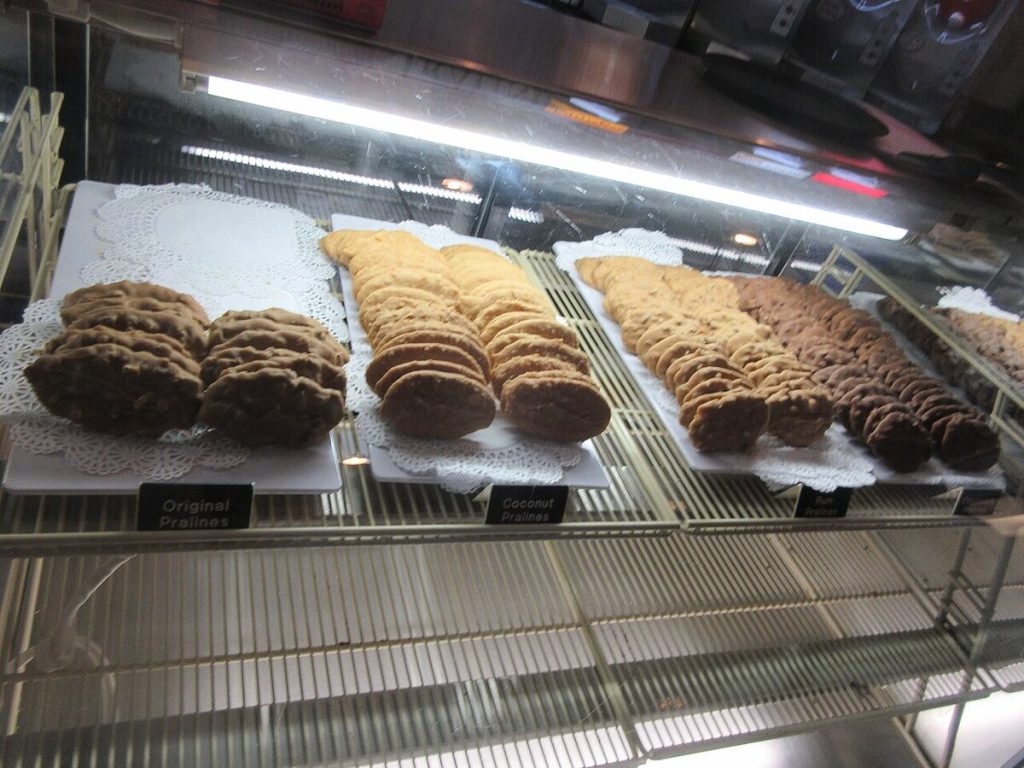
What is praline? It depends on where you are standing. In France it is caramelised nuts ground into a paste or powder, in Belgium it is a bite-sized filled chocolate, and in the American South it is a soft, creamy sweet made with pecans. All three involve sugar and nuts, but they are very different things, so when someone mentions praline it is worth asking which one they mean.
Key takeaways
- French praline is nuts coated in caramel, often ground into a paste for pastry and chocolate.
- Belgian praline is a filled chocolate, sold in boxes.
- American praline is a pecan candy, closely tied to New Orleans.
- Praline paste, praline chocolates and praline sauce are not interchangeable in recipes.
French praline: caramel and nuts
The older, classic form begins with sugar cooked to a caramel. Whole almonds, hazelnuts or a mix are stirred in, and the mixture is poured out to cool into a hard brittle. Break it up and grind it, and you get a coarse powder; keep grinding and the oils release until it becomes a smooth, glossy paste called praliné. Pastry chefs use it to flavour buttercream, mousse, ice cream, fillings and the centres of chocolates. It tastes deeply of roasted nuts with a toasted-sugar edge.
The name is traditionally linked to a seventeenth-century French nobleman, the Duc de Choiseul-Praslin, whose cook is said to have created the sweet. The story is repeated often, though documentary proof is thin, so treat it as a good tale rather than settled fact.
Praline paste is also the base of gianduja, the silky hazelnut chocolate, and it turns up in spreads that many people know from the breakfast table.
Belgian praline: the filled chocolate
In Belgium, and in many shops that follow Belgian usage, a praline is a small chocolate with a shell and a soft centre. The filling might be nut paste, ganache, caramel, fruit cream or liqueur. Boxes of assorted pralines are a classic gift, and a good chocolatier will put on show a wide range of shapes and flavours. This is what you will see in the windows of Brussels and Bruges.
To a French pastry chef, calling this a praline would sound odd, which is why the word can cause confusion when a recipe from one country is read in another. When we discuss chocolates in more detail, our piece on praline chocolate, nuts and caramel takes a closer look at the chocolate side of the story.
American praline: pecan candy
In the Southern United States, especially in Louisiana, a praline is a flat, round candy made with sugar, cream or milk, butter and pecans. It is cooked until it reaches a soft-ball stage and spooned onto parchment in rounds, where it sets into a sweet, fudgy, slightly crumbly disc. The recipe is attributed to French influence on the region, adapted to local pecans, which were abundant. You will find these sold in sweet shops and given as souvenirs. The texture is closer to fudge than to the brittle of the French version.
Comparing the three
| Type | Main ingredients | Texture | Common use |
|---|---|---|---|
| French praline | Caramel with almonds or hazelnuts | Hard brittle, powder or smooth paste | Pastry fillings, ice cream, chocolate |
| Belgian praline | Chocolate shell with filling | Crisp shell, soft centre | Gift boxes, after-dinner treats |
| American praline | Sugar, cream, butter, pecans | Soft, creamy, fudge-like | Candy, topping for desserts |
Making a simple nut praline at home
You can make the French style in a kitchen with a few basics. The key is patience with the caramel and care around hot sugar.
- Lightly toast the nuts in a dry pan or oven until fragrant. Toasting deepens the flavour; our guide to roasting pine nuts shows the same stovetop and oven technique on a smaller nut.
- Melt sugar in a heavy-based pan over medium heat without stirring much, swirling the pan until it turns amber.
- Stir in the warm nuts quickly and coat them.
- Pour onto a lined tray and let it cool completely.
- Break into pieces, then blitz in a food processor. It goes through stages: crumbs, then a sandy powder, then a paste.
Caramel is much hotter than boiling water and sticks like glue, so keep children away, and have a bowl of cold water nearby for burns. Cool the pan before cleaning it by soaking it in hot water, which dissolves the sugar.
Using and storing praline
- Praline paste keeps in a jar in a cool cupboard; the oil may separate, so stir before using.
- Praline powder is good sprinkled over desserts for crunch.
- Belgian pralines are best stored in a cool, dry place away from strong smells, and eaten within the date on the box.
- American pralines stay fresh in an airtight container for a short time, then become dry.
A nut paste and a nut praline can be a hazard for people with allergies. Always read labels for tree nuts, peanuts and traces if you are cooking for someone with an allergy. If you want to make a savoury touch, a rind of cheese can lend depth in sauces; our write-up on what a Parmesan rind is offers ideas, though that is a separate topic from sweets.
Where the word comes from
The word praline travelled with the sweet. From France it reached Belgium, where chocolatiers adopted it for their filled chocolates, and from there to Louisiana, where French settlers adapted the recipe. A good overview of the history is available in the Wikipedia article on praline, which also lists regional variants.
Common mix-ups when shopping or cooking
Labels can mislead if you do not know which praline you are holding. A jar marked “praline paste” is the French nut paste; a box marked “pralines” in a chocolate shop holds filled chocolates; a bag of “pralines” in a Southern-style sweet shop is pecan candy. Ice creams and desserts labelled “praline” may use any of the three flavours, though most mean a caramelised-nut taste, and a “praline sauce” is generally a caramel sauce with nuts. When a recipe calls for praline, look at the other ingredients for clues: if it also lists cream, butter and sugar and says to cook until set, it is likely the American type; if it speaks of grinding caramelised nuts, it is French.
When you buy online or abroad, read the ingredient list instead of the front of the box. Nut content, sugar and chocolate percentages tell you what you are really getting, and they matter for allergies as well as taste.
Frequently asked questions
Is praline a nut?
No. It is a sweet made with nuts and sugar, though the form depends on the country.
What is the difference between praline and caramel?
Caramel is cooked sugar by itself or with butter and cream. Praline adds nuts, either left whole, crushed or ground to a paste.
What is a praline in chocolate?
In Belgium and many chocolate shops, it is a filled chocolate. In some others it refers to a nutty filling.
Are pralines gluten-free?
Often, but not always. Fillings and additives vary, so check the label.
Can I replace praline paste with something else?
Smooth hazelnut or almond butter with a little caramel can stand in for flavour, but the result will be different. Use it only where the recipe is flexible.
Conclusion
Praline is three sweets sharing a name. Know whether you are looking for caramelised nut paste, a filled chocolate or a pecan candy, and you will pick the right treat or recipe every time.
Key takeaways about what is praline
Here is a short summary of what is praline so you can find the main points quickly.
- The older, classic form begins with sugar cooked to a caramel.
- The name is traditionally linked to a seventeenth-century French nobleman, the Duc de Choiseul-Praslin, whose cook is said to have created the sweet.
- Praline paste is also the base of gianduja, the silky hazelnut chocolate, and it turns up in spreads that many people know from the breakfast table.
- In Belgium, and in many shops that follow Belgian usage, a praline is a small chocolate with a shell and a soft centre.
Save this guide to what is praline so you can find it again whenever you need a quick reminder.
If you only remember one thing about what is praline, make it the practical steps covered in this guide.
Check official sources before acting on anything related to what is praline, because details can change over time.
Questions about what is praline are common, so it helps to compare more than one trustworthy source.
Use this page as a starting point for what is praline and come back to it when your situation changes.
Good decisions about what is praline come from checking the facts, comparing your options and taking your time.
Related reading:
- Labeled Quadrants on a Graph: Numbering and Sign Rules
- What Is a Parmesan Rind? How to Use It in Cooking
For general background, you can look up what is praline on Wikipedia.