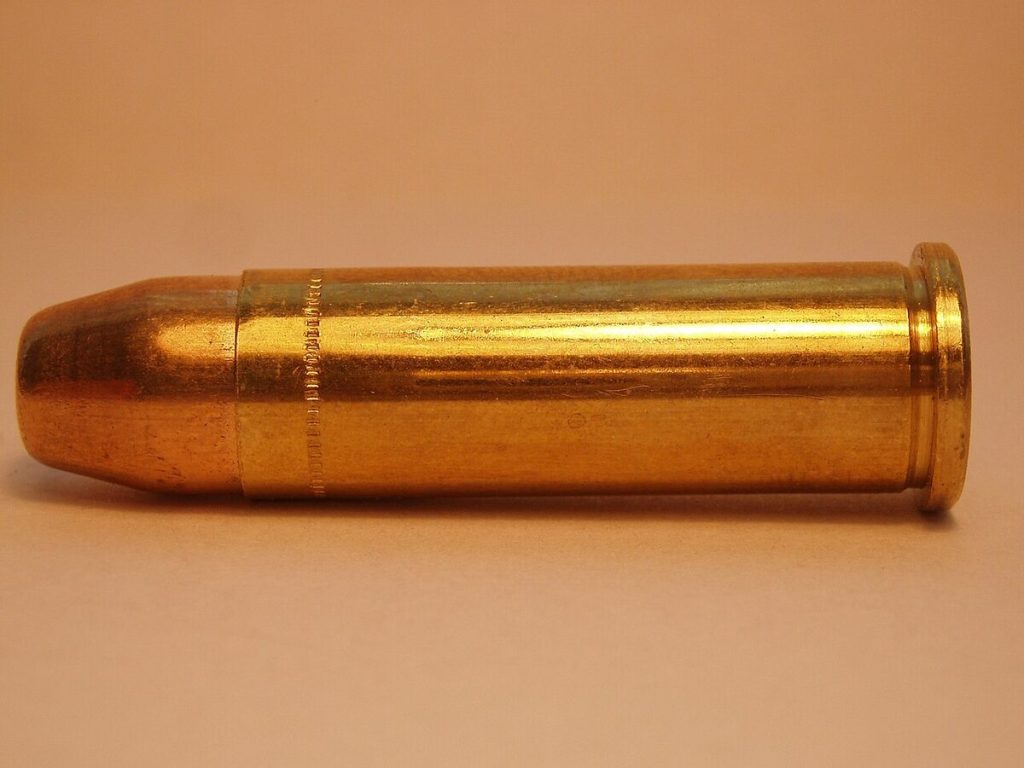
Anyone searching for 38 cal semi auto pistols runs into a naming problem almost immediately. The famous “.38 Special” is primarily a revolver cartridge, so semi-automatic pistols usually use other cartridges with confusingly similar names, such as .38 Super or .380 ACP. Reading the exact calibre marking on the firearm, and never guessing from a nickname, is the single most important habit, because the wrong ammunition can be dangerous. This guide explains the names, the differences and what to check, as general education rather than a buying recommendation.
Key takeaways
- .38 Special is a rimmed revolver cartridge; very few semi-automatics were made for it.
- .38 Super and .380 ACP are semi-automatic cartridges, but they are different and not interchangeable.
- Cartridge names rarely match true bullet diameter, so always read the headstamp and the firearm’s markings.
- Laws on owning and buying firearms and ammunition vary widely; follow the rules where you live.
Why “.38 cal” is confusing
Cartridge names are historical labels, not measurements you can rely on. In many cases a “.38” cartridge fires a bullet of about .357 inch in diameter. The “.38” came from an older system of naming based on the bore or the size of the earlier lead bullets, and the names stuck. As a result, cartridges described as “.38”, “.380”, “.357” and “9mm” overlap in odd ways, and some use bullets of nearly the same diameter while being entirely different in case length, pressure and design.
This matters because a cartridge that fits physically in a chamber is not necessarily the correct one. The only safe approach is to match the exact designation stamped on the firearm to the exact designation printed on the ammunition box and the case head.
The cartridges that get mixed up
| Cartridge | Typical use | Key point |
|---|---|---|
| .38 Special | Revolvers | Rimmed case designed for revolvers; semi-automatic versions are rare. |
| .38 Super | Semi-automatic pistols, often 1911-pattern | Introduced in the late 1920s as a higher-pressure development of .38 ACP. |
| .38 ACP | Older semi-automatics | Early twentieth-century John Browning design, now largely superseded. |
| .380 ACP | Small, compact pistols | Also called 9mm Short or 9mm Kurz; a shorter case than 9mm Luger. |
| 9mm Luger | Semi-automatic pistols | Similar bullet diameter but a different, longer case. |
You can read the technical backgrounds on Wikipedia for .38 Special, .38 Super and .380 ACP.
Why revolver and semi-automatic cartridges differ
A revolver holds cartridges in a rotating cylinder, so the case can have a rim that stops it moving too far forward in the chamber. A semi-automatic pistol feeds rounds from a magazine into the chamber, and the mechanism needs the cartridge to headspace in a particular way, usually off the case mouth or a shoulder. That is why a rimmed .38 Special case is awkward in a typical magazine-fed pistol, and why designers developed rimless cartridges for self-loading pistols.
A few semi-automatic designs for .38 Special-type ammunition have existed, but they are unusual, so if a listing describes one, treat the claim with care and verify it with the manufacturer’s documentation.
A closer look at the semi-automatic options
.38 Super
This cartridge was introduced in 1929 for the Colt 1911-type pistol and is a higher-pressure version of the older .38 ACP. It has a long history in competitive shooting, particularly in some practical pistol disciplines. Older firearms chambered for .38 ACP may not be rated for modern .38 Super loads, so never assume that two similarly named cartridges are safe in each other’s firearms.
.380 ACP
The .380 ACP dates from 1908 and was designed by John Browning. It is shorter and lower in power than 9mm Luger, and it became popular in small, easily carried pistols. Because the numbers look close to “.38”, beginners sometimes mistake it for a “.38 special” semi-automatic. It is not the same cartridge.
9mm Luger
The 9mm Luger, also called 9x19mm Parabellum, is among the most common pistol cartridges worldwide. Its bullet diameter is similar to .380 ACP, but the case is longer, and the two are not interchangeable.
Why mixing ammunition is unsafe
A cartridge that happens to enter a chamber may be too long, too short or too high in pressure for the firearm. A round that is too small can lead to poor support of the case and a rupture. One that develops too much pressure can damage the gun and injure the shooter. Organisations such as SAAMI, the Sporting Arms and Ammunition Manufacturers’ Institute, publish voluntary industry standards for cartridge dimensions and pressures in the United States, which is one reason that markings matter. The CIP does a similar job across many European countries.
Practical checks for anyone researching
- Read the calibre stamped on the barrel, slide or frame, exactly as written.
- Match it to the manufacturer’s manual, which will state the approved ammunition.
- Check the headstamp on the base of each cartridge case against the box label.
- Never rely on a seller’s nickname or a forum post as proof of compatibility.
- Ask a qualified gunsmith or licensed dealer if you are unsure or if the firearm is old or modified.
Legal and safety context
Rules on buying, owning, storing and transporting firearms and ammunition differ greatly between countries and, within the United States, between states and cities. Some places require licences, background checks, waiting periods or registration, and some forbid certain items altogether. In the United Kingdom, for example, most handguns are heavily restricted. This article does not tell you what you may lawfully buy or do; check current law with the relevant authorities before acting.
General safety rules apply to everyone: treat every firearm as loaded, keep your finger off the trigger until ready to shoot, point the muzzle in a safe direction and store firearms securely away from children. Training from a qualified instructor is worth the time.
If you enjoy careful explainers on names and labels, see our guides to what B means in a Prius and what it means to brine a turkey.
Frequently asked questions
Is there such a thing as a .38 Special semi-automatic?
A few exist, but they are rare. Most semi-automatics use .38 Super, .380 ACP, 9mm or other cartridges, and .38 Special is mainly a revolver round.
Can I fire .38 Special in a .38 Super pistol?
No. They are different cartridges, and you should never assume that a similar name or a round that fits is safe. Use only ammunition specified for your firearm.
Is .380 ACP the same as 9mm?
No. They use bullets of similar diameter, but .380 ACP has a shorter case and lower power than 9mm Luger.
What does the number in the cartridge name mean?
It is a historical label that roughly relates to bullet size, but it is not an exact measurement. Always rely on the full designation.
Where can I find reliable technical details?
Use the manufacturer’s manual and industry standards bodies, and ask a qualified gunsmith. Avoid forum guesses for safety-critical decisions.
Conclusion
The key to understanding 38 cal semi auto pistols is to see the label as a clue, not a spec. Check the stamped marking, match it with the correct ammunition, learn the differences between .38 Special, .38 Super and .380 ACP, and follow the law where you live.
Key takeaways about 38 cal semi auto pistols
Here is a short summary of 38 cal semi auto pistols so you can find the main points quickly.
- Anyone searching for 38 cal semi auto pistols runs into a naming problem almost immediately.
- Cartridge names are historical labels, not measurements you can rely on.
- This matters because a cartridge that fits physically in a chamber is not necessarily the correct one.
- You can read the technical backgrounds on Wikipedia for .38 Special, .38 Super and .380 ACP.
Questions about 38 cal semi auto pistols are common, so it helps to compare more than one trustworthy source.
Use this page as a starting point for 38 cal semi auto pistols and come back to it when your situation changes.
Good decisions about 38 cal semi auto pistols come from checking the facts, comparing your options and taking your time.
Save this guide to 38 cal semi auto pistols so you can find it again whenever you need a quick reminder.
If you only remember one thing about 38 cal semi auto pistols, make it the practical steps covered in this guide.
Related reading:
- How Much Is a Fifth of Henny? Size and Price Guide
- Cintas Login Partner Connect: How to Get Into Your Account
For general background, you can look up 38 cal semi auto pistols on Wikipedia.