If you are looking into mercury distance from sun miles, this guide explains the essentials in plain language and points you to the most useful next steps.
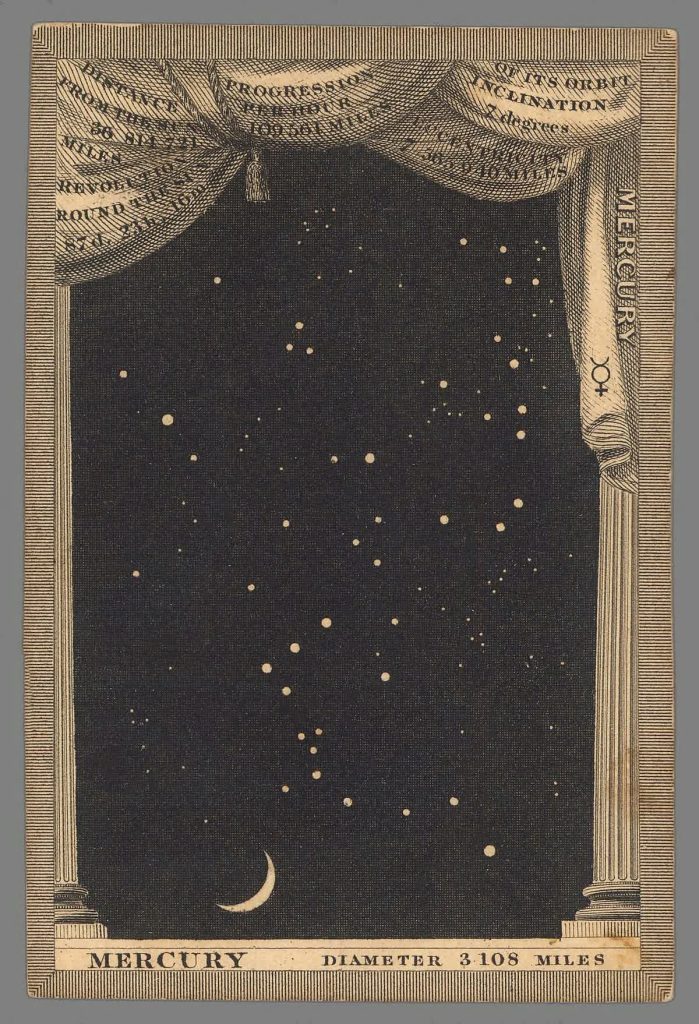
The average Mercury distance from Sun in miles is about 36 million (roughly 58 million kilometres), which is around 0.39 astronomical units. Because Mercury travels on a stretched, oval-shaped orbit, the real figure swings from about 29 million miles at its closest to about 43 million miles at its farthest.
Key takeaways
- Mercury averages about 36 million miles (58 million km) from the Sun, the shortest distance of any planet.
- Its distance varies between roughly 29 million miles (perihelion) and 43 million miles (aphelion).
- Earth averages about 93 million miles from the Sun, so Mercury is a little over a third of that distance.
- Figures are rounded and differ slightly between sources, so check NASA’s fact sheets if you need precise values.
Mercury’s distance from the Sun at a glance
| Measure | Miles (approx.) | Kilometres (approx.) |
|---|---|---|
| Closest (perihelion) | 29 million | 46 million |
| Average | 36 million | 58 million |
| Farthest (aphelion) | 43 million | 70 million |
| Earth, for comparison (average) | 93 million | 150 million |
These numbers are rounded to the nearest million, which is sensible for distances this large. Reference sources quote slightly different decimals, but they agree on the overall picture.
Why the distance changes
Planets do not orbit in perfect circles. Each follows an ellipse with the Sun at one focus, and how stretched that ellipse is depends on a number called eccentricity. Earth’s orbit is very nearly circular, so its distance from the Sun only varies by a few per cent through the year. Mercury has the most eccentric orbit of the eight planets, so its distance changes dramatically: the farthest point is almost 50 per cent greater than the closest.
Two terms are worth knowing. Perihelion is the point in an orbit closest to the Sun, and aphelion is the point farthest away. They come from Greek words for “near the Sun” and “away from the Sun”. You can read more about the terms in the article on apsides at Wikipedia.
What astronomical units mean here
Astronomers measure distances inside the solar system in astronomical units (AU). One AU is defined as the average distance between Earth and the Sun, about 93 million miles. Mercury’s average of 0.39 AU simply says that it sits about 39 per cent as far from the Sun as we do.
The unit is handy because it avoids huge numbers. Venus orbits at about 0.72 AU, Mars at about 1.5 AU and Neptune at about 30 AU, so you can compare planets at a glance without counting zeros.
How Mercury compares with Earth
At around a third of Earth’s distance, Mercury receives far more sunlight. The Sun would look much larger in the Mercurian sky, and the light is several times as intense as at Earth, with the exact ratio depending on where Mercury is in its orbit. Because the planet is close and the Sun’s gravity is strong, Mercury moves faster than any other planet, at an average speed of roughly 29 miles per second.
That speed gives Mercury the shortest year in the solar system: one orbit takes about 88 Earth days. Oddly, a day on Mercury is much longer. The planet spins slowly, so one full sunrise to sunrise lasts about 176 Earth days, or two Mercury years.
Distance, heat and the planet’s surface
Proximity makes the daytime side extremely hot, but Mercury has almost no atmosphere to hold on to that heat. After sunset the temperature falls far below freezing, which gives one of the biggest day and night swings of any planet.
It is not the hottest planet, though. Venus holds that title because its thick carbon dioxide atmosphere traps heat. Mercury does have an extremely thin exosphere, and it contains traces of atoms such as sodium; if the chemistry interests you, see our explainer on how many neutrons sodium has.
Light travel time
Sunlight reaches Mercury, at its average distance, in a little over three minutes. It takes just over eight minutes to reach Earth. At Mercury’s closest approach the trip takes around two and a half minutes, and at its farthest around three and a half. That is a handy way to picture the gap without counting millions of miles.
Putting the distances in everyday terms
A few comparisons help make 36 million miles feel real.
- It is roughly 150 times the average distance from Earth to the Moon. For that figure, see how far the Moon is from Earth.
- A jet travelling at 550 mph would need more than seven years of non-stop flying to cover it.
- The distance is about the same as circling the Earth at the equator around 1,450 times.
These are rough, rounded comparisons rather than exact values, but they show why astronomers prefer units such as AU.
How to convert and check the numbers
- To convert miles to kilometres, multiply by 1.609. So 36 million miles is about 58 million km.
- To convert kilometres to miles, multiply by 0.621.
- To convert to AU, divide the distance in miles by about 93 million.
When you are using the figures in a school project or article, state whether you mean the average, closest or farthest distance, because a single “distance” can mislead.
For authoritative values, NASA publishes planetary fact sheets and a solar system exploration site at science.nasa.gov. Where sources disagree by a small amount, it is because of rounding and the date the orbit was measured, since planetary orbits change very slowly over time.
Frequently asked questions
How many miles is Mercury from the Sun?
On average about 36 million miles, ranging from roughly 29 million miles at its closest to 43 million miles at its farthest.
Is Mercury the closest planet to Earth?
Surprisingly, it can be. Because Mercury stays close to the Sun, it is on average the nearest planet to Earth and, in fact, to every other planet, even though Venus comes closer at its nearest approach.
How long does it take light to travel from the Sun to Mercury?
A little over three minutes at the average distance.
Why is Mercury’s orbit so elongated?
The shape of a planet’s orbit comes from how it formed and how it has been tugged by other bodies over billions of years. Mercury’s eccentricity is about 0.21, the highest of the eight planets.
What is Mercury’s distance in astronomical units?
About 0.39 AU on average, with a range of around 0.31 to 0.47 AU.
Conclusion
The Mercury distance from Sun miles figure to remember is 36 million on average, with a range from about 29 to 43 million. That elongated orbit explains the planet’s fast year, fierce sunlight and extreme swings in temperature.
Key takeaways about mercury distance from sun miles
Here is a short summary of mercury distance from sun miles so you can find the main points quickly.
- The average Mercury distance from Sun in miles is about 36 million (roughly 58 million kilometres), which is around 0.39 astronomical units.
- These numbers are rounded to the nearest million, which is sensible for distances this large.
- Astronomers measure distances inside the solar system in astronomical units (AU).
- The unit is handy because it avoids huge numbers.
If you only remember one thing about mercury distance from sun miles, make it the practical steps covered in this guide.
Check official sources before acting on anything related to mercury distance from sun miles, because details can change over time.
Questions about mercury distance from sun miles are common, so it helps to compare more than one trustworthy source.
Use this page as a starting point for mercury distance from sun miles and come back to it when your situation changes.
Good decisions about mercury distance from sun miles come from checking the facts, comparing your options and taking your time.
Save this guide to mercury distance from sun miles so you can find it again whenever you need a quick reminder.
Related reading:
- The Sixth Man Law and Order: How to Find Episode Details
- The Life Cycle of a Tiger: Birth to Adulthood Explained
For general background, you can look up mercury distance from sun miles on Wikipedia.