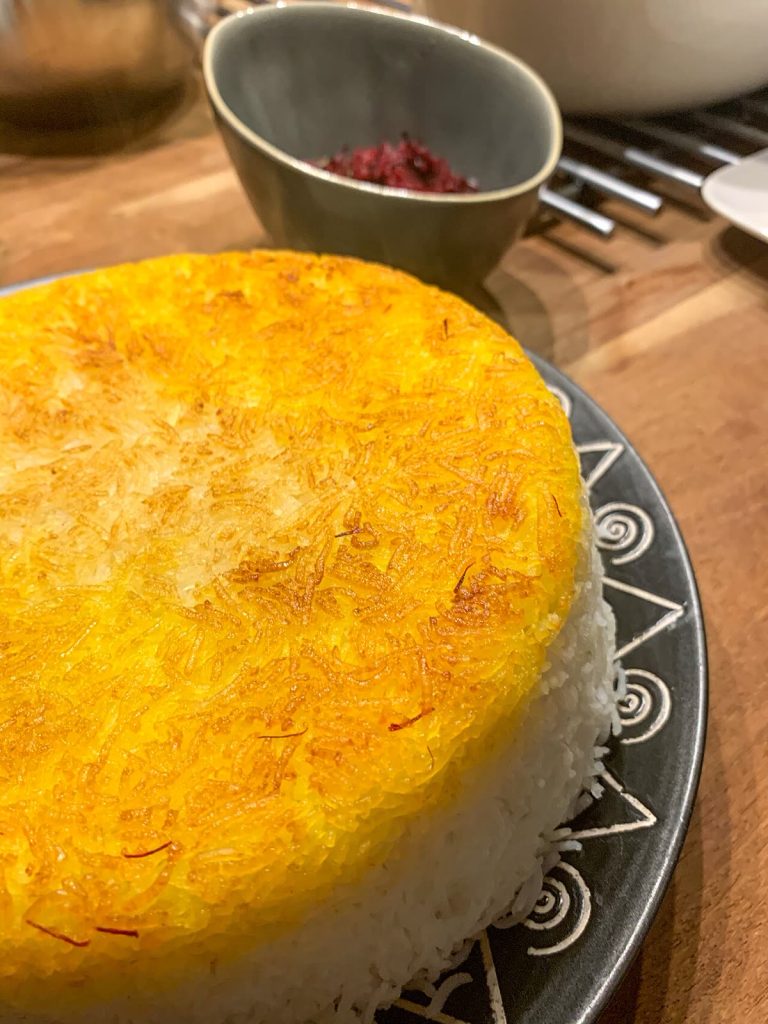
What is the burnt rice called? In Spanish, the crispy, caramelised layer of rice at the bottom of a paella pan is called socarrat. Many other cuisines prize this toasted rice and give it their own name, such as tahdig in Persian cooking, nurungji in Korean and guoba in Chinese. Despite sounding like a mistake, it is usually done on purpose.
Key takeaways
- The Spanish word is socarrat, the golden crust on a good paella.
- Persian tahdig, Korean nurungji and Chinese guoba are all deliberately crisp rice.
- The goal is toasted and crunchy, not black or bitter.
- You can make it at home with the right pan, enough fat and patience.
Socarrat in Spanish cooking
Socarrat comes from the Valencian verb socarrar, meaning to scorch lightly. In a traditional paella, the cook lets the rice cook undisturbed at the end so the bottom layer toasts against the pan and forms a golden, crunchy crust. It has a deep, nutty, savoury flavour and is considered a sign of a well-made paella. The aim is toasted, not black. A good cook listens for a gentle crackling sound and smells for a toasty aroma, then takes the pan off the heat before it tips into bitterness.
What the burnt rice is called around the world
| Name | Cuisine | How it is made |
|---|---|---|
| Socarrat | Spanish (Valencian) | Rice crust on the bottom of a paella pan |
| Tahdig | Persian | Rice, often with oil, yoghurt or saffron, crisped in the base of the pot |
| Nurungji | Korean | Scorched rice from the pot, eaten as a snack or boiled into a drink or porridge |
| Guoba | Chinese | Rice crust fried or served sizzling in soups and dishes |
| Pegao | Puerto Rican | Crispy rice stuck to the bottom of the pot |
| Concon | Dominican | Toasted rice layer from the pot |
The same idea appears in many other places, which tells you how widely loved the crispy texture is.
Tahdig: Persian crispy rice
Tahdig literally means bottom of the pot in Persian. Cooks often line the pan with oil or butter, sometimes with thin potato slices, flatbread or yoghurt-coated rice, then steam the rice over low heat until the base forms a crunchy golden cake. It is flipped out onto a plate so the crust faces up, and guests often compete for the best pieces. You can read about it in the Tahdig article on Wikipedia.
Nurungji and guoba
In Korea, nurungji is the scorched rice left in the pot after cooking. It can be eaten as a crunchy snack or simmered in water to make a comforting rice tea or porridge called sungnyung. In China, guoba (rice crust) is dried or fried and served with sauces or in sizzling dishes, where hot sauce poured on top makes it crackle at the table.
Is burnt rice safe to eat?
Properly toasted rice crust is safe and delicious. Blackened, carbon-like rice tastes bitter and is best discarded. A few food safety points apply to rice generally.
- Serve rice soon after cooking and cool leftovers quickly, ideally within an hour or so, before refrigerating.
- Do not leave cooked rice standing at room temperature for long, as bacteria that survive cooking can produce toxins.
- Reheat leftovers until steaming hot, and only reheat once.
- Scrape off and discard any rice that is truly black and acrid.
How to make crispy rice at home
- Choose a wide, heavy-based pan, ideally non-stick or well seasoned, such as a paella pan or a heavy saucepan.
- Cook the rice until almost done, with the right ratio of liquid for your rice type.
- Add a thin layer of oil or a knob of butter around the base and edges.
- Leave the rice undisturbed on medium heat, and then reduce to medium-low for the final few minutes.
- Listen for crackling and look for golden edges. Do not stir.
- Take the pan off the heat and rest it for a few minutes so the crust loosens.
- Serve with the crispy side up, or break off pieces to share.
Tips for better results
- Use short or medium grain rice for paella and Persian-style rice, as it holds together well.
- Do not use too much liquid, since wet rice steams rather than crisps.
- Keep the heat steady. Too high and the crust burns; too low and it stays pale.
- Soak a stuck pan with hot water for easy cleaning.
- Pair with the right dishes: stews, grilled meats and saucy vegetables suit crunchy rice well.
If you are cooking meat to go with it, our guide on how to tenderise pork has simple methods that work well alongside rice dishes. For the dish where socarrat is most famous, see the Paella article on Wikipedia.
The science behind the crunch
The golden colour and nutty taste of crispy rice come from browning reactions. When starch and a little protein on the surface of the rice meet dry heat, they form hundreds of new flavour compounds, in much the same way as toast or the crust of bread develops. A thin coating of fat helps conduct heat evenly across the base, which is why so many recipes begin by oiling the pan. Too much moisture prevents browning, because water keeps the temperature near boiling until it has evaporated.
Ideas for serving crispy rice
- Break it into shards and serve with a stew, kebab or curry.
- Top with yoghurt, herbs and a squeeze of lemon for a fresh contrast.
- Serve a wedge of paella crust as a welcome snack when guests arrive.
- Add crisp pieces to soups just before serving so they sizzle and soften slightly.
- Turn leftover plain rice into crisp patties by pressing it into a hot oiled pan until golden on each side.
Frequently asked questions
What is burnt rice called in Spanish?
It is called socarrat, the prized toasted layer at the bottom of a paella pan.
Is socarrat actually burnt?
Not in the sense of being ruined. It is lightly scorched and caramelised on purpose. Black, bitter rice is overdone.
What is the Persian name for crispy rice?
Tahdig, which means bottom of the pot.
Can you make crispy rice in a normal pan?
Yes. Use a heavy pan, a little fat, steady heat and patience, and avoid stirring in the final stage.
What do Koreans call burnt rice?
Nurungji. It is eaten as a snack or turned into a warm rice drink or porridge.
Conclusion
If you have wondered what the burnt rice is called, the answer depends on where you are: socarrat in Spain, tahdig in Iran, nurungji in Korea and guoba in China. All of them celebrate the same crunchy, golden reward at the bottom of the pot. Try making your own, watch the heat and enjoy the crust.
Key takeaways about what is the burnt rice called
Here is a short summary of what is the burnt rice called so you can find the main points quickly.
- Socarrat comes from the Valencian verb socarrar, meaning to scorch lightly.
- The same idea appears in many other places, which tells you how widely loved the crispy texture is.
- Tahdig literally means bottom of the pot in Persian.
- In Korea, nurungji is the scorched rice left in the pot after cooking.
Good decisions about what is the burnt rice called come from checking the facts, comparing your options and taking your time.
Save this guide to what is the burnt rice called so you can find it again whenever you need a quick reminder.
If you only remember one thing about what is the burnt rice called, make it the practical steps covered in this guide.
Check official sources before acting on anything related to what is the burnt rice called, because details can change over time.
Questions about what is the burnt rice called are common, so it helps to compare more than one trustworthy source.
Use this page as a starting point for what is the burnt rice called and come back to it when your situation changes.
Related reading:
- Rise of Kingdoms: How to Choose the Best Civilization
- Why Are Earwigs So Bad This Year? Causes and What to Do
For general background, you can look up what is the burnt rice called on Wikipedia.