Is it bad to jump start another car? Generally no. When the leads go on in the right order and both vehicles are in sound condition, a jump start is routine and puts only a modest, short-lived load on the donor car. The trouble starts with crossed cables, damaged batteries, or newer vehicles whose handbooks restrict the practice, so a few minutes of checking beforehand is well worth it.
Key takeaways
- A correctly done jump start is safe for both cars; mistakes with the clamps cause nearly all the damage.
- Never jump a battery that is cracked, bulging, leaking or frozen.
- The final black clamp goes on bare metal away from the battery, not on the dead battery’s negative terminal.
- Hybrids, electric cars and start-stop models may have special rules, so read the handbook first.
- If a car needs repeated jumps, the battery or charging system needs testing.
What can actually go wrong?
Car batteries store a lot of energy and can release hydrogen gas while charging or discharging. That combination is why the procedure has a set order. The main risks are as follows.
- Reversed polarity: connecting positive to negative can blow fuses, damage the alternator diodes or harm electronic control units, which are expensive to replace.
- Sparks near the battery: a spark close to a battery vent can ignite hydrogen. This is the reason for the bare-metal earth point.
- Damaged batteries: a cracked case, swollen sides or a frozen battery can rupture or leak acid when you add current.
- Voltage surges: revving the donor engine hard or disconnecting clamps carelessly can send spikes through sensitive electronics.
- Overloading a weak donor: a small or elderly battery may struggle and need recharging afterwards.
If none of those apply, the jump itself is very low risk. You are simply sharing a little current for a few minutes.
Check before you connect anything
Take a minute to look over both cars. Inspect the dead battery for cracks, bulging, corrosion crusts or fluid. If you see any of those, or the weather has been bitterly cold and the case may be frozen, stop and call for help. Check the jump leads for frayed insulation, loose clamps or exposed copper, and make sure they are long enough to reach comfortably.
Make sure both ignitions are off, handbrakes are on, gearboxes are in neutral or park, and lights, heated seats and the radio are switched off. Keep jewellery, loose sleeves and hair away from fans and belts under the bonnet. Your handbook may show dedicated jump-start terminals; some cars have the battery in the boot or under a seat, with a remote positive point in the engine bay.
Safe jump start steps
Follow this order every time.
- Park the donor car close enough for the leads to reach, but without the bodywork touching.
- Connect one red clamp to the positive (+) terminal of the flat battery.
- Connect the other red clamp to the positive (+) terminal of the donor battery.
- Connect one black clamp to the negative (-) terminal of the donor battery.
- Connect the final black clamp to a bare, unpainted metal part of the dead car’s engine block or chassis, well away from the battery and moving parts.
- Start the donor car and let it idle for a few minutes. Do not rev it hard.
- Try starting the dead car. If it does not catch, wait a minute and try again, but do not keep cranking.
- Once it is running, remove the clamps in exact reverse order, taking care that the clamps never touch each other or any metal while still attached at the other end.
Keep the revived car running. A short drive or a long idle gives the alternator time to put charge back. Around 20 to 30 minutes is a sensible target, and a longer drive is better than a short one.
Hybrids, electric cars and start-stop systems
Modern vehicles complicate the picture. Many hybrids have a conventional 12-volt battery that can be jumped, but manufacturers often specify exactly where to connect, and some advise against using the car as a donor. Electric vehicles also use a 12-volt battery for their systems, and again the handbook is the authority. Cars with start-stop technology may use an enhanced battery type that behaves differently when flat. Do not guess. If the handbook is missing, the manufacturer’s website or a main dealer can usually tell you.
The general principles behind the lead-acid battery are covered on the Wikipedia page on automotive batteries, which is helpful if you want to understand why the gas risk exists.
Jump leads versus other options
| Option | Needs a second car? | Best for |
|---|---|---|
| Jump leads | Yes | Cheap, simple help from a friend or passer-by. |
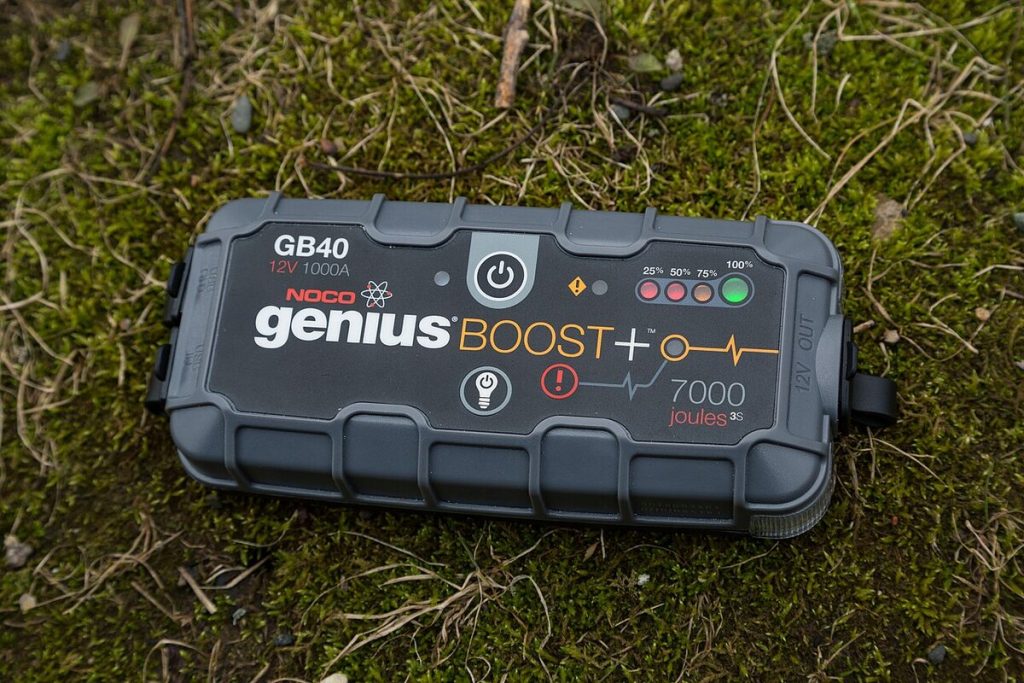
| Portable jump starter pack | No | Solo drivers and rural areas; keep it charged. |
| Breakdown cover | No | Newer cars, uncertain connections, unsafe locations. |
| Garage battery test or replacement | No | Repeated flat batteries or a car over five years old. |
If you are travelling and the car in question is a hire vehicle, ring the rental company before you attempt anything, since some contracts expect you to use their assistance line. If you are planning a trip, our tips before booking a rental car in Amsterdam are a useful read before you collect the keys.
Staying safe at the roadside
If the car has died on a busy road or the hard shoulder of a motorway, personal safety comes ahead of the battery. Get everyone out and well away from traffic, switch on the hazard lights and call for assistance instead of working beside moving vehicles. At night, a torch and something reflective help. If an incident has caused damage, our guide to finding crash reports and next steps covers what to do afterwards.
Common mistakes
- Letting the clamps touch while one end is connected.
- Putting the last black clamp on the dead battery’s negative post.
- Revving the donor engine, which does not help and can cause surges.
- Switching the revived car off immediately and then being unable to restart it.
- Repeating failed attempts for ages instead of pausing and reassessing.
- Ignoring a pattern of flat batteries.
Frequently asked questions
Can jump starting damage the donor car?
Rarely, when done correctly. The donor sees a brief extra load. Damage is mostly linked to wrong connections or hard revving.
Do I need to run the donor car’s engine?
Yes. Running it at a steady idle supplies more stable power than relying on its battery alone.
How long should I leave the leads connected?
A few minutes of idling before trying the start is usual. If the car still does not turn over after several tries, the battery may be beyond help or there may be a different fault.
Why does my car keep going flat after a jump?
Possible causes include an old battery, a faulty alternator, a parasitic drain such as a light left on, or too many short journeys. Have a garage test the battery and charging system.
When should I call breakdown cover instead?
Call if the battery looks damaged, you smell gas, you are unsure about the terminals, or the handbook warns against jump starting. Using professionals is also wise for hybrid and electric models.
Conclusion
So, is it bad to jump start another car? Not when you follow the correct order, inspect the batteries first and respect any manufacturer warnings. Take your time, keep the clamps apart, earth the last one on bare metal, and treat repeat flat batteries as a sign that the battery needs attention.
Key takeaways about is it bad to jump start another car
Here is a short summary of is it bad to jump start another car so you can find the main points quickly.
- Is it bad to jump start another car?
- Car batteries store a lot of energy and can release hydrogen gas while charging or discharging.
- If none of those apply, the jump itself is very low risk.
- Take a minute to look over both cars.
Save this guide to is it bad to jump start another car so you can find it again whenever you need a quick reminder.
If you only remember one thing about is it bad to jump start another car, make it the practical steps covered in this guide.
Check official sources before acting on anything related to is it bad to jump start another car, because details can change over time.
Questions about is it bad to jump start another car are common, so it helps to compare more than one trustworthy source.
Use this page as a starting point for is it bad to jump start another car and come back to it when your situation changes.
Good decisions about is it bad to jump start another car come from checking the facts, comparing your options and taking your time.
Related reading:
- Where to Get a Sturgeon in Stardew Valley (Location & Times)
- Simple Syrup vs Triple Sec: They Are Not the Same
For general background, you can look up is it bad to jump start another car on Wikipedia.