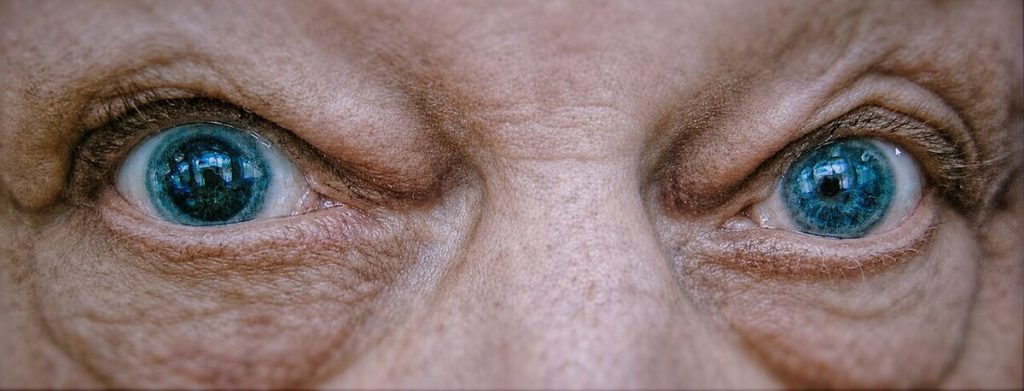
A normal pupil size for most healthy adults is about 2 to 4 millimetres across in bright light and about 4 to 8 millimetres in the dark. The normal pupillary size is not one fixed number, because your pupils change constantly with light, focus, age and emotion.
Key takeaways
- Adult pupils are typically 2 to 4 mm in bright light and 4 to 8 mm in dim light.
- Pupils should react quickly: smaller in light, larger in the dark.
- A small difference between the two eyes is common and often harmless.
- Sudden changes, uneven pupils with a head injury, or pupils that do not react need urgent medical help.
- Medicines, drugs and eye conditions can all change pupil size.
What the pupil does
The pupil is the black circle in the middle of the iris, the coloured part of the eye. It is an opening that lets light reach the retina at the back of the eye. Tiny muscles in the iris adjust its width automatically, much like the aperture in a camera. When light is bright the pupil narrows (constricts), and when light is dim it widens (dilates). You cannot control this by will, because it is run by the autonomic nervous system.
Normal pupil size by situation
Because the size changes all the time, doctors look at pupils in set conditions. The figures below are typical ranges, not strict rules.
| Condition | Typical adult pupil size | Notes |
|---|---|---|
| Bright light | About 2 to 4 mm | Pupil narrows within moments |
| Dim light or dark | About 4 to 8 mm | Younger people often have larger pupils |
| Looking at something close | Slightly smaller | Part of the near-focus response |
| Excitement or fear | Larger | Driven by the fight-or-flight response |
Pupil size in children and older adults
Babies and children
Newborn pupils are often fairly small and react sluggishly at first. In childhood and the teenage years the pupils tend to be larger in dim light than in adults, which is one reason young people can often see better in low light. There is no single “correct” size for a child, so doctors focus on whether the pupils are equal and react well.
Older adults
With age the pupils tend to become smaller and react a little more slowly. This is one reason older people can need more light to read comfortably. Eye surgery, such as cataract removal, may also change how the pupil looks and behaves.
Do both pupils have to match?
Not always. A small difference between the two pupils, called anisocoria, is common and is often harmless if it has always been there. Many people notice it only in photographs. What matters is whether it is new, whether it changes, and whether it comes with other symptoms.
Get urgent medical advice if uneven pupils appear suddenly, or if they come with headache, a head injury, drooping eyelid, double vision, confusion, weakness or severe eye pain. In an emergency, call your local emergency number or go to accident and emergency.
What can make pupils larger or smaller?
Common causes of wide (dilated) pupils
- Dim light or darkness.
- Strong emotion, excitement or fear.
- Dilating eye drops used in eye tests.
- Some medicines, such as certain antihistamines, decongestants or antidepressants.
- Recreational drugs and stimulants.
Common causes of small (constricted) pupils
- Bright light.
- Opioid painkillers and certain other drugs.
- Some eye drops, including those for glaucoma.
- Ageing.
- Certain nerve conditions, which a doctor would need to assess.
Pupil size alone can never prove drug use or illness. Many everyday factors affect it, so never use it to judge a person on its own.
How to check pupil size safely at home
- Sit in a room with soft, even lighting and look at a distant object.
- Use a mirror or ask someone to look at your eyes, noting whether both pupils look round and similar in size.
- Shine a phone torch from the side, not straight into the eye, and watch the pupil narrow. Do this briefly and gently.
- Turn the lights down and see the pupils widen again after a few moments.
- Take a clear photo in even light to compare over time if you are worried about a change.
This is only a simple check. It is not a medical test and should not replace an exam by an optometrist or doctor.
Why the pupil reflex matters
Doctors often shine a small light into each eye to test the pupillary light reflex. Light in one eye should make both pupils narrow, because the signal is shared by the brain. This quick test checks the optic nerve, the brainstem and the nerves that control the iris. It is used in routine eye checks and in emergency care, which is why pupil size and reaction are noted so often in medical records. A pupil that is slow, uneven or fixed gives clinicians useful clues, although the cause always needs a proper assessment.
When to see an optometrist or doctor
- You notice a new or growing difference in pupil size.
- One or both pupils do not react to light.
- You have blurred vision, eye pain, redness or halos around lights.
- Your pupils stay very large and you are sensitive to light after starting a new medicine.
For trusted health information, visit the NHS website, or read the Wikipedia article on the pupil for the science behind how it works.
Frequently asked questions
What is the average pupil size?
Adults usually fall between about 2 and 4 mm in bright light and 4 to 8 mm in the dark, though individual differences are normal.
Are my pupils too big?
Large pupils in dim light are normal. If they stay wide in bright light, or you feel unwell, speak to a doctor or optometrist.
Is it normal for one pupil to be bigger?
A slight lifelong difference is common and usually harmless. A sudden new difference needs prompt medical advice.
Does pupil size change with emotion?
Yes. Excitement, fear, interest and mental effort can make pupils larger, while tiredness can make them smaller.
Can eye drops affect my pupils?
Yes. Dilating drops widen the pupil for a few hours, and some glaucoma drops narrow it. Avoid driving until your vision is clear again if you have had dilating drops.
Conclusion
There is a healthy range rather than a single normal pupil size, and the key sign is how well your pupils react to light. Equal or only slightly different pupils that respond promptly are usually fine, while sudden changes deserve prompt medical attention. If you enjoy short plain-English explainers like this, you might also like our guide to what bento is in Japan.
Key takeaways about normal pupillary size
Here is a short summary of normal pupillary size so you can find the main points quickly.
- A normal pupil size for most healthy adults is about 2 to 4 millimetres across in bright light and about 4 to 8 millimetres in the dark.
- The pupil is the black circle in the middle of the iris, the coloured part of the eye.
- Because the size changes all the time, doctors look at pupils in set conditions.
- Newborn pupils are often fairly small and react sluggishly at first.
Save this guide to normal pupillary size so you can find it again whenever you need a quick reminder.
If you only remember one thing about normal pupillary size, make it the practical steps covered in this guide.
Check official sources before acting on anything related to normal pupillary size, because details can change over time.
Questions about normal pupillary size are common, so it helps to compare more than one trustworthy source.
Use this page as a starting point for normal pupillary size and come back to it when your situation changes.
Good decisions about normal pupillary size come from checking the facts, comparing your options and taking your time.
Related reading:
- Stevie Branch Autopsy: What Is Publicly Known and Where to Find Official Records
- VLC Player Cast to TV: How to Stream Video With Chromecast or DLNA
For general background, you can look up normal pupillary size on Wikipedia.