The jasmine rice water to rice ratio that works for most kitchens is 1 cup of rinsed rice to 1¼ cups of water on the stove, or about 1 to 1 in a rice cooker. That gives soft, fragrant grains that cling a little without turning to paste. The exact figure moves with the brand, how well you rinse, and the pan you use, so this article gives you a reliable starting point and shows you how to adjust it.
Key takeaways
- For stovetop jasmine, start with 1 cup rice to 1¼ cups water after rinsing.
- Rice cookers need less water, close to 1 to 1 by volume, because little steam escapes.
- Rinse until the water runs mostly clear, then rest the rice off the heat for 10 minutes.
- If the rice is too hard or too wet, change the water by 2 tablespoons per cup next time.
Why the ratio matters for jasmine rice
Jasmine is a long-grain rice with a softer, slightly sticky texture compared with many other long-grain types. It holds less starch than short-grain sushi rice, but more than a firm, separate-grain variety. Because it is usually sold fairly fresh and not very dry, it needs less water than people expect. Use the generous 2 to 1 ratio printed on some old packets and you will end up with a soggy bowl.
Think of the ratio as a starting point rather than a law. Newly harvested rice carries more moisture and needs a touch less water. Older, drier rice may want a splash more. A wide pan loses more steam than a narrow one, and a loose lid does the same. If you find a ratio that works in your own pot, write it down and stick with it.
The jasmine rice water to rice ratio for the stovetop
For a standard pan with a tight lid, here is the method that gives consistent results.
- Measure the rice with a dry measuring cup, levelled off.
- Rinse in a bowl or sieve, swirling with your hand, for two or three changes of water. Drain well.
- Add the rice to a saucepan with 1¼ cups of cold water per cup of rice. If you like softer rice, go up to 1⅓ cups.
- Add a pinch of salt if you wish, and stir once.
- Bring to a boil uncovered, then drop the heat to the lowest setting and cover tightly.
- Cook for about 12 to 15 minutes without lifting the lid.
- Turn off the heat and leave it covered for 10 minutes.
- Fluff gently with a fork or rice paddle.
The resting step is not optional. During those ten minutes the moisture at the bottom of the pan spreads through the grains and the surface dries slightly, which is what separates fluffy rice from claggy rice.
Quick reference for different batch sizes
| Dry rice | Water (firm to standard) | Water (softer) | Simmer time |
|---|---|---|---|
| 1 cup | 1 to 1¼ cups | 1⅓ cups | 12 to 15 min |
| 1½ cups | 1⅔ to 1⅞ cups | 2 cups | 13 to 16 min |
| 2 cups | 2 to 2½ cups | 2⅔ cups | 14 to 17 min |
| 3 cups | 3 to 3¾ cups | 4 cups | 15 to 18 min |
Larger batches need proportionally slightly less water because there is less surface area for evaporation. That is why the numbers above creep towards 1 to 1¼ rather than staying fixed.
Rice cooker and pressure cooker settings
A rice cooker traps almost all of its steam, so the ratio is lower. For jasmine, try 1 cup of rinsed rice to 1 cup of water, then add up to 2 tablespoons more if you prefer very soft grains. Many cookers also print water lines on the inner pot. Follow the line marked for white rice, then test and adjust.
In an electric pressure cooker, 1 to 1 by volume works well. Cook on high pressure for about 3 to 4 minutes, then allow a natural release for 10 minutes. Because pressure cookers vary, treat your first batch as a trial.
Oven method
For a hands-off option, put 1 cup of rinsed rice and 1½ cups of boiling water in a covered ovenproof dish with a pinch of salt. Bake at around 180°C (350°F) for roughly 25 minutes, then rest it for five minutes. The extra water compensates for the slower heat.
Rinsing, soaking and other small decisions
Rinsing removes surface starch. Skipping it gives you stickier rice, which some people like, but if you want separate grains, rinse. Jasmine does not need long soaking. A 15 to 30 minute soak can shorten cooking slightly and give a more even texture, but if you soak, cut the water by about 2 tablespoons per cup.
Salt is a matter of taste. A small pinch per cup seasons the rice from within. A teaspoon of oil or a small knob of butter stops foaming and adds a little gloss.
Troubleshooting your rice
If the result is not what you hoped for, work out the cause before changing everything at once.
- Too wet or mushy: reduce water by 2 tablespoons per cup, make sure you drained after rinsing, and check that the heat was truly low.
- Hard or crunchy centres: add 2 tablespoons more water per cup, or cook a couple of minutes longer with the lid on. A splash of hot water added at the end, then covered for five minutes, can rescue a batch.
- Burnt bottom: your heat was too high or the pan is thin. Use a heavier pan or a heat diffuser.
- Gummy clumps: you probably stirred too much or skipped the rest. Stir once at the start only.
- Pale and bland: add salt, or cook in stock for savoury dishes.
Using leftovers and pairing ideas
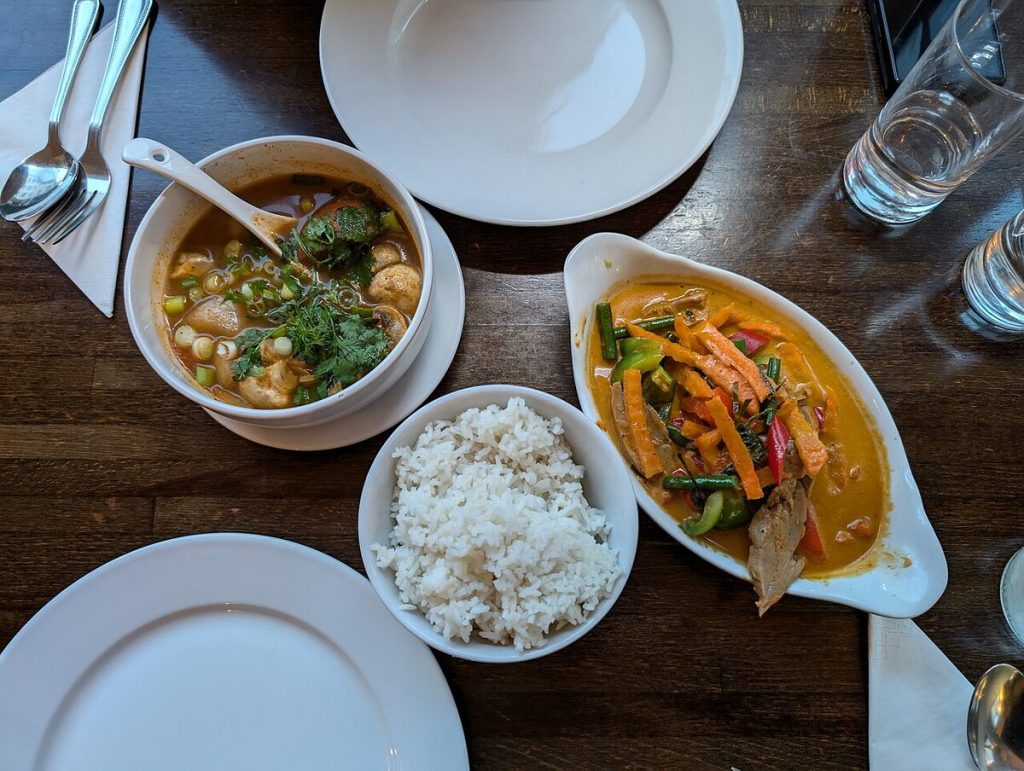
Jasmine rice suits Thai curries, stir-fries, grilled meat and steamed fish. Spread leftovers on a tray to cool quickly, refrigerate within an hour or so, and use within a day. Reheat until steaming hot all the way through. The same cautions apply to other rice, as covered in our piece on reheating risotto the next day. If you also cook aromatic Indian rice, the numbers differ, so see our notes on the ratio of rice to water for basmati.
For a bit of background on where the grain comes from and why it smells the way it does, the Wikipedia entry on jasmine rice is a helpful read. If you like your grains with a firm bite, the idea of al dente translates loosely to rice, too: you want tenderness with a slight resistance.
Frequently asked questions
Is the ratio for jasmine rice 1 to 1 or 1 to 2?
On the stove, closer to 1 to 1¼ works best for rinsed rice. A 1 to 2 ratio suits unrinsed brown rice or some other varieties, but it makes jasmine soggy. In a rice cooker, 1 to 1 is a good start.
Should I rinse jasmine rice before cooking?
Yes, if you want fluffy, separate grains. Rinse two or three times until the water looks mostly clear. Skipping it gives a stickier result.
How long does jasmine rice take to cook?
About 12 to 15 minutes at a low simmer on the stove, plus 10 minutes resting off the heat. A rice cooker takes around 15 to 20 minutes depending on the model.
Can I use the same ratio for brown jasmine rice?
No. Brown jasmine keeps its bran and needs more water, roughly 1 to 1¾ or 2, and a longer cook of 35 to 45 minutes.
Why is my jasmine rice sticky?
Common causes are too much water, not rinsing, stirring while it cooks, or skipping the rest. Fix one thing at a time and the texture usually improves quickly.
Conclusion
A good jasmine rice water to rice ratio is simple once you know the starting figures: roughly 1 to 1¼ on the stove and 1 to 1 in a cooker. Rinse, keep the lid on, rest the pot, and adjust by small amounts until it suits your pan and your taste.
Key takeaways about jasmine rice water to rice ratio
Here is a short summary of jasmine rice water to rice ratio so you can find the main points quickly.
- The jasmine rice water to rice ratio that works for most kitchens is 1 cup of rinsed rice to 1¼ cups of water on the stove, or about 1 to 1 in a rice cooker.
- Jasmine is a long-grain rice with a softer, slightly sticky texture compared with many other long-grain types.
- Think of the ratio as a starting point rather than a law.
- For a standard pan with a tight lid, here is the method that gives consistent results.
Save this guide to jasmine rice water to rice ratio so you can find it again whenever you need a quick reminder.
If you only remember one thing about jasmine rice water to rice ratio, make it the practical steps covered in this guide.
Check official sources before acting on anything related to jasmine rice water to rice ratio, because details can change over time.
Questions about jasmine rice water to rice ratio are common, so it helps to compare more than one trustworthy source.
Use this page as a starting point for jasmine rice water to rice ratio and come back to it when your situation changes.
Related reading:
- What Does 1/4 Cup Equal? Ml, Tablespoons and Ounces
- Audi Inspection Due Reset: How to Clear the Service Reminder
For general background, you can look up jasmine rice water to rice ratio on Wikipedia.