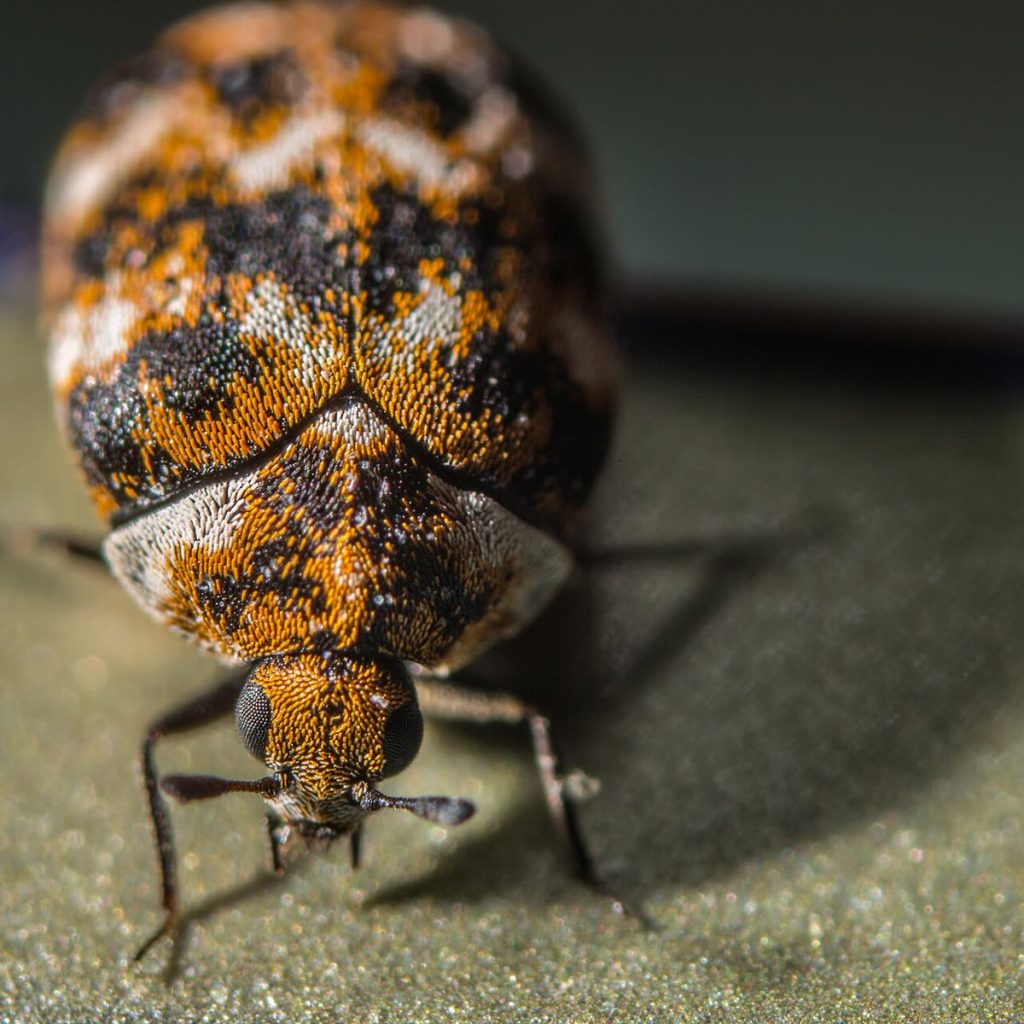
Little black oval bugs in house are usually carpet beetles, pantry beetles, fleas, springtails or ground beetles that wandered in from outside. The size, shape, movement and place you find them tell you which one you are dealing with, and that decides how to get rid of them, so identify first and treat second.
Key takeaways
- Catch a specimen on clear tape and look closely before buying any treatment.
- Where you find the bugs is a strong clue: windowsills, food cupboards, pet bedding, damp corners or beds.
- Vacuuming, laundering and removing the source solve most problems without strong chemicals.
- Oval, flat, reddish-brown bugs near beds could be bed bugs and need professional confirmation.
- Persistent or widespread infestations deserve a call to a qualified pest controller.
The usual suspects
| Bug | Look | Typical place | Main concern |
|---|---|---|---|
| Carpet beetle (adult) | Rounded to oval, 2 to 4 mm, black or mottled | Windowsills, near fabric | Larvae damage wool, fur, feathers and silk |
| Pantry beetle | Small, brown to black | Flour, cereal, pet food, spices | Contaminates stored food |
| Flea | Tiny, dark, flattened sideways, jumps | Pet bedding, carpet | Itchy bites |
| Springtail | Very small, dark, springs when disturbed | Bathrooms, damp corners, plant pots | Mostly harmless; a sign of damp |
| Ground beetle | Larger, glossy black | Floors, doorways, mostly in autumn | Harmless wanderers |
| Bed bug | Oval and flat, reddish-brown | Mattress seams, bed frames, furniture | Bites; needs professional help |
How to identify what you have
- Catch one. Press clear sticky tape over it or trap it in a jar.
- Magnify. Use a magnifying glass or your phone camera zoom. Note size, shape, legs and any pattern on the back.
- Observe behaviour. Does it jump, fly, crawl slowly or run? Fleas and springtails jump; beetles crawl or fly.
- Map the finds. Where do you see them most? Write down rooms and times.
- Look for damage. Check for holes in wool, shed skins, tiny hair-like casts, gritty trails in flour or bite marks on people and pets.
- Compare with a trusted reference. A good image set, such as the carpet beetle entry on Wikipedia, can help with first identification, though a pest professional is more reliable.
Getting rid of carpet beetles
Adults come inside to lay eggs, often through windows or on cut flowers, and the fuzzy larvae do the damage. Vacuum carpets, rug edges, skirting boards, wardrobes and under furniture thoroughly, and empty the vacuum outside. Wash susceptible fabrics at a hot temperature where the label allows, and dry clean or freeze items that cannot be washed. Store woollens in sealed bags or boxes after cleaning. Insecticide is rarely the first step; removing food sources such as hair, lint, dead insects and stored natural fibres works best.
Dealing with pantry beetles
Check every open packet of flour, rice, pasta, cereal, dried fruit, nuts, spices and pet food. Throw away anything with beetles, webbing or an unpleasant smell. Vacuum cupboards, wipe them with warm soapy water and let them dry before restocking. Keep dry goods in airtight containers, and buy smaller amounts if you use them slowly. Pantry pests can hide in old, forgotten bags, so go through the back of the cupboard.
Fleas and springtails
For fleas, treat the pet with a vet-recommended product and wash bedding on a hot cycle. Vacuum floors and soft furnishings daily for a couple of weeks, because the eggs and pupae in carpets hatch over time. Ask your vet about home treatments suitable for your pets. Do not use products meant for dogs on cats, as some are toxic to them.
Springtails signal moisture. Fix leaks, improve ventilation, dry out damp patches and consider a dehumidifier. They can also live in overwatered houseplants, so let the compost dry out between waterings. Once the damp is gone, they usually disappear without further treatment.
Preventing a repeat
- Seal gaps around windows, doors and pipes.
- Fit fine mesh screens on vents and open windows in spring and summer.
- Clean regularly, especially behind furniture, in cupboards and around skirting boards.
- Store clothes and food in sealed containers.
- Keep bins closed and empty them often.
- Check second-hand furniture, rugs and fur items before bringing them indoors.
Small insects often turn up when the weather changes. If you are curious about other tiny household residents, our short explainer on how long an ant lives covers another common visitor and how colonies behave.
When to call a professional
Call a qualified pest controller if you suspect bed bugs, if you see large numbers, if the problem comes back after cleaning, or if you cannot identify the insect. Many local councils offer pest control services or can point you to accredited firms. Health advice, such as treating bites, is available from a pharmacist or the NHS at nhs.uk. Avoid using insecticide sprays in cupboards that hold food or near pets and children, and follow label instructions carefully.
A room-by-room inspection
If you are unsure where to start, take an hour and work through the house with a torch. In the kitchen, empty cupboards one shelf at a time and look for webbing, clumped flour or small holes in packets. Check the corners and under the sink for damp, which attracts springtails. In the living room and bedrooms, pull furniture away from the wall, lift rug edges and look in the folds of curtains, in air vents and along the tops of skirting boards. Look inside wardrobes and drawers where wool and fur are stored, and shake out items near windows. Check pet beds and the places your animals sleep.
In the loft, garage or spare rooms, look for dead insects, bird or rodent nests, and unused stored goods, because carpet beetle larvae can live on old nests and dead insects for months. Removing such material takes away their food supply. Keep notes of the places where you find activity, as a pest technician will find them useful if you need to call one.
Timing and seasons
Many of these insects show up at predictable times. Adult carpet beetles often appear in spring, when they move towards light to find a way outdoors, which is why they gather on windowsills. Ground beetles come indoors more often in autumn, and springtails flourish during wet weather. Pantry beetles can appear at any time of year in a warm kitchen. Knowing the pattern helps you decide whether you are seeing a short-lived seasonal visitor or a breeding population in your home. A few insects in a single week may need only a vacuum, while a steady stream over several weeks points to a source that needs finding.
Frequently asked questions
Are little black oval bugs harmful?
Most are nuisance pests. Carpet beetle larvae damage fabrics, pantry beetles spoil food, and fleas bite, but many others are harmless.
Why do I find them on the windowsill?
Adult carpet beetles and other outdoor beetles are drawn to light, so they gather near windows after getting inside.
How do I tell a bed bug from a carpet beetle?
Bed bugs are flat and reddish-brown and live near beds, while carpet beetles are rounder and often mottled. Confirm with a professional if unsure.
Will vacuuming get rid of them?
Thorough, regular vacuuming removes eggs, larvae and adults and is one of the best first steps.
Do I need chemicals?
Not usually. Cleaning, removing food sources and sealing entry points often solve the problem. Use insecticides only as directed.
Conclusion
Little black oval bugs in house look alike at first glance, but a close look and a note of where you found them usually reveal the culprit. Clean thoroughly, remove the source and call a professional when you are unsure.
Key takeaways about little black oval bugs in house
Here is a short summary of little black oval bugs in house so you can find the main points quickly.
- Little black oval bugs in house are usually carpet beetles, pantry beetles, fleas, springtails or ground beetles that wandered in from outside.
- Adults come inside to lay eggs, often through windows or on cut flowers, and the fuzzy larvae do the damage.
- Check every open packet of flour, rice, pasta, cereal, dried fruit, nuts, spices and pet food.
- For fleas, treat the pet with a vet-recommended product and wash bedding on a hot cycle.
Good decisions about little black oval bugs in house come from checking the facts, comparing your options and taking your time.
Save this guide to little black oval bugs in house so you can find it again whenever you need a quick reminder.
If you only remember one thing about little black oval bugs in house, make it the practical steps covered in this guide.
Check official sources before acting on anything related to little black oval bugs in house, because details can change over time.
Questions about little black oval bugs in house are common, so it helps to compare more than one trustworthy source.
Use this page as a starting point for little black oval bugs in house and come back to it when your situation changes.
Related reading:
- What Is a Sangria? Spanish Wine Punch Explained
- How to Tenderise Pork: Simple Methods for Juicy Results
For general background, you can look up little black oval bugs in house on Wikipedia.