If you have ever stared at a menu and wondered what is yiros, the short answer is that it is a Greek street food made from meat cooked on a vertical spit, shaved into thin slices and served in a flatbread with salad and sauce. In Australia the word is often spelled yiros and pronounced “YEE-ros”, while in the United States people usually write gyro. The name comes from a Greek word meaning “turn”, which describes the rotating spit. This article explains what goes into it, how it differs from similar foods and how to make a version at home.
Key takeaways
- Yiros and gyro are the same dish, written differently in different countries.
- The meat is typically pork, chicken, lamb or beef cooked on a rotating spit.
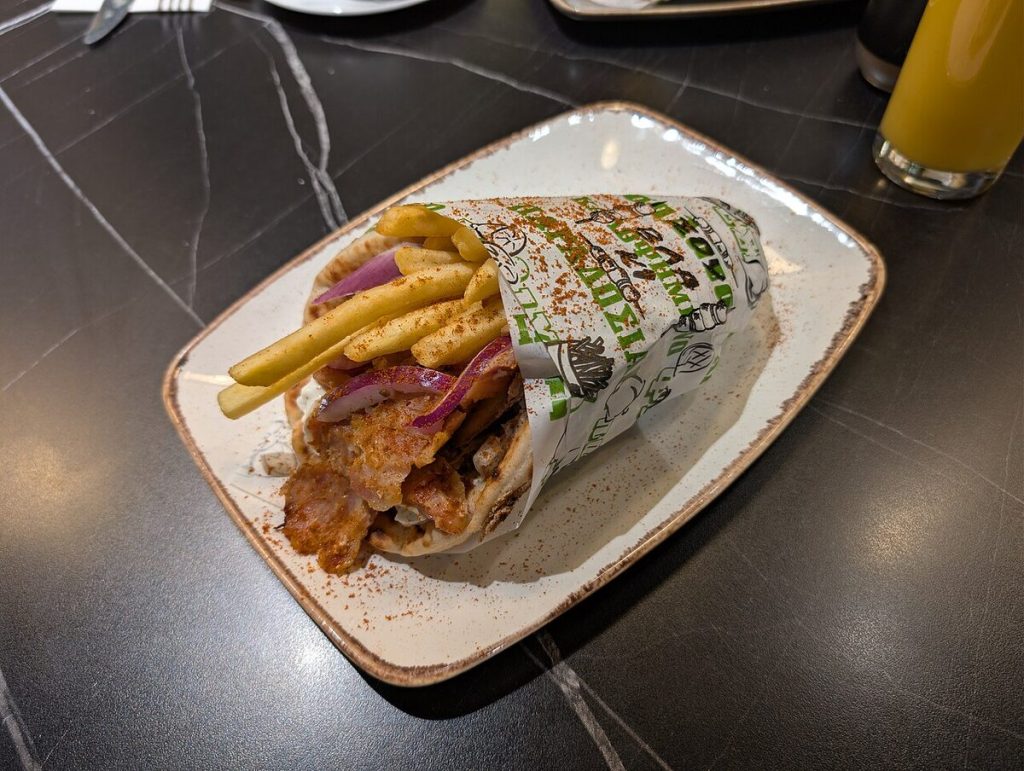
- It is served in pita with tomato, onion, tzatziki and often chips.
- Traditional recipes marinate or season the meat well and slice it thinly.
What is yiros made of?
The base is meat, and the choice depends on region and shop. In Greece, pork and chicken are very common. Elsewhere, lamb, beef or a lamb and beef mixture is popular. The meat may be stacked as marinated slices, or in some places formed into a seasoned cone from minced meat. As it turns, the outer layer cooks and is carved off in thin ribbons.
The typical filling
- Sliced meat from the spit.
- Tomato, red onion and sometimes lettuce or cabbage.
- Tzatziki, a yoghurt sauce with cucumber, garlic and herbs.
- Fries tucked in the wrap, common in Greece and many Australian shops.
- Optional extras such as chilli sauce, paprika, parsley or lemon.
Yiros, gyro and souvlaki: what’s the difference?
| Dish | Cooking method | Usual serving |
|---|---|---|
| Yiros / gyro | Vertical rotating spit, shaved slices | Wrapped in pita with salad and sauce |
| Souvlaki | Small pieces of meat on skewers, grilled | On a stick, or in pita |
| Shawarma | Vertical spit with Middle Eastern spices | Wrapped with pickles and garlic or tahini sauces |
| Doner kebab | Vertical spit, Turkish style | In bread or on a plate |
The cooking style is shared across a family of dishes, and you can read about the Turkish origin in the Wikipedia article on gyro. The seasoning and sauce make each one distinct.
How to say it
Most Greek speakers say something like “YEE-ro”, and in Australia “YEE-ros” is typical. In the United States “JIE-ro” and “YEE-ro” are both heard. Do not worry; vendors will understand any of them if you point to the menu.
What does it taste like?
Expect savoury, juicy meat with a slightly crisp edge, balanced by cool, tangy tzatziki and fresh vegetables. Oregano, garlic, lemon and paprika are common seasonings. The pita is soft and warm, sometimes toasted lightly.
Making yiros at home
You do not need a spit. An oven and a hot pan will get you close.
- Marinate thinly sliced chicken thigh or lamb in olive oil, lemon juice, garlic, oregano, salt and pepper for at least a few hours.
- Cook in a very hot pan or under a grill until browned at the edges and cooked through. Chicken must reach a safe internal temperature; check the guidance on the Food Standards Agency site.
- Make tzatziki by mixing thick yoghurt, grated cucumber (squeezed dry), garlic, lemon juice and a little olive oil.
- Warm the pita in a dry pan or oven.
- Assemble with tomato, onion, meat, sauce and, if you like, a few chips.
- Wrap in baking paper or foil to hold it together.
Dietary considerations
Traditional yiros contains meat, gluten from the pita, and dairy in the sauce. For vegetarian versions, try grilled halloumi, falafel or roasted vegetables. For gluten-free, ask whether a plate is available without bread. If you have allergies, ask the vendor about ingredients, since marinades and sauces vary.
Tips when ordering
- Ask for sauce on the side if you want to control the mess.
- Choose the meat you prefer; availability differs between shops.
- Request extra tomato or salad for freshness.
- Eat it fresh, since the pita softens quickly.
If you enjoy exploring food questions, you may also like our explainers on what al dente means in cooking, what bolognese means and whether panko breadcrumbs go bad.
A short history of the dish
The vertical spit method has roots in the eastern Mediterranean, and the Greek version developed in the twentieth century as shops adapted the technique to local meats and seasonings. Migrants then carried it around the world, which explains why the dish now appears in Melbourne, Chicago and Athens with slight differences. Because it spread through immigrant communities, each country adapted the toppings and sauces to local tastes.
Regional variations in what is yiros made of
If you still ask what is yiros made of when you travel, remember that the answer changes by place. In Greece, pork is the classic choice, and you may find fries inside. In Australia, lamb and beef or chicken are very common, with options such as tabouleh, hummus or chilli sauce. In the United States, a lamb and beef cone is traditional in many cities. In some places a vegetarian version made from mushrooms or soy is available.
Sides and drinks that go well
- Greek salad with olives, feta and cucumber.
- Lemon potatoes or fries.
- Stuffed vine leaves.
- A cold lager, a Greek soft drink or sparkling water with lemon.
Storing and reheating leftovers
Keep cooked meat in the fridge within a couple of hours and eat it within a day or two. Reheat until piping hot, and always keep the tzatziki cold. Do not leave a wrapped yiros sitting in a warm bag for hours, because the bread will go soggy and food safety becomes a concern.
Frequently asked questions
What is yiros meat?
It is usually pork, chicken, lamb or beef roasted on a vertical spit and sliced thin.
Is yiros the same as gyro?
Yes. It is the same Greek dish, with different spellings in different countries.
Is yiros healthy?
It can be balanced, with protein and vegetables, though sauces, chips and portion size affect it.
How is it different from a kebab?
The cooking method is similar, but the seasoning, sauces and bread differ by culture.
Can I make it vegetarian?
Yes, use grilled vegetables, halloumi or falafel with the usual toppings.
Conclusion
So, what is yiros? It is spit-roasted meat, soft pita, fresh salad and cool tzatziki combined into one of the world’s most loved handheld meals. Try it from a good local shop, or make your own at home with a simple marinade and a hot pan.
Key takeaways about what is yiros
Here is a short summary of what is yiros so you can find the main points quickly.
- The base is meat, and the choice depends on region and shop.
- The cooking style is shared across a family of dishes, and you can read about the Turkish origin in the Wikipedia article on gyro.
- Most Greek speakers say something like "YEE-ro", and in Australia "YEE-ros" is typical.
- Expect savoury, juicy meat with a slightly crisp edge, balanced by cool, tangy tzatziki and fresh vegetables.
Save this guide to what is yiros so you can find it again whenever you need a quick reminder.
Related reading:
- How Far Does a Hair Follicle Go Back? About 90 Days
- Draco Ammo Type: What Does an AK Pistol Actually Take?
For general background, you can look up what is yiros on Wikipedia.