If your instant yeast not foaming problem has you staring at a bowl of flat, murky water, do not bin the dough yet. Usually the cause is water that was too hot or too cold, old yeast, or too little time. This guide explains how to test, fix and prevent it.
Key takeaways
- Instant yeast does not strictly need proofing, but a foam test tells you whether it is alive.
- The usual causes are expired yeast, water that is too hot or too cold, and not enough sugar or time.
- Aim for lukewarm water, roughly 38 to 43 C (100 to 110 F), for active dry yeast and slightly cooler for instant.
- If it still does not foam, replace the yeast rather than gamble with a whole batch of dough.
Why instant yeast not foaming does not always mean a problem
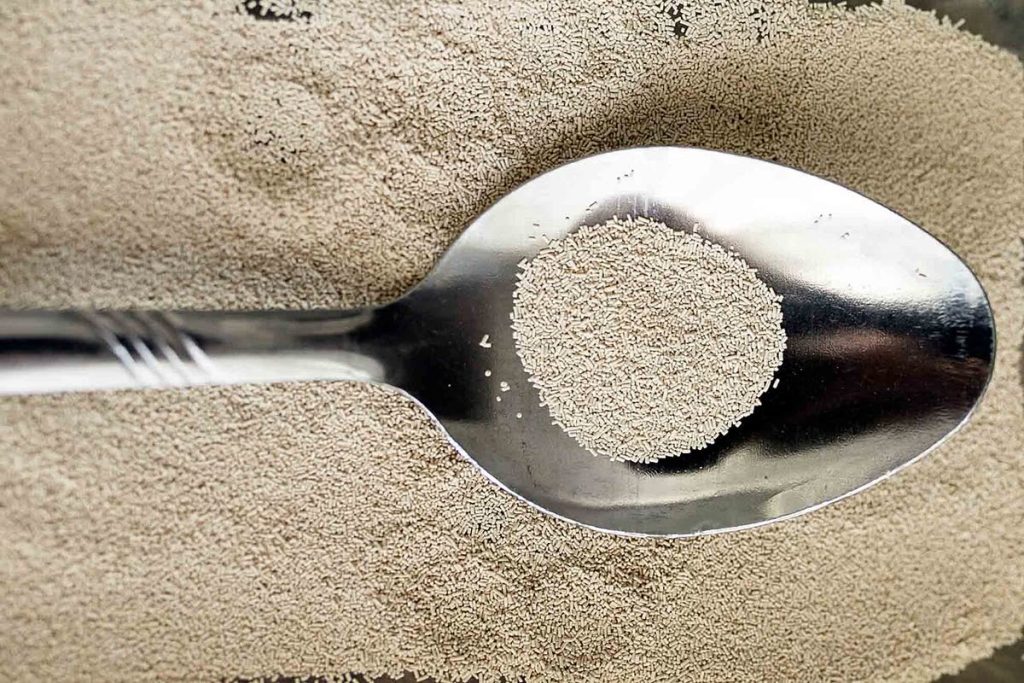
Instant yeast is a finely granulated form of baker’s yeast, and you can read about the species on Wikipedia. It is designed to be mixed straight into the flour without activating in water first. That means it may not foam much when stirred into water, even if it is perfectly healthy. Active dry yeast, in contrast, normally needs to be dissolved in warm water and left for a few minutes, and it often produces a creamy foam.
So the first question is which type of yeast you have. If the packet says instant, rapid rise or bread machine, a lack of dramatic foam is not necessarily a failure. If you want to test it, do it deliberately and carefully.
How to do a proper foam test
- Measure about 120 ml (half a cup) of lukewarm water. It should feel barely warm on your wrist.
- Add a teaspoon of sugar and stir until dissolved. The sugar gives the yeast something to eat.
- Sprinkle in about two teaspoons (roughly one standard packet) of yeast.
- Leave it for 5 to 10 minutes in a warm spot, away from draughts.
- Look for a layer of foam, a bready smell and tiny bubbles. If you see them, the yeast is alive.
If nothing happens after ten minutes, wait up to fifteen. If it is still flat, the yeast is likely dead or weak.
The most common reasons yeast will not foam
| Cause | How to tell | Fix |
|---|---|---|
| Water too hot | Water feels hot to the touch; yeast dies above roughly 55 C (130 F) | Let water cool and start again with fresh yeast |
| Water too cold | Foam is very slow or absent | Use lukewarm water, and wait longer |
| Expired or weak yeast | Past the date, or stored badly | Replace it |
| No sugar | Foam is minimal | Add a pinch of sugar or honey |
| Salt directly on yeast | Salt touching yeast in the bowl | Keep salt away until the flour is added |
| Chlorinated or very hard water | Slow activity | Use filtered or bottled water if you suspect this |
| Cold room | Dough or mix barely moves | Move to a warmer place |
Water temperature in detail
This is the main culprit. Yeast is a living organism, and heat kills it. Water from a very hot tap can be well above 55 C, which is enough to destroy it. If you do not have a thermometer, use the wrist test: lukewarm water feels about the same temperature as your skin, neither hot nor cold. For instant yeast mixed straight into flour, slightly warm liquid is enough.
Yeast age and storage
Dry yeast keeps for a long time unopened, but it loses power once opened, especially in a warm cupboard. Store opened yeast in an airtight container in the fridge or freezer. A packet that has been sitting in a humid place can lose potency even before its date.
Too little time
In a cool kitchen, yeast can take longer to wake up. Give it a full ten minutes at least, and if the room is cold, put the bowl somewhere warm, like near (not on) a warm oven.
If you skipped the test and the dough will not rise
- Check that the dough is in a warm place, ideally 24 to 27 C (75 to 80 F).
- Give it more time. Cold dough may need two hours or more.
- Make sure you did not add salt directly onto the yeast or use boiling water.
- Try kneading in a fresh pinch of yeast dissolved in a spoonful of warm water with sugar.
- If the dough is dense and has no activity after a long wait, start again with fresh yeast.
Other baking tips to prevent flat dough
- Weigh ingredients, especially flour. Too much flour makes a stiff dough that rises slowly.
- Use bread flour for chewy loaves, since higher protein supports a better rise.
- Knead long enough to develop gluten, usually 8 to 10 minutes by hand.
- Cover dough to prevent a skin from forming.
- Do not add too much sugar, salt or fat in an enriched dough, because these can slow yeast.
Once you have a dough that works, you can try other recipes and storage skills. Our guides on whether panko breadcrumbs go bad, how to toast pine nuts and reheating risotto safely are good companions for the kitchen.
Food safety note
Dead yeast is not harmful, and bread made with it is safe but will be flat and dense. Do not eat raw dough, as raw flour can carry bacteria. If the mix smells strongly sour or chemical, or shows mould, throw it out.
Frequently asked questions
Does instant yeast need to foam?
Not necessarily. It is designed to be added to flour directly, so you may not see much foam. A test with warm water and sugar is optional but useful.
What temperature should the water be?
Lukewarm, around 38 to 43 C (100 to 110 F). Above about 55 C (130 F) yeast can die.
How long should I wait for yeast to foam?
Five to ten minutes in a warm place, up to fifteen if the room is cool.
Can I rescue dough if the yeast was dead?
You can try kneading in fresh yeast dissolved in warm water, but results vary. Often it is better to start again.
How should I store yeast?
Keep it airtight in a cool, dry place, or in the fridge or freezer once opened, to keep it active longer.
Conclusion
An instant yeast not foaming issue usually has a simple cause: water temperature, age or time. Run a short foam test, adjust the water and warmth, and replace old yeast. With a little care, your next loaf should rise properly.
Key takeaways about instant yeast not foaming
Here is a short summary of instant yeast not foaming so you can find the main points quickly.
- If your instant yeast not foaming problem has you staring at a bowl of flat, murky water, do not bin the dough yet.
- Instant yeast is a finely granulated form of baker's yeast, and you can read about the species on Wikipedia.
- So the first question is which type of yeast you have.
- If nothing happens after ten minutes, wait up to fifteen.
Check official sources before acting on anything related to instant yeast not foaming, because details can change over time.
Questions about instant yeast not foaming are common, so it helps to compare more than one trustworthy source.
Use this page as a starting point for instant yeast not foaming and come back to it when your situation changes.
Related reading:
- East Mesa Police Activity Today: How to Find Reliable Updates
- What Is the Carrier Hub App on Android? Is It Safe to Keep?
For general background, you can look up instant yeast not foaming on Wikipedia.