If you searched for “what is a quotiont”, the correct spelling is quotient, and the answer is simple. In maths, a quotient is the result you get when you divide one number by another. If you divide 12 by 3, the quotient is 4. The number being divided (12) is the dividend, the number you divide by (3) is the divisor, and the quotient is the answer. If the division is not exact, you may also have a remainder.
Key takeaways
- A quotient is the answer to a division problem.
- In 20 divided by 4 equals 5, 20 is the dividend, 4 is the divisor and 5 is the quotient.
- When numbers do not divide evenly, you can write the quotient with a remainder, as a decimal or as a fraction.
- The word also appears in other settings, such as intelligence quotient (IQ) and the quotient rule in calculus.
What is a quotiont? The simple meaning
The word comes from the Latin for “how many times”, which is a helpful way to think about it. When you ask what 20 divided by 5 is, you are asking how many times 5 fits into 20. The answer, 4, is the quotient.
Division can be written in several ways, and all of them produce a quotient:
- 20 ÷ 5 = 4
- 20 / 5 = 4
- 20 over 5, written as a fraction, equals 4
A fraction is simply a division that has not been carried out yet. So the quotient of 3 and 4 is 3/4, or 0.75.
The parts of a division problem
Every division sentence has the same roles, and learning the names helps you follow textbooks and tests.
| Part | Meaning | Example (35 ÷ 7 = 5) |
|---|---|---|
| — | — | — |
| Dividend | The number being divided | 35 |
| Divisor | The number you divide by | 7 |
| Quotient | The result of the division | 5 |
| Remainder | What is left over, if any | 0 |
A useful check is that dividend = divisor × quotient + remainder. For 35 ÷ 7, that is 7 × 5 + 0 = 35. For 37 ÷ 7, the quotient is 5 and the remainder is 2, because 7 × 5 + 2 = 37.
What is a quotient when numbers do not divide evenly?
When the divisor does not go into the dividend a whole number of times, you have three common ways to express the answer.
Quotient with a remainder
Write 17 ÷ 5 as 3 remainder 2. The quotient is 3, and 2 is left over. This form is common in early school maths and in problems involving whole items, such as sharing 17 sweets between 5 children.
Decimal quotient
Continue the division after the decimal point. 17 ÷ 5 = 3.4. This is the usual form in science, money and measurement.
Fraction quotient
Express the remainder as a fraction of the divisor. 17 ÷ 5 = 3 and 2/5, which equals 3.4.
Which form you use depends on the question. If the problem asks how many full boxes you can fill, the whole number quotient is the answer. If it asks for an exact value, give the decimal or the fraction.
How to find a quotient step by step
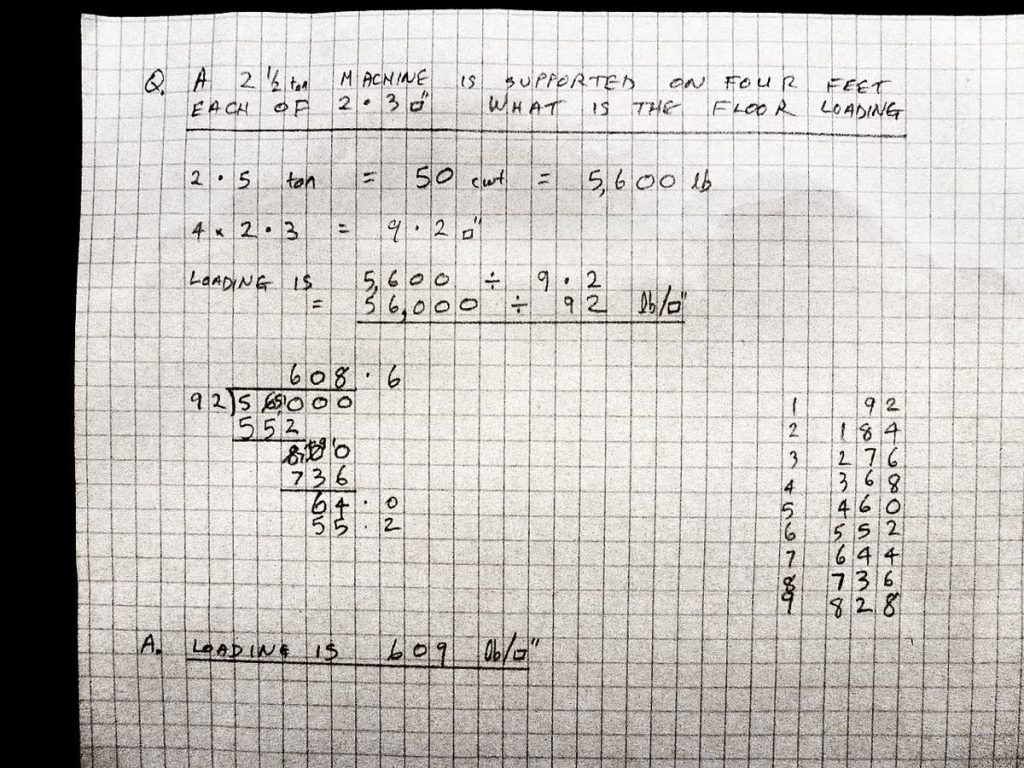
Here is how to use long division to find a quotient such as 156 ÷ 12.
- Set up the problem with 12 outside the division bracket and 156 inside.
- Look at the first digits. 12 does not go into 1, but it goes into 15 once. Write 1 above the 5.
- Multiply 1 × 12 = 12, subtract from 15 to get 3.
- Bring down the next digit, 6, to make 36.
- 12 goes into 36 exactly 3 times. Write 3 next to the 1.
- Multiply 3 × 12 = 36, subtract to get 0.
- The quotient is 13, and the remainder is 0.
You can check by multiplying: 12 × 13 = 156.
For mental maths, use a calculator, times tables or simple estimates, such as knowing that 150 ÷ 10 is 15, so 156 ÷ 12 should be close to 13.
Quotients with negative numbers and fractions
The rules of signs for division are the same as for multiplication.
- A positive divided by a positive gives a positive quotient.
- A negative divided by a negative gives a positive quotient.
- A positive divided by a negative, or the reverse, gives a negative quotient.
To find the quotient of fractions, multiply by the reciprocal. For example, 1/2 ÷ 1/4 = 1/2 × 4/1 = 2. In words, one quarter fits into one half twice.
Division by zero has no quotient. You cannot divide by zero, and calculators will show an error. This is because no number multiplied by zero can give a non-zero dividend.
Quotient in other contexts
The word is also used well beyond arithmetic.
- **Intelligence quotient (IQ)**: originally a ratio of mental age to chronological age, multiplied by 100, though modern tests use standardised scores.
- **Quotient rule**: in calculus, a formula for finding the derivative of one function divided by another.
- **Difference quotient**: the expression used to define a derivative.
- **Emotional quotient and other informal terms**: phrases such as “fun quotient” borrow the idea to suggest a measured ratio.
For a general reference, the Wikipedia article on quotients covers how the term applies in arithmetic and algebra.
Common mistakes to avoid
- Confusing the dividend and divisor, which gives the wrong answer, since 12 ÷ 3 is not the same as 3 ÷ 12.
- Forgetting the remainder when the problem asks for it.
- Misplacing a decimal point in long division.
- Ignoring signs with negative numbers.
- Thinking the quotient must always be smaller than the dividend. Dividing by a number between 0 and 1 makes the quotient larger, as in 6 ÷ 0.5 = 12.
If you like practising maths in everyday contexts, you might enjoy our pieces on whether 100 ml equals a quarter cup, how many grams are in three-quarters of a cup and the four quadrants in a graph, which are all examples of using division and ratios in practice.
Frequently asked questions
What is a quotient in math?
It is the result of dividing one number by another. In 24 ÷ 6 = 4, the quotient is 4.
What is the difference between quotient and remainder?
The quotient is the whole number of times the divisor fits into the dividend, and the remainder is what is left over.
What is the quotient of 15 and 3?
The quotient is 5, because 15 divided by 3 equals 5.
Can a quotient be a decimal?
Yes. If the numbers do not divide evenly you can continue the division to give a decimal, such as 7 ÷ 2 = 3.5.
Is the quotient always smaller than the dividend?
No. If you divide by a number smaller than 1, the quotient is bigger. For example, 5 ÷ 0.5 = 10.
Conclusion
So, what is a quotient? It is simply the answer to a division. Once you know the names of the dividend, divisor and remainder, and how to express the answer as a whole number, decimal or fraction, division problems become much easier to read and check.
Key takeaways about what is a quotiont
Here is a short summary of what is a quotiont so you can find the main points quickly.
- If you searched for "what is a quotiont", the correct spelling is quotient, and the answer is simple.
- The word comes from the Latin for "how many times", which is a helpful way to think about it.
- Division can be written in several ways, and all of them produce a quotient:
- A fraction is simply a division that has not been carried out yet.
Check official sources before acting on anything related to what is a quotiont, because details can change over time.
Questions about what is a quotiont are common, so it helps to compare more than one trustworthy source.
Use this page as a starting point for what is a quotiont and come back to it when your situation changes.
Good decisions about what is a quotiont come from checking the facts, comparing your options and taking your time.
Related reading:
- Cauliflour Ear: Stages, Treatment and Prevention
- T Mobile Carrier Hub: What the Android App Is and Does
For general background, you can look up what is a quotiont on Wikipedia.