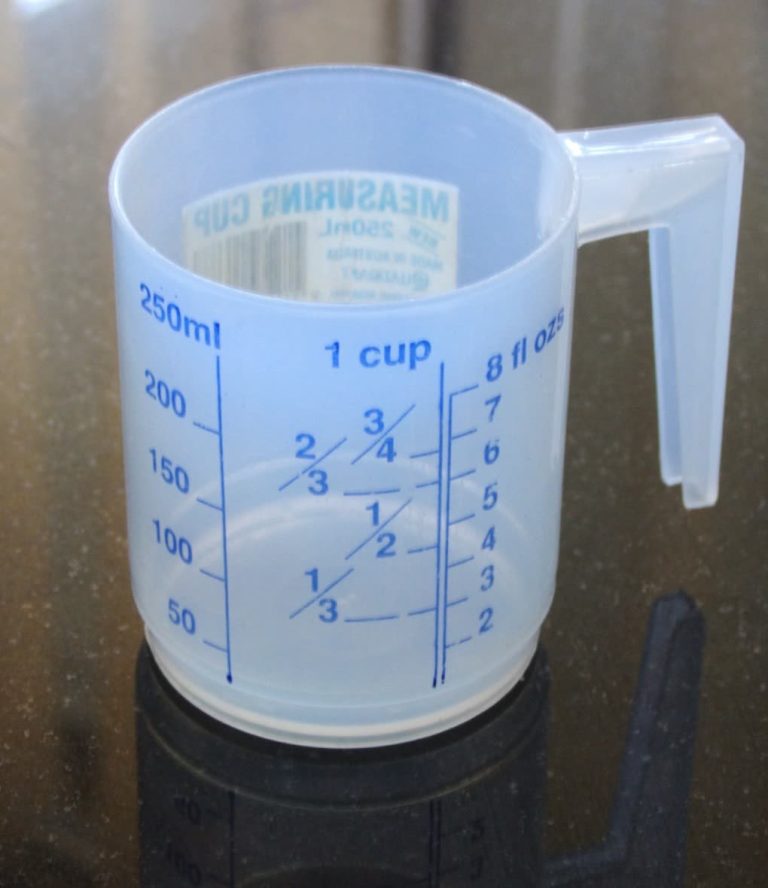
The standard inch designation is the double prime symbol (″), but almost everyone types a straight double quotation mark (“) or the abbreviation “in” instead. All three are understood, and which one you choose depends mostly on where the text will be read: a technical drawing, a shop label, a spreadsheet or a text message.
Key takeaways
- The typographically correct mark for inches is the double prime (″, Unicode U+2033).
- The straight double quote (“) is the everyday stand-in and is fine for most informal use.
- “in” is the clearest abbreviation in running text, especially when a quote mark could be confused with speech.
- Feet use the single prime (′) or an apostrophe, so 5′ 10″ means five feet ten inches.
The three ways to mark inches
When you see a measurement like 12″ or 12″ or 12 in, you are looking at the same thing written three ways. Here is how they compare.
| Form | Example | Best used for |
|---|---|---|
| Double prime (″) | 8.5″ × 11″ | Print design, technical documents, careful typography |
| Straight double quote (“) | 8.5″ x 11″ | Product listings, forms, quick notes, anywhere you only have a standard keyboard |
| Abbreviation “in” | 8.5 in x 11 in | Reports, manuals, anywhere clarity matters more than brevity |
| Word “inches” | 8.5 inches by 11 inches | Prose, instructions, accessibility-minded writing |
What the double prime actually is
The prime symbols come from mathematics and surveying. A single prime (′) is used for feet, minutes of arc and derivatives, while the double prime (″) is used for inches, seconds of arc and second derivatives. They are slanted marks, usually slightly angled, and they look different from the curly or straight quotation marks used for speech. You can read the background on the prime symbol on Wikipedia.
Because most keyboards do not have a dedicated key for it, the straight double quote became the working substitute. That is why you will see “wrong” marks on everything from television boxes to timber yards, and nobody is confused.
Straight quotes versus curly quotes
One common mistake is ending up with a curly closing quote (”) after a number. Word processors turn straight quotes into curly ones automatically, which makes 12” look slightly off. The curly mark leans the wrong way and is meant for speech, not measurement. If you care about the finish, replace it with the double prime or turn off smart quotes for that line.
How to type the inch mark
Windows
- Straight quote: press Shift and the apostrophe key (on a UK keyboard, Shift+2).
- Double prime in Microsoft Word: type 2033, then press Alt+X to convert it to ″.
- Anywhere else: open the Character Map, or press Windows key + full stop to open the emoji and symbol panel, then search for the symbol and paste it.
Mac
- Straight quote: Shift plus the apostrophe key (Shift+2 on a UK keyboard).
- Double prime: press Control+Command+Space to open the Character Viewer, search “double prime”, then double-click the symbol.
iPhone, iPad and Android
- Switch to the number and symbol keyboard and tap the straight quote.
- On many keyboards, pressing and holding the quote key shows variants, and the prime mark is sometimes among them. If it is not, copy the symbol from a web page once and save it in your text replacement or shortcuts list.
A neat trick on any device is to set up a text shortcut, such as typing “dprime” to expand to ″. It takes thirty seconds and saves hunting for the symbol later.
Writing feet and inches together
For height and dimensions, the single prime and double prime appear side by side. A person who is five feet ten inches tall is written 5′ 10″, or 5’10” in plain text. Leave out the space if your style guide says so, but stay consistent through a document.
Mixed-unit measurements can be confusing if the marks are inconsistent, so check each one. A 6″ ruler is not the same as a 6′ ruler, and a missed mark on a delivery quote can cost money. If a figure matters, write it in words once, for example “6 inches (6″)”.
Plain-text, spreadsheets and code
In spreadsheets, the straight double quote is a special character: it often marks text strings in formulas. If you want a cell to display 12″, you may need to type it as part of a text value or use a custom number format. In code and CSV files, an unescaped quote can break the structure, so either escape it (usually by doubling it) or use “in” instead. This is the biggest practical reason to prefer “in” in data files.
Search is another issue. People searching a catalogue for “12 inch” will not find items listed as 12″ unless the site maps the two together, so listings that spell it out are easier to find.
Choosing the right mark: a quick guide
- For printed or published design work, use the double prime (″) and the single prime (′) for feet.
- For emails, forms and quick notes, the straight quote is fine.
- For data, spreadsheets and anything automated, use “in” or “inches”.
- For accessibility, spelling it out helps screen readers, which often read a straight quote as “quote” rather than “inches”.
Measurements are also useful when you work out shapes, for example when finding the arc length of a curved edge. If that is your goal, see semicircle formulas for area, perimeter and arc length, which work in any unit you choose.
Other measurement marks you might see
The inch has a long history, and it is now defined as exactly 25.4 millimetres in the international system. You can read more on the inch article on Wikipedia. Outside inches, a similar-looking mark can mean seconds of arc on maps and compass bearings, or seconds in a time reading. Context makes this clear: 40° 26′ 46″ N is a map coordinate, not a size. Temperatures use the degree sign (°) and are a separate topic, as in our guide to deep fryer oil temperature.
Frequently asked questions
What is the symbol for inches?
The formal inch designation is the double prime (″). In everyday writing people use a straight double quotation mark (“) or the abbreviation “in”.
Is it wrong to use a quote mark for inches?
Not in most settings. It is a widely accepted shortcut, and only formal typography or print design really needs the double prime. Just avoid curly closing quotes after a number.
How do I type the double prime on a keyboard?
In Word on Windows, type 2033 and press Alt+X. On a Mac, use the Character Viewer (Control+Command+Space). On phones, copy the symbol once and save it as a text shortcut.
What is the symbol for feet?
The single prime (′), usually replaced by a straight apostrophe in plain text. So 6′ means six feet and 6″ means six inches.
Should I write “in” or “inches” on a product listing?
Either is fine. Writing “inches” or “in” is safer for search and screen readers, while the quote mark saves space on small labels.
Conclusion
The inch designation is the double prime, but the straight quote and “in” do the job in everyday writing. Pick the form that suits your audience, keep it consistent, and spell the unit out whenever a mistake would be costly.
Key takeaways about inch designation
Here is a short summary of inch designation so you can find the main points quickly.
- The standard inch designation is the double prime symbol (″), but almost everyone types a straight double quotation mark (") or the abbreviation "in" instead.
- When you see a measurement like 12" or 12″ or 12 in, you are looking at the same thing written three ways.
- The prime symbols come from mathematics and surveying.
- Because most keyboards do not have a dedicated key for it, the straight double quote became the working substitute.
Good decisions about inch designation come from checking the facts, comparing your options and taking your time.
Save this guide to inch designation so you can find it again whenever you need a quick reminder.
If you only remember one thing about inch designation, make it the practical steps covered in this guide.
Check official sources before acting on anything related to inch designation, because details can change over time.
Related reading:
- Garage Kits Menards: What to Know Before You Buy
- What Does Brine a Turkey Mean? A Simple Explanation
For general background, you can look up inch designation on Wikipedia.